Highland Brigade

Definition and stakes

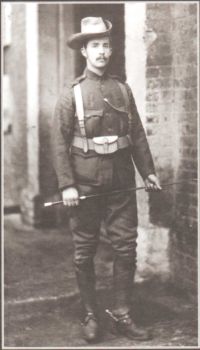
William E. Sellers,  From Aldershot to Pretoria

“ No time even for a whispered prayer! A few brief moments, and the flower of the British army lay prone to rise no more!
It was the Highland Brigade that suffered most severely—the brigade of which every true Britisher is so justly proud. Who that has not seen these Highlanders march can have any idea of their perfect bearing and splendid condition? The faultless line, the measured rising and falling of the white gaiters, until you almost forget they are men who are marching there, and fancy it must be the rising and falling of the crank in some gigantic piece of machinery.
”
Source: Gutenberg

The Scottish Highlands, Highland Clans and Highland Regiments…

“ The Highland brigade advanced steadily under a heavy fire of round shot, grape, and musketry. Nothing could resist the determined bravery of the troops, headed by their gallant leader, Brigadier-General Ferguson; and the number of the enemy, who swarmed the plain, served only to augment their ardour and confirm their discipline. The enemy received our fire and maintained his position obstinately; but in the moment of charging, the valour of British troops bore down all opposition, and forced him to a precipitate retreat. ”
Source: Gutenberg

Frederick Watson,  The Story of the Highland Regiments

“ A brigade may consist of three or four or more battalions, each battalion roughly a thousand odd men, and naturally comes into severe fighting.
In the Crimea the Highland Brigade was composed of three regiments, the Black Watch, the Camerons, and the 93rd Sutherlands. It was commanded by the famous Sir Colin Campbell. In the Indian Mutiny no regular brigade was formed. In the Egyptian war in 1882 the Highland Brigade was under the command of Sir Archibald Alison, and included the Black Watch, the Highland Light Infantry, the Gordons, and the Camerons.
”
Source: Gutenberg

Get perspective with Kwize: daily news enlightened by great literature