Hilda of Whitby

Definition and stakes

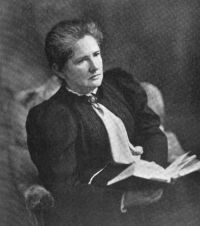
Portrait of Charlotte M. Yonge Charlotte M. Yonge,  History of Christian names (1884)

“ Alone, it was only used in the North and in England, where the Deiran princess Hildur became the holy abbess Hilda of Whitby, succeeding St. Begga, and leaving a reputation for sanctity enhanced, by the sight of
“The very form of Hilda fair
Hovering upon the sunny air;” a vision which, though Clara de Clare could not see it, is to be beheld 318under certain conditions of light, in the windows of Whitby church to the present day; as well as the ammonites, believed, as usual, to have been serpents turned to stone at the prayer of the saint.
”
Source: Gutenberg

1911 Encyclopædia Britannica, Volume 13… (1911)

“ Hilda exercised great influence in Northumbria, and ecclesiastics from all over Christian England and from Strathclyde and Dalriada visited her monastery. In 655 after the battle of Winwæd Oswio entrusted his daughter Ælfled to Hilda, with whom she went to Whitby. At the synod of Whitby in 664 Hilda sided with Colman and Cedd against Wilfrid. In spite of the defeat of the Celtic party she remained hostile to Wilfrid until 679 at any rate. Hilda died in 680 after a painful illness lasting for seven years. ”
Source: Wikisource

S. Baring-Gould,  The Lives of the Saints, Volume 02…

“ Elfleda was scarcely twenty-five years of age, when S. Hilda died, and she was called to succeed her as abbess of Whitby. She is described by Bede as a most pious mistress of spiritual life. But like all the Anglo-Saxon princesses whom we meet within the cloister at this epoch, she did not cease to take a passionate interest in the affairs of her race and her country, and to exercise that extraordinary and salutary influence which was so willingly yielded by the Anglo-Saxon kings and people to those princesses of their sovereign races who became the brides of Christ. ”
Source: Gutenberg

Get perspective with Kwize: daily news enlightened by great literature