“ Roman civilization and influence were felt mainly on the coast and in southern Spain; in the north and west lived the semi-barbarous tribes we have already noted, who were now but loosely held together by the disintegrating bonds of Rome. Hispania’s conquerors could do nothing to help her, for was not Rome herself at the mercy of the Goths, and compelled to pay an enormous ransom, after enduring humiliating siege and capitulation? ”
Hispania
Definition and stakes
The theme of “Hispania” has been addressed by authors such as Frederick A. Ober, T. M. Hughes, John Hay, John Lemprière and Cornelius Tacitus. It is often associated with terms like Spain, Romans, Roman, empire and Castile.
Quotes about “Hispania”
“ How the red flush of her shame mars the proud beauty of Spain!V. Has the red blood run cold that boiled by the Xenil and Darro? Are the high deeds of the sires sung to the children no more? On the dun hills of the North hast thou heard of no plough-boy Pizarro? Roams no young swine-herd Cortés hid by the Tagus' wild shore?VI. Once again does Hispania bend low to the yoke of the stranger! Once again will she rise, flinging her gyves in the sea! Princeling of Piedmont! unwitting thou weddest with doubt and with danger, King over men who have learned all that it costs to be free. ”
“ While it is true that “peace hath her victories,” yet they are not often recorded, and the history of Spain for the next four hundred [23] years is mainly uneventful. But although Hispania had been freed from participation in Roman feuds, yet the barbaric population of the far north was not entirely subjugated until the time of Augustus, who finally completed the work begun by the Scipios and continued by Pompey and Cæsar. ”
T. M. Hughes, Iberia Won; A poem descriptive of the Peninsular War
“ Spain was anciently divided into Hispania Ulterior and Citerior. The former comprehended Bætica, the present Andalucía, and Lusitania nearly corresponding to what is now called Portugal. Hispania Citerior comprised all the rest of the Peninsula. The name “Hesperia” was more commonly applied by the ancient poets to the Italian Peninsula than to the Spanish. Thus Virgil (in addition to the passage above cited) : Et sæpe Hesperiam, sæpe Itala regna vocare. ”
 John Lemprière,
A classical dictionary
(1904)
John Lemprière,
A classical dictionary
(1904)
“ Hispānia, or Hispāniæ, called by the poets Iberia, Hesperia, and Hesperia Ultima, a large country of Europe, separated from Gaul by the Pyrenean mountains, and bounded on every other side by the sea. Spain was first known to the merchants of Phœnicia, and from them passed to the Carthaginians, to whose power it long continued in subjection. The Romans became sole masters of it at the end of the second Punic war, and divided it at first into citerior and ulterior, which last was afterwards separated into Bætica and Lusitania by Augustus. The Hispania citerior was also called Tarraconensis. ”
T. M. Hughes, Iberia Won; A poem descriptive of the Peninsular War
“ Juvenal (P. C. 120) uses the name “Hispania” as the distinctive appellation of the country, which became better and more perilously known in his time than in the days of Horace and Virgil: Horrida vitanda est Hispania.Sat. viii. 116.There is classical authority for a happy variety of names in describing Spain—“Hesperia,” “Iberia,” “Hispania:” Tum sibi Callaïco Brutus cognomen in hosteFecit, et Hispanam sanguine tinxit humum.Ov. Fast. vi. 461. Herculis ritu, modò dictus, ô plebs,Morte venalem petiisse laurumCæsar, Hispanâ repetit PenatesVictor ab orâHorat. Carm. iii. 14. ”
Cornelius Tacitus, A Dialogue Concerning Oratory, or the Causes of Corrupt Eloquence
“ HISPANIA, Spain, otherwise called Iberia, from the river Iberus. It has the sea on every side except that next to Gaul, from which it is separated by the Pyrenees. During the time of the republic, the whole country was divided into two provinces, Ulterior and Citerior, the Farther and Hither Spain. ”
 Ellen Churchill Semple,
Influences of Geographic Environment
Ellen Churchill Semple,
Influences of Geographic Environment
“ Proximity to Africa has closely allied Spain to the southern continent in flora, fauna, and ethnic stock. The long-headed, brunette Mediterranean race occupies the Iberian Peninsula and the Berber territory of northwest Africa.241 This community of race is also reflected in the political union of the two districts for long periods, first under the Carthaginians, then the Romans, who secured Hispania by a victory on African soil, and finally by the Saracens. ”
Hutton Webster, Early European History
“ During the reign of Louis XI (1461-1483 A.D.) the royal domains were enlarged by the addition of Anjou, Provence, and the duchy of Burgundy. His son, Charles VIII (1483-1498 A.D.) , made Brittany a possession of the French crown. The unification of France was now almost complete.189. UNIFICATION OF SPAIN (TO 1492 A.D.) THE SPANISH PENINSULA The Spanish peninsula, known to the Romans as Hispania, is sharply separated from the rest of Europe by the Pyrenees Mountains. At the same time the nearness of the peninsula to Africa has always brought it into intimate relations with that continent. ”
Mary Platt Parmele, A Short History of Spain
“ Nowhere can the student of Roman antiquities find a richer field than in Spain. And not only that, there is to-day in the manners and customs, and in the habits of the peasantry, a pervading atmosphere of the classic land which adopted them, which all that has occurred since has been powerless to efface, while the language of Spain is Latin to its core. Nor is this strange when we reflect that they were under this powerful influence for a period as long as from Christopher Columbus to the Spanish-American War! ”
 Waldo David Frank,
Virgin Spain
(1926)
Waldo David Frank,
Virgin Spain
(1926)
“ Their blood in the small towns is little mixed; and their heads unmixed also. While through the ages, Spain drank a torrent of Ideas—Greek, Roman, Moslem, Christian, Jew—and bent to the tragic fusing of Africa, Asia, Europe, America into a single Spain, the Basque quite simply kept on being himself. ”
John Richard Green, History of the English People, Volume VII
“ How strangely Spain had fallen from its high estate in Europe the wars of Lewis had abundantly shown, but so vast was the extent of its empire, so enormous the resources which still remained to it, that under a vigorous ruler men believed its old power would at once return. Its sovereign was still master of some of the noblest provinces of the Old World and the New, of Spain itself, of the Milanese, of Naples and Sicily, of the Netherlands, of Southern America, of the noble islands of the Spanish Main. ”
Frank Frost Abbott, The Common People of Ancient Rome
“ Spain was acquired, it is true, in 197 B.C., and the Latin which was first introduced into it was the Latin of Plautus, but the subjugation of the country occupied more than sixty years, and during this period fresh troops were steadily poured into the peninsula, and later on there was frequently an interchange of legions between Spain and the other provinces. Furthermore, new communities of Roman citizens were established there even down into the Empire, and traders were steadily moving into the province. ”
Various, Blackwood's Edinburgh Magazine…
“ And at the period that a few scanty bands of expatriated malefactors, and of refugees for opinion’s sake, flying from persecution to the wilderness, toiled out a scanty and laborious existence in the forests and prairies of North America, and alone represented the Anglo-Saxon race in the New World, Spain was in secure and undisturbed enjoyment of two vast and productive empires. To-day, how great the contrast! The unwieldy Spanish colonies have crumbled and fallen to pieces, the petty English settlements have grown into a flourishing and powerful nation. ”
Robert Somers, Encyclopædia Britannica, Ninth Edition (1878)
“ The grandeur of Spain in the preceding century was due partly to the claim of her kings to be Holy Roman Emperors, in which imperial capacity they entailed intolerable mischief on the Low Countries and on the commercial civilization of Europe, and partly to their command of the gold and silver mines of Mexico and Peru, in an eager lust of whose produce they brought cruel calamities on a newly-discovered continent where there were many traces of antique life, the records of which perished in their hands or under their feet. ”
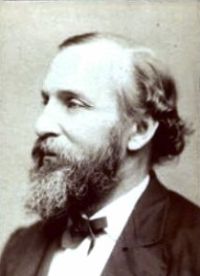 Oliver Optic,
Vine and Olive; Or, Young America in Spain and Portugal
Oliver Optic,
Vine and Olive; Or, Young America in Spain and Portugal
“ Shortly after the Roman republic became an empire, under Augustus,—B.C. 30 to A.D. 14,—war was suspended throughout the Roman empire; and the Spaniards enjoyed a large share of tranquillity from that time till the barbarians poured across the Pyrenees, at the beginning of the fifth century. As a province of the empire, Spain held a high rank. The stupendous Bridge of Alcantara, the well-preserved Theatre of Murviedro, and the celebrated Aqueducts of Segovia and Tarragona, still attest the magnificence of that period. Nor was the peninsula wanting in illustrious men during these times. ”
Albert F. Blaisdell, The Story of American History for Elementary Schools
“ The vast domain claimed by Spain on this continent by right of discovery and exploration comprised the fertile islands of the West Indies, the greater portion of Central and South America, and all that part of our own country west of the Mississippi. In territory, in wealth, in power, the sovereignty of Spain became the mightiest in the world.How are the mighty fallen! The once powerful empire has crumbled into dust. The year 1898 saw its overthrow on this side of the Atlantic and in the Philippines. ”
Oliver Optic,
Vine and Olive; Or, Young America in Spain and Portugal
“ Roman empire a province where the people were more industrious or more prosperous. How strongly this account contrasts with the history of modern Spain! When the Spanish monarchs were aspiring to rule the world, in the sixteenth century, the streets of their cities were overrun with beggars. Only a century ago, the number of people in Spain who were without shirts, because they were too poor to buy such a luxury, was estimated at three millions, or one-third of the population of the kingdom. ”
“ Sea-girdled mother of men! Spain, name of glory and power; Cradle of world-grasping Emperors, grave of the reckless invader, How art thou fallen, my Spain! how art thou sunk at this hour!II. Once thy magnanimous sons trod, victors, the portals of Asia, Once the Pacific waves rushed, joyful thy banners to see; For it was Trajan that carried the battle-flushed eagles to Dacia, Cortés that planted thy flag fast by the uttermost sea.III. Has thou forgotten those days illumined with glory and honor, When the far isles of the sea thrilled to the tread of Castile? ”
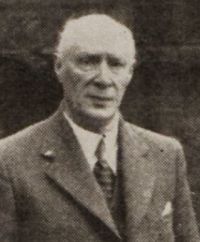 Lewis Spence,
Legends & Romances of Spain
Lewis Spence,
Legends & Romances of Spain
“ We must turn our backs on the scarlet southern land and ascend to the bare heights of Castile and Asturias, where Christian Spain, prisoned for half a thousand years upon a harsh and arid plateau, and wrought to a high passion of sacrifice and patriotism, burst into a glory of martial song, the echoes of which resound among its mountains like ghostly clarions on a field of old encounter.Isolation and devotion to a national cause are more powerful as incentives to the making of romance than an atmosphere of Eastern luxuriance. ”
Waldo David Frank,
Virgin Spain
(1926)
“ Spain has become a receding unity, under a single monarch. Her American possessions wait only the full tide of growth in order to set loose. Castile’s will has leveled Spain. Her huertas give wine and fruit just in the amount to balance the desert dearth about them. Her high towns are fossils of recalcitrance, or backfires smoldering against each other. Although the diapason of will has its home in every Spanish soul, no one city is its symbol. Toledo, Avila, Seville, Barcelona, Jaca, Murcia, Mérida, Oviedo ... they bespeak their pasts, their individual dynamisms, whose sum is zero. ”
Lewis Spence,
Legends & Romances of Spain
“ With the solace of such a treasure-house of poetic and romantic wealth as she possesses, Spain may well rest in assured hope of the return of the brave days in praise of which her trovadores struck the lyre and her poets sang in stately [405] epic. Poor Spain! Nay, golden Spain—enchanted cavern, glowing with the spoil of song, the rainbow treasure of legend, and the gem-like radiance of immortal romance! Her citizens, imperial spirits,Rule the present from the past;On all this world of men inheritsTheir seal is set. ”
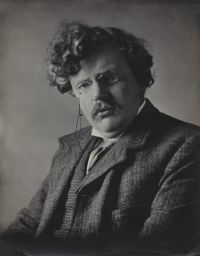 Gilbert Keith Chesterton,
A Short History of England
(1917)
Gilbert Keith Chesterton,
A Short History of England
(1917)
“ Meanwhile those picturesque English privateers who had plagued the Spanish Empire of the New World were spoken of in the South simply as pirates, and technically the description was true; only technical assaults by the weaker party are in retrospect rightly judged with some generous weakness. Then, as if to stamp the contrast in an imperishable image, Spain, or rather the empire with Spain for its centre, put forth all its strength, and seemed to cover the sea with a navy like the legendary navy of Xerxes. ”
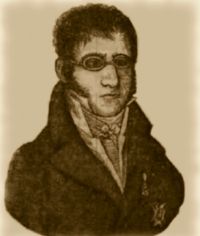 Juan Bautista Arriaza,
Modern Poets and Poetry of Spain
Juan Bautista Arriaza,
Modern Poets and Poetry of Spain
“ Rather than as owing her advances in learning and civilization to the Moors, it is more probable that these were the remains of former civilization, existing among the Roman colonies on the dissolution of the empire. At that time Spain was essentially inhabited by descendants of Romans, as it still continues to be, mainly, to the present day. Latin had become the language of the country, and the best of the later Latin authors, Seneca, Lucan, Martial, Quinctilian and others, were natives of the Peninsula. ”
Arthur Bird, Looking Forward: A Dream of the United States of the Americas in 1999
“ In 1492 Spain had a population of 40,000,000 people,—frugal, industrious and prosperous. In the arts and sciences they led the world in those days. In military science and navigation none could equal them. The discovery of America utterly ruined Spain in less than three hundred years. Spaniards thereafter ceased to depend upon their own energy and resources. Intoxicated by the brilliant discoveries of Columbus, the dazzling conquests of Pizarro, Cortes and De Soto, Spain has endeavored since the fifteenth century to enslave the New World and live upon the sweat of others’ brows. ”
“ The Castle of Tarifa is still kept up, and makes a picturesque object on the Spanish coast, but no corsair watches the approach of the distant sail, and no gun checks her speed; every ship—English, French, or Spanish—passes unmolested on her way between these peaceful shores. Instead of the mutual hatred which once existed between the two sides of the Straits, they are in friendly intercourse, and to-day, under these smiling skies, Spain looks love to Barbary, and Barbary to Spain. ”
Samuel Irenæus Prime, The Alhambra and the Kremlin: The South and the North of Europe
“ For every line we cross, and every city and province we visit, is rich in association, even if the land is now but a great sepulchre of great peoples.And we were in Spain. On the northern frontier, and in instant contact with the people of France, is a race that is Spanish only in name, and hardly that; a race that has, through all the mutations of government in this unstable country, maintained a sort of independence, with rights and privileges, manners and customs so peculiar to themselves, that they may be said to be in Spain, but not of Spain. ”
Preserved Smith, The Age of the Reformation
“ That such an empire as the world had not seen since Rome should within a single life-time rise to its zenith and, within a much shorter time, decline to the verge of ruin, is one of the melodramas of history. Perhaps, in reality, Spain was never quite so great as she looked, nor was her fall quite so complete as it seemed. ”
Waldo David Frank,
Virgin Spain
(1926)
“ But henceforth, German blood suffuses like a golden glow the flesh of{53} Iberia which has already drunk the Celt, the Semite, the Greek, the Latin.There has been no drama. This process is instinctive. Spain lives like a tree with her roots close and her branches harboring the seasons. She has taken to herself the nourishment of wind and rain, the steadfastness of sun. All Spain takes in is Spain. In her own vague life, an Idea has been born, expressive of her chaos. ”
 Kenneth Morris,
The Crest-Wave of Evolution
Kenneth Morris,
The Crest-Wave of Evolution
“ Spain, very soon after Augustus completed its conquest, was producing most of the brightest minds in Latin literature: the influx of important egos had hardly passed from Italy before it began to appear in Spain. Had not Rome become the world metropolis, capable of attracting to herself all elements of greatness from every part of the Mediterranean world, we should think of the first century A.D., as a great Spanish Age. Gaul, too, within a couple of generations of Ceasar's devastating exploits there, had become another Egypt for wealth and industries. ”
