Indiana Territory

Definition and stakes

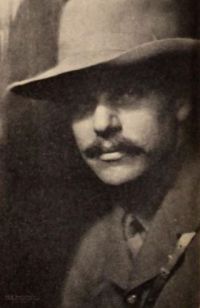
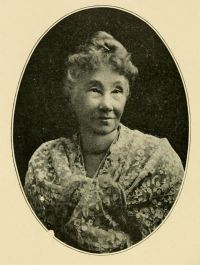
Portrait of Emily Edson Briggs Emily Edson Briggs,  The Olivia Letters

“ What a glorious casket! Away with the cane! The pallor of his countenance is a part of the uncanny mockery of the night. There is no better speaker on the floor of the Senate. His thoughts flow fresh, clear, sparkling, like water from a hill-side spring. It is true, Indiana is a benighted State, morally defective, as seen by her divorces; her territory swampy, with fever and ague a yearly crop. But which is the best harvest a State can yield? Why men, to be sure, and when this fact is considered Indiana need not feel ashamed of herself. ”
Source: Gutenberg

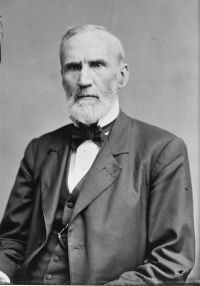
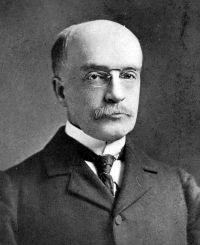
Portrait of John Bach McMaster John Bach McMaster,  A Brief History of the United States

“ INDIANA TERRITORY.—After Wayne's treaty with the Indians, five years brought so many people into the Northwest Territory that in 1800 the western part was cut off and made the separate territory of Indiana. [7] Not 6,000 white people then lived in all its vast area.
The census of 1800 showed that more than 5,000,000 people then dwelt in our country; of these, nearly 400,000 were in the five Western states and territories—Kentucky, Tennessee, Northwest, Indiana, Mississippi.
”
Source: Gutenberg

J. N. Larned,  History for ready reference, Volume 3… (1895)

“ In 1810 the people had increased in numbers to 24,500, and in the newly-erected Territory of Illinois there was an aggregate of 12,300 persons." In 1816 "it was ascertained that the Indiana Territory possessed a population which entitled it to an independent state government. Congress authorized the election of a convention to form a state Constitution," and "the new 'State of Indiana' was formally admitted into the Union on the 19th of April, 1816." Two years later, on the 3d of December, 1818, the Territory of Illinois was similarly transformed and became one of the states of the Union. ”
Source: Gutenberg

Get perspective with Kwize: daily news enlightened by great literature