Inigo Jones

Definition and stakes

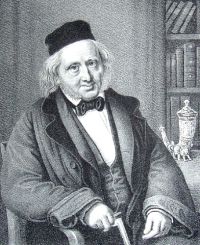
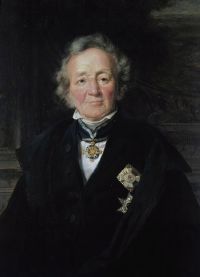
Portrait of Leopold von Ranke Leopold von Ranke,  A history of England principally in the seventeenth century… (1875)

“ Inigo Jones, whom many consider as the man of the greatest artistic talent whom England on the whole has produced, and in whose works we perceive a steady progress from an overcharged romantic style to purer forms, was one of his personal friends. It is easy to see why a man of architectural genius should attach himself to the court, for which he built chapels and banqueting halls, and to Archbishop Laud, who undertook to restore churches in the style of Christian antiquity, rather than to the Puritans [Pg 57] A.D. 1637. ”
Source: Gutenberg

Mrs. A. T. Thomson,  The life and times of George Villiers…

“ In that letter it is stated that Inigo used his “predominant power” at Court to injure Jonson, then bed-ridden and impoverished, as the poet was. Henceforth, Aurelian Townshend, a poet scarcely known, was employed to invent the masques represented at Court, in conjunction with Inigo Jones.
The same year that was marked by the death of Buckingham witnessed poor Jonson’s “fatal stroke,” as he termed it, of palsy. He never recovered this attack of 1628, and his days were overclouded by successive mortifications. Hitherto the city of London had given him a pension for his services.
”
Source: Gutenberg

Portrait of Ben Jonson Ben Jonson,  Sejanus: His Fall

“ On the mechanical and scenic side Jonson had an inventive and ingenious partner in Inigo Jones, the royal architect, who more than any one man raised the standard of stage representation in the England of his day. Jonson continued active in the service of the court in the writing of masques and other entertainments far into the reign of King Charles; but, towards the end, a quarrel with Jones embittered his life, and the two testy old men appear to have become not only a constant irritation to each other, but intolerable bores at court. ”
Source: Gutenberg

Get perspective with Kwize: daily news enlightened by great literature