Italian unification

Definition and stakes

Various,  The Catholic World, Vol. 25, April 1877 to September 1877

“ As for Rome and Italy, their temporal prosperity, so far from being sacrificed, would be promoted, by the re-establishment of the pontifical state and the overthrow of the visionary fabric of Cavour and Mazzini. We certainly desire to see all just national aspirations of the Italians satisfied. We are glad that Austrian domination in Italy has ceased. But all history seems to show that a confederate unity of distinct states is the only order suited to Italy, and that a monarchical unification is foreign and hostile to the genius and conditions of the Italian people. ”
Source: Gutenberg

Various,  The Atlantic Monthly, Volume 07…

“ The entire success of Victor Emanuel and Garibaldi has brought Italian matters to a crisis. Carrying out the policy of Cavour, the King and the Soldier have all but completed the unification of their country, at the very time when the United States are threatened with disunion. The Kingdom of Italy exists at this time, virtually, if not in terms, and contains about twenty-four million people. It comprises the original territories of Victor Emanuel, minus Savoy and Nice, the Two Sicilies, Lombardy, almost the whole of the Papal States, and Tuscany, Parma, and Modena. ”
Source: Gutenberg

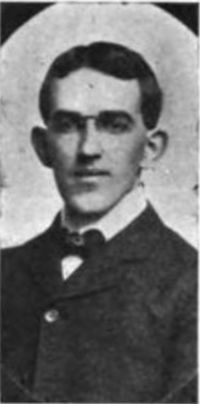
Portrait of Frederic Austin Ogg Frederic Austin Ogg,  The Governments of Europe

“ The Completion of Unification, 1866-1871.—It remained but to consolidate the kingdom and to accomplish the annexation of the two Italian districts, Venetia and Rome, which were yet in foreign hands. Venetia was acquired in direct consequence of Italy's alliance with Prussia against Austria in 1866. A plebiscite of October 21-22, 1866, following the enforced cession of Venetia by Austria, October 3, yielded a vote of 647,246 to 47 for annexation. The union was sanctioned by a decree of November 4, 1866, and ratified by a law of July 18, 1867. ”
Source: Gutenberg

Get perspective with Kwize: daily news enlightened by great literature