James the Apostle

Definition and stakes

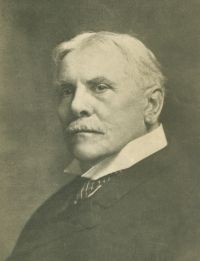
Adam Clarke,  Commentary and critical notes on the Bible… (1800s)

“ Were this unavoidable, it would be useless to make it a subject of regret; but as every man may receive grace from his God to enable him to walk in every respect uprightly, it is to be deplored that so few live up to their privileges. Some have produced these words as a proof that "no man can live without sinning against God; for James himself, a holy apostle speaking of himself, all the apostles, and the whole Church of Christ, says, In many things we offend all." This is a very bad and dangerous doctrine ”
Source: Wikisource

Leighton Pullan,  The Books of the New Testament

“ We can be sure that the James here mentioned is the James who acted as the first bishop of the Church at Jerusalem. The author's designation of himself would not be intelligible unless he meant that he was related to a very prominent man of that name. The writer cannot be the Apostle Jude. He does not claim to be an apostle, and he seems indirectly to repudiate the authority of an apostle by describing himself only in relation to his brother and by referring to "the apostles of our Lord Jesus Christ" in a manner which seems to distinguish them for himself. ”
Source: Gutenberg

Unknown,  A Week of Instruction and Amusement…

“ Gentiles, was the appellation by which all nations were distinguished, that were not Jews, and consequently the Gentiles were Pagans. St. Paul performed many voyages and journies in the service of the Christian religion, and the New Testament history closes A. D. 63, with his release from a two years imprisonment at Rome; no ancient author has left any particulars of the remaining part of this Apostle's life.
The Epistle of St. James was written by that Apostle, who is called James the Less, the son of Alphæus or Cleophat, which are supposed [Pg 74] to be the same name, differently written.
”
Source: Gutenberg

Get perspective with Kwize: daily news enlightened by great literature