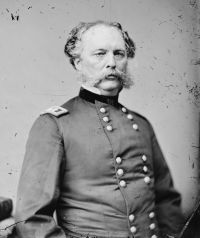
Jean-Baptiste Kléber

Definition and stakes

P. Austin Nuttall,  The Nuttall Encyclopædia

“ Klausthal (9) , in Hanover, 25 m. NE. of Göttingen, is the chief mining town of the northern Hartz Mountains, and the seat of the German mining administration, surrounded by silver, copper, lead, and zinc mines.
Kléber, Jean Baptiste, French general, born at Strasburg; originally an architect, served with distinction in the Revolutionary army, accompanied Bonaparte to Egypt, and was left by him in command, where, after a bold attempt to regain lost ground and while in the act of concluding a treaty with the Turks, he was assassinated by an Arab fanatic (1753-1800) .
”
Source: Gutenberg

John Palmer,  Rudyard Kipling

“ Naturally, therefore, Mr Kipling has succeeded in getting very near to the professional view of soldiering. All Mr Kipling's soldiers take their soldiering as men of business. This was what so terribly astonished and interested Cleever when he met the Infant and heard that after he had killed a man he had felt thirsty and "wanted a smoke too"; and Cleever has been followed in his astonishment by many of Mr Kipling's literary critics.
The greatest study in literature of the professional soldier—though he is infinitely more than that—is Shakespeare's Falstaff.
”
Source: Gutenberg

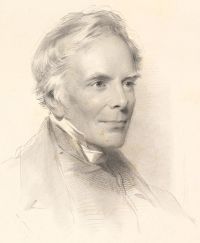
John Henry Overton,  Dictionary of National Biography… (1892)

“ It seems strange that this shy, homely, unambitious man, living so retired a life, should yet have been the prime factor in the great religious movement of his time. Newman emphatically asserts in his ‘Apologia’ that Keble was the ‘true and primary author’ of the Oxford movement. The explanation must be sought in his character and writings. Keble was from first to last a consistent churchman. The principles which he imbibed from his father at Fairford guided him all through his life. ”
Source: Wikisource

Get perspective with Kwize: daily news enlightened by great literature