Jefferson Barracks

Definition and stakes

Edmund Flagg,  Flagg's The Far West, 1836-1837…

“ Our tarry was but a brief one, as the distrust with which our movements were regarded by the villagers was evident; nor is this [149] suspicion at all to be wondered at when we consider the numberless impostures of which, by immigrants, they have been made the victims.
A few miles through groves of oaks brought us in view of that beautiful spot, Jefferson Barracks. The buildings, constructed of stone, are romantically situated on a bold bluff, the base of which is swept by the Mississippi, and were intended to garrison an entire regiment of cavalry for frontier service.
”
Source: Gutenberg

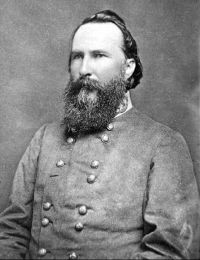
Portrait of James Longstreet James Longstreet,  From Manassas to Appomattox: Memoirs of the Civil War in America

“ I was fortunate in the assignment to Jefferson Barracks, for in those days the young officers were usually sent off among the Indians or as near the borders as they could find habitable places. In the autumn of 1842 I reported to the company commander, Captain Bradford R. Alden, [Pg 18] a most exemplary man, who proved a lasting, valued friend. Eight companies of the Third Infantry were added to the garrison during the spring of 1843, which made garrison life and society gay for the young people and interesting for the older classes. ”
Source: Gutenberg

Jr. Thomas Dixon,  The Victim: A Romance of the Real Jefferson Davis

“ On his graduation, the Second Lieutenant of Infantry, from the State of Mississippi, barely twenty years old, reported for duty to the Jefferson Barracks at St. Louis. [Pg 33]
He was ordered to the frontier to extend the boundaries of the growing Republic—now accompanied by his faithful body servant, James Pemberton.
The Fort, situated on the Wisconsin River, was the northern limit of the Illinois tribe of Indians, and the starting point of all raids against the Iroquois who still held the rich lands around the village of Chicago.
”
Source: Gutenberg

Get perspective with Kwize: daily news enlightened by great literature