John Howland

Definition and stakes

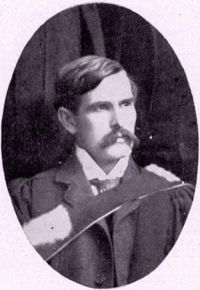
Portrait of Pelham Edgar Pelham Edgar,  Dictionary of National Biography… (1912)

“ HOWLAND, Sir WILLIAM PEARCE (1811–1907) , Canadian statesman, born at Paulings, New York, on 29 May 1811, was son of Jonathan Howland, a descendant of John Howland, who migrated from England in 1620. His mother's maiden name was Lydia Pearce. After education at the common school of his native place and at Kinderhook Academy, Howland went to Canada in 1830 and found employment in a general store at Cooksville, Ontario. His business interests rapidly grew, and in association with his brother Peleg he soon owned a number of country stores, and made large profits in lumbering and rafting ventures. ”
Source: Wikisource

Azel Ames,  The Mayflower and Her Log; July 15…

“ John Howland was possibly of kin to Carver and had been apparently some years in his family. Bradford calls him a “man-servant,” but it is evident that “employee” would be the more correct term, and that he was much more than a “servant.” It is observable that Howland signed the Compact (by Morton’s List) before such men as Hopkins, the Tilleys, Cooke, Rogers, and Priest, which does not indicate much of the “servant” relation. His antecedents are not certainly known, but that he was of the Essex family of the name seems probable. ”
Source: Gutenberg

Frank H. Perkins,  Handbook of Old Burial Hill, Plymouth… (1902)

“ For us they languish, & for us they die
And shall they languish shall they die in vain.
Readers of “Dr. Le Baron and His Daughters” will recall the following reference to the graves of the Howland family:—
[Pg 26]
Consider Howland slept with his fathers on Burying Hill, and Ruth Bryant, his loving wife, had meekly followed him thither. You may see their stones today, in the shadow of that majestic though mistaken monument to the memory of John Howland, the Pilgrim, who married Elizabeth Tilley, and not Ellzabeth, daughter of childless Governor Carver.
”
Source: Gutenberg

Get perspective with Kwize: daily news enlightened by great literature