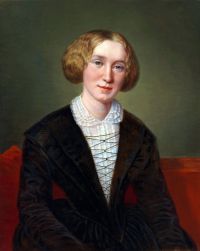
John Penn

Definition and stakes

Marcus Benjamin,  Appletons' Cyclopædia of American Biography… (1900)

“ In addition, the British government created an annuity of £4,000, which has only recently been commuted. John Penn's branch of the family was entitled to a fourth of these sums, and the estates in Philadelphia and elsewhere were considerable; so that he was enabled to live comfortably the rest of his life at “Lansdowne,” or at his city residence. He was buried ander the floor of Christ church, Philadelphia, but his remains were afterward removed to England.—A grandson of the founder, son of Richard, was Richard, lieutenant-governor of Pennsylvania, b. in England in 1735 ”
Source: Wikisource

L. Carroll Judson,  The Sages and Heroes of the American Revolution

“ As a counsellor and advocate he stood on a commanding eminence. His forensic eloquence was strongly pathetic. The court and jury were often suffused with tears when listening to his appeals. As a patriot and statesman he stood approved by his country. [Pg 294] His disposition was mild and benevolent—his purposes pure and firm. He was a good and honest man. Let the young men who are just stepping on the stage of action imitate John Penn in his successful efforts to be useful. Banish the doctrine that power shall be monopolized by a few. ”
Source: Gutenberg

Charlotte Fell Smith,  Dictionary of National Biography… (1895)

“ Subsequently he became an assistant clerk in the war department, and received a pension on retirement. On 24 June 1791 he married, and settled in London. In 1834 he succeeded his brother, John Penn (1760–1834) [q. v.] , in the estates of Stoke Park, Buckinghamshire, and Pennsylvania Castle, Portland. He was a member of the Outinian Society, founded by his brother, John Penn. He was in the commission of the peace for Buckinghamshire. Penn died at Stoke Park on 28 Sept. ”
Source: Wikisource

Get perspective with Kwize: daily news enlightened by great literature