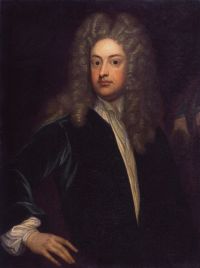
Juba II of Mauretania

Definition and stakes

1911 Encyclopædia Britannica (1911)

It retained its independence till the time of Augustus, who in 25 B.C. bestowed the sovereignty of the previously existing kingdom upon Juba II., king of Numidia, at the same time uniting it with the western portion of Numidia, from the Mulucha to the Ampsaga, which received the name of Mauretania Caesariensis, while the province that had previously constituted the kingdom, or Mauretania proper, came to be known as Mauretania Tingitana (see Mauretania) .
Source: Wikisource

Karl Baedeker The Mediterranean (1911)

Cherchell occupies the site of the ancient Phœnician colony of Iol. From the year 25 B. C. it took the name of Caesarea, and in the Roman imperial age it became the capital of Mauretania and residence of Juba II. (25 B. C. to 22 A. D.) , one of the most learned and enlightened men of his time, under whom it rapidly rose to importance. Under Emp. Claudius it became the provincial capital, under the name of Colonia Claudia Caesarea, of Mauretania Cæsariensis, and in rivalry with Carthage and Hippo Regius (p. 309) grew to be one of the greatest and wealthiest cities of N. Africa.
Source: Gutenberg

1911 Encyclopædia Britannica, Volume 12… (1911)

Pliny the Elder, deriving his knowledge from the accounts of Juba, king of Mauretania, states that when visited by the Carthaginians under Hanno the archipelago was found by them to be uninhabited, but that they saw ruins of great buildings. This would suggest that the Guanches were not the first inhabitants, and from the absence of any trace of Mahommedanism among the peoples found in the archipelago by the Spaniards it would seem that this extreme westerly migration of Berbers took place between the time of which Pliny wrote and the conquest of northern Africa by the Arabs.
Source: Wikisource

Get perspective with Kwize: daily news enlightened by great literature