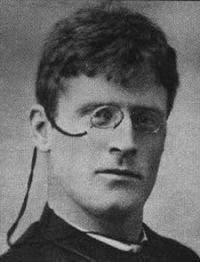
Knut Hamsun

Definition and stakes

Hanna Astrup Larsen Knut Hamsun

Underneath the brightness and levity there is a consciousness of superstitions that are felt sometimes as dark and sinister forces waiting to drag men away from the light into the gloomy void where the evil powers reign. The boy Knut Hamsun's nature was like a sensitive stringed instrument vibrating to the faintest breath of nature's moods, and we find in his works the nervousness, the quick transitions, and the swinging between extremes of exaltation and despair which belong to the Nordland type.
Source: Gutenberg

Hanna Astrup Larsen Knut Hamsun

One has made them vikings, explorers, seafarers, and pioneers; the other has made them home-builders and tillers of the soil. One is restless, impatient of restraint, avid for new experiences and for ever-shifting forms of life; the other longs for the homeland, and seeks to strike roots deep in the spot of earth made sacred by the toil of the forefathers.
In Knut Hamsun both these tendencies are present and are accentuated by his double racial heritage, his birth in an old peasant family of Gudbrandsdalen and his upbringing among the lively, adventurous fisherfolk of Nordland.
Source: Gutenberg

W.W. Worster Knut Hamsun (December 1920)

These, then, are the steps of Hamsun's progress as an author, from the passionate chaos of Sult to the Miltonic, monumental calm of Growth of the Soil. The stages in themselves are full of beauty; the wistfulness of Pan and Victoria, the kindly humour of Svoermere and Benoni, the autumn-tinted resignation of the Wanderer with the Mute — they follow as the seasons do, each with a charm of its own, yet all deriving from one source. His muse at first is Iselin, the embodiment of adolescent longing, the dream of those "whom delight flies because they give her chase."
Source: Wikisource

Get perspective with Kwize: daily news enlightened by great literature