Kuruman

Definition and stakes

1911 Encyclopædia Britannica (1911)

“ In the middle period of the 19th century Kuruman was the rendezvous of all travellers going north or south. Of these the best known is David Livingstone. The trunk railway line passing considerably to the east of the town, Kuruman is no longer a place of much importance. It is pleasantly situated on the upper course of the Kuruman river, being beautified by gardens and orchards, and presents a striking contrast to the desert conditions of the surrounding country. ”
Source: Wikisource

Andrew A. Anderson,  Twenty-Five Years in a Waggon in South Africa…

“ And when I first knew the country, twenty years ago, it was nearly unknown to the white man, except the missionaries, who had their stations at Kuruman, Lekatlong, Bakclaris, and Matetong, and some half-dozen traders passing through Kuruman, from Hope Town, in the Cape Colony, to the Bechuana chiefs living to the north. This little-known region then was one of the most pleasant and agreeable parts of Africa to visit and explore. The natives, more particularly at Kuruman and those to the north, were most friendly and kind. Like all native tribes, they do not forget to beg of the white man. ”
Source: Gutenberg

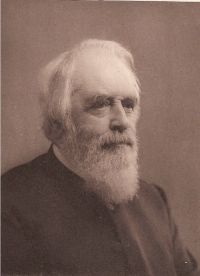
Portrait of William Garden Blaikie William Garden Blaikie,  The Personal Life of David Livingstone…

“ Kuruman, the entire population of which amounted in 1853 to 638 souls, enjoys and has enjoyed the labors of at least two missionaries,--four sermons, two prayer-meetings, infant schools, adult schools, sewing schools, classes, books, etc., and the amount of visible success is very gratifying, a remarkable change indeed from the former state of these people. Yet the dregs of heathenism still cleave fast to the minds of the majority. They have settled deep down into their souls, and one century will not be sufficient to elevate them to the rank of Christians in Britain. ”
Source: Wikisource

Get perspective with Kwize: daily news enlightened by great literature