
“ Cecilia laughed a little. ‘Why should you fear that?’ she asked. ‘Because I am extremely anxious for your good opinion,’ he replied,—‘and, of course, for Lady Eliza’s also.’ ‘I have no doubt you have got it,’ she said lightly. ‘You are not speaking for yourself, Miss Raeburn. I hope that you think well of me.’ ‘Your humility does you credit.’ ‘I wish you would be serious. It is hard to be set aside by those whom one wishes to please.’ ‘But I do not set you aside. You are speaking most absurdly, Mr. Fordyce,’ said Cecilia, who was growing impatient. ”
Quotes about “Lady Cecilia”
Samuel Warren, Ten Thousand a-Year. Volume 3
“ Lady Cecilia had not vouchsafed to consult her before her Ladyship had finally committed herself to Titmouse; and, after that, interference was useless and unwarrantable.Lady Cecilia late one afternoon entered her dressing-room pale and dispirited, as had been latterly her wont; and, with a deep sigh, sank [Pg 127] into her easy-chair. Annette, on her Ladyship's entrance, was leaning against the window frame, reading a book, which she immediately closed and laid down. "What are you reading there?" inquired Lady Cecilia, languidly. ”
“ Though she forced herself to be civil to Gilbert Speid, and felt no actual enmity towards him, everything to do with him was hateful to her. Cecilia, whom she loved as a daughter, and to whom she clung more closely with each passing year, would be cut off from her, not in love nor in gratitude, as she knew well enough, but by the barrier of such surroundings as she, Lady Eliza, could never induce herself to penetrate. ”
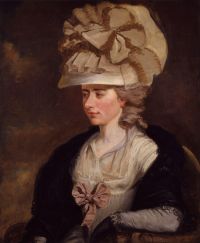 Frances Burney,
Cecilia/Book 10 — Book 10/Chapter x…
(1782)
Frances Burney,
Cecilia/Book 10 — Book 10/Chapter x…
(1782)
“ The upright mind of Cecilia, her purity, her virtue, and the moderation of her wishes, gave to her in the warm affection of Lady Delvile, and the unremitting fondness of Mortimer, all the happiness human life seems capable of receiving:—yet human it was, and as such imperfect! ”
Frances Burney,
Cecilia — Book 6/Chapter vii: AN ANECDOTE
(1782)
“ Not only Cecilia, but Mrs Delvile herself was now overpowered, and she sat for some time wholly silent and confounded; Lady Honoria then, turning to Cecilia exclaimed, "Bless me, Miss Beverley, what are you about! why that flower is the most ridiculous thing I ever saw! you have spoilt your whole work." ”
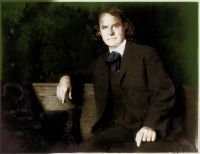 Elbert Hubbard,
Little Journeys to the Homes of the Great - Volume 06
Elbert Hubbard,
Little Journeys to the Homes of the Great - Volume 06
“ True to the central impulse of her soul the Dark Ages rightly called her Cecilia, and then Saint Cecilia, mother of sacred music, and later she ministered to men as Melania, the Nun of Tagaste; next as that daughter of William the Conqueror, the Sister of Charity who went throughout Italy, Spain and France and taught the women of the nunneries how to sew, to weave, to embroider, to illuminate books, and make beauty, truth and harmony manifest to human eyes. And so this Lady of the Beautiful Hands stood to Leonardo as the embodiment of a perpetual life ”
Samuel Warren, Ten Thousand a-Year. Volume 2
“ Lady Cecilia's icy coldness—her petrifying indifference of manner, her phlegmatic temperament and lofty pride, were qualities, all of which were calculated rather to check than encourage the advances of a suitor, especially of such an one as Titmouse; but, though the earl did not know it, there were others whose ardor and impatience to possess themselves of such superior loveliness, could not be similarly restrained or discouraged. Will not the reader find it difficult to believe, that Mr. ”
“ Come here, Cecilia. I can’t hear my own voice for this screeching limmer. (Be quiet, girl!) What is it, Cecilia? Can’t you answer, child?’ The maid had all the temperament of the female domestic servant, and was becoming hysterical. [71] ‘Put her out!’ cried Lady Eliza. ‘Cecilia! put her into the passage.’ ‘There’s a man downstairs,’ sobbed the maid, who had talked herself into a notion that Macquean was a poacher trying to effect an entrance into the house. ‘A man, is there? ”
F. Marion Crawford, Cecilia: A Story of Modern Rome
“ The preparations for the wedding went on, and the Countess made up her mind that it should take place at the end of July. It would be so much more convenient to get it over at once, and the sooner Cecilia returned from her honeymoon, the sooner her mother could see her again. The good lady knew that she should be very unhappy when she was separated from the child she had idolised all her life; but she had always looked upon marriage as an absolute necessity, and after being married twice herself, she was inclined to consider it as an absolute good. ”
Frances Burney,
Cecilia — Book 8/Chapter ix: A SHOCK
(1782)
“ She lost in Mrs Charlton a friend, whom nearly from her infancy she had considered as a mother, and by whom she had been cherished with tenderness almost unequalled. She was not a woman of bright parts, or much cultivation, but her heart was excellent, and her disposition was amiable. Cecilia had known her longer than her memory could look back, though the earliest circumstances she could trace were kindnesses received from her. Since she had entered into life, and found the difficulty of the part she had to act, to this worthy old lady alone had she unbosomed her secret cares. ”
Frances Burney,
Cecilia — Book 9/Chapter i: A COGITATION
(1782)
“ Cecilia, compelled thus to travel with only her Ladyship and Miss Bennet, had a journey the most disagreeable, and determined, if possible, to stay in London but two days. She had already fixed upon a house in which she could board at Bury when she returned, and there she meant quietly to reside till she could enter her own.Lady Margaret herself, exhilarated by a notion of having outwitted her husband, was in unusual good spirits, and almost in good humour. ”
Frances Burney,
Cecilia — Book 4/Chapter x: A MURMURING
(1782)
“ But I may thank myself, for if I had but been content to see him brought up in the shop—yet all the world would have cried shame upon it, for when he was quite a child in arms, the people used all to say he was born to be a gentleman, and would live to make many a fine lady's heart ache.""If he can but make your heart easy," said Cecilia, smiling, "we will not grieve that the fine ladies should escape the prophecy.""O, ma'am, I don't mean by that to say he has been over gay among the ladies, for it's a thing I never heard of him ”
Frances Burney,
Cecilia — Book 7/Chapter i: A RENOVATION
(1782)
“ Cecilia, however, to quitting the house, determined not to visit it again very speedily; for she was extremely disgusted with Lady Margaret, though she suspected no particular motives of enmity, against which she was guarded alike by her own unsuspicious innocence, and by an high esteem of Mr Monckton, which she firmly believed he returned with equal honesty of undesigning friendship. ”
Cecilia Pauline Cleveland, The Story of a Summer
“ When we were upon the croquet ground, I had an opportunity to admire Lela's toilette. A born Queen of Fashion, her dresses even when as a school-girl were my admiration, and her toilette for my birthday showed the refinement of delicacy and taste: for, not wishing to be the only lady present in colors, she wore a black grenadine, with black bows and a black lace hat; her diamond ear-drops and one half-blown deep red rose alone testifying that her mourning robe was only worn through sympathy. ”
F. Marion Crawford, Cecilia: A Story of Modern Rome
“ The Countess did not care a straw for titles, for she had lived in a world where they are as plentiful as figs in August; but to be the mother of a king's second cousin was something worth living for, and she herself would be the mother-in-law of an ex-King's son, which would have made her the something-in-law of the ex-King himself, if he had been alive. Yet she cared very little for herself in comparison with Cecilia. She was only a vicarious snob, after all, and a very motherly and loving one, with harmless faults and weaknesses which every one forgave. ”
Cecilia Pauline Cleveland, The Story of a Summer
“ Sunday is, I think, a very triste day in the country (low be it spoken) . I cannot remain longer than an hour at church, for the Mass is a low one, and the sermon consists of fifteen minutes of plain, practical instruction, unembellished by rhetoric, to the congregation. The church, it is true, is four miles distant, but Gabrielle's aristocratic ponies, Lady Alice and The Duchess, fairly fly over the ground—up or down hill, it is immaterial to them—and consequently, I find myself, when my religious duties are over, with many idle hours upon my hands. ”
F. Marion Crawford, Cecilia: A Story of Modern Rome
“ Everything had been ready for their departure several days ago."You do not really mean to leave Rome till Guido—I mean, till Signor d'Este is out of all danger, do you?" asked the young girl."My dear, since you are not going to marry him, what difference can it make?" asked the Countess, unconsciously heartless. "The sooner we go, the better. You are as pale as a sheet and as thin as a skeleton. You will lose all your looks if you stay here!"Cecilia was in a loose white silk garment with open sleeves. ”
Elizabeth G. Jordan, Tales of the Cloister — Under the Black Pall (1901)
“ She must remain a lie until the end—a nun mistaken in her vocation, with no love for it in her heart, yet respected by her associates and pupils for the qualities she had not. She was an impostor! Nature or God, or both, had shown it to her here, in the sanctuary she was profaning by her vows. Above her the music throbbed tremulously. A single voice, Sister Cecilia's, took up the organ's refrain and carried it forward with a suggestion of triumph in the rich tones. Her face was raised to the arched dome of the chapel, and in her pure eyes burned the light of religious exaltation. ”
F. Marion Crawford, Cecilia: A Story of Modern Rome
“ Cecilia said. "He is very ill, and it is my fault."The Countess was horrified at the suggestion."My dear child," she cried, "you are quite mad! Why, the poor man is in bed, of course!""I hope so," Cecilia answered unmoved. "But Signor Lamberti could carry him to his sitting room.""Who ever heard of such a thing!""We could go in a cab, with thick veils," Cecilia continued. "No one would ever know.""Think of Petersen, my dear! Women of our class do not wear thick veils in the street. For heaven's sake put this absurd idea out of your head." ”
F. Marion Crawford, Cecilia: A Story of Modern Rome
“ The good Countess blushed at the thought."They are only women!" said Cecilia. "Why should I not look at them?""Because they are horrid," answered the Countess. "But I must say I saw nothing of the sort in Guido's rooms. Nevertheless, I felt like the wicked ladies in the French novels, who always go out in thick veils and have little gold keys hidden somewhere inside their clothes. It must be very uncomfortable."She prattled on and her daughter scarcely heard her. All sorts of hard questions were presenting themselves to Cecilia's mind together. ”
Frances Burney,
Cecilia — Book 9/Chapter x: A RELATION
(1782)
“ My expectations for my son had "outstepped the modesty of" probability. I looked for rank and high birth, with the fortune of Cecilia, and Cecilia's rare character. Alas! a new constellation in the heavens might as rationally have been looked for!My extravagance, however, has been all for his felicity, dearer to me than life,—dearer to me than all things but his own honour! Let us but save that, and then let wealth, ambition, interest, grandeur and pride, since they cannot constitute his happiness, be removed from destroying it. ”
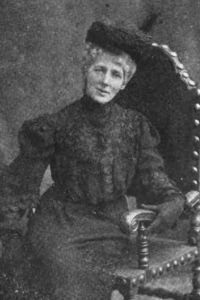 Mrs. Hugh Fraser,
Italian Yesterdays, vol. 1
Mrs. Hugh Fraser,
Italian Yesterdays, vol. 1
“ Raised on a daïs hung with rich silk, surrounded with lighted tapers that shed a soft glow all around, half smothered in flowers, Cecilia lay there while all Rome, beside itself with joy, came to gaze upon her and entreat her prayers. No perfumes were permitted to be used, since the heavenly fragrance of roses and lilies still emanated from the coffin. The nuns knelt round her for a guard of honour, and soon the great Pope Clement VIII, who had barely recovered from a severe illness, travelled in from Frascati to pray beside her. ”
F. Marion Crawford, Cecilia: A Story of Modern Rome
“ Surely, by this time you must have made up your mind.""I have only known him a fortnight, mother. That is not a long time when one is to decide about one's whole life, is it?""No. Well—it seems to me that a fortnight—you see, it is so important!""Precisely," Cecilia answered. "It is very important. That is why I do not mean to do anything in a hurry. Either you must tell Signor d'Este to wait a little while before he asks me, or else, when he does, I must beg him to wait some time for his answer." ”
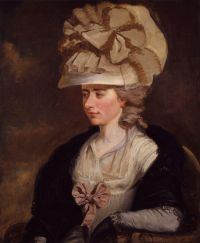 Fanny Burney,
Cecilia; Or, Memoirs of an Heiress…
Fanny Burney,
Cecilia; Or, Memoirs of an Heiress…
“ And you, pure as you are of mind, and steadfast in principle, what would your chance be of happiness with a man who never erring till he knew you, could never look at you without regret, be his fondness what it might?” “Oh madam,” cried the greatly shocked Cecilia, “let him, then, see me no more!—take, take him all to yourself! forgive, console him! I will not have the misery of involving him in repentance, nor of incurring the reproaches of the mother he so much reverences!” “Exalted creature!” cried Mrs Delvile; “tenderness such as this would confer honour upon a monarch.” ”
F. Marion Crawford, Cecilia: A Story of Modern Rome
“ The most maidenly girl of eighteen knows when a man is waiting for an opportunity to ask her to be his wife, whereas most young men who are much in love do not know exactly when they are going to put the question, and are often surprised when it rises to their lips. Cecilia considered that issue a foregone conclusion. The vital matter was to find out her own answer.She had never known any man, since her step-father died, whom she liked nearly as much as Guido, and she had met more interesting and gifted men before she was really in society than most women ever know in a lifetime. ”
“ Nevertheless, as Cecilia possessed a generous disposition, an elevated mind, a lively imagination, and a due share of pride, she had a passionate admiration for high and noble actions, and even a great desire to imitate them, sometimes saying that she would give everything in the world for an opportunity of becoming a heroine. "Provided," her mother would add with a smile, "that your acts of heroism never exposed you to the chance of being scratched by a thorn, or to the necessity of walking a few steps in uneasy shoes." ”
F. Marion Crawford, Cecilia: A Story of Modern Rome
“ Cecilia told her mother what Lamberti had advised her to do for Guido's sake, and that she had sent her message by him. The Countess was surprised and did not quite like the plan."Either you love him, or you do not, my dear," she said. "You were sure that you did not, and you told him so. That was sensible, at least, though I think you might have found out earlier what you felt. It is much better to let him understand at once that you will not marry him. Men would always rather know the truth at once and get over it than be kept dangling at a capricious woman's beck and call." ”
F. Marion Crawford, Cecilia: A Story of Modern Rome
“ If she had studied men for ten years she could not have found word or look more certain to touch him and win him to her way."Thank you," he said, rather curtly, for he was thinking of another answer. "If I take you to Guido, what shall you say to him?"She drew herself up against the back of the sofa, but the smile still lingered on her lips."You must trust me, too," she answered. "Do you think I can compose set speeches beforehand? When shall we go? How is it to be managed?""You often go out with your maid, do you not? What sort of woman is she? A dragon?""No!" Cecilia laughed. ”
Fanny Burney,
Cecilia; Or, Memoirs of an Heiress…
“ At night, with less sadness than usual, she retired to rest. In her sleep she bestowed riches, and poured plenty upon the land; she humbled the oppressor, she exalted the oppressed; slaves were raised to dignities, captives restored to liberty; beggars saw smiling abundance, and wretchedness was banished the world. From a cloud in which she was supported by angels, Cecilia beheld these wonders, and while enjoying the glorious illusion, she was awakened by her maid, with news that Mrs Charlton was dying! ”
F. Marion Crawford, Cecilia: A Story of Modern Rome
“ He is mine, and I know what his friendship is worth. You will find out, as I have, that if he is sometimes indolent and slow to make up his mind, he never changes afterwards. You may be separated from him for a year or two, but you will find him always the same when you meet him again, always gentle, always true, always the most honourable of men.""He is that, and more," Cecilia said softly. "I like everything about him.""And he loves you," Lamberti continued. "He loves you as men do not often love the women they marry, and as you, with your fortune, may never be loved again." ”
