Law of Moses

Definition and stakes

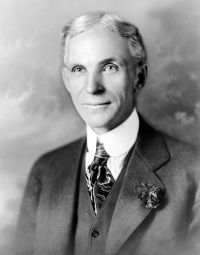
Portrait of F. W. Farrar F. W. Farrar The Expositor's Bible: The First Book of Kings

The law of Moses—the ten words which constituted the inmost preciousness of his legislation—was, alas! a violated law. For the disobedient it had no message but the wrathful menace of death. But to show that God has not abandoned His disobedient children, but would still enable them to keep that law, and to repent for its transgression, the cherubim are there. Their presence on the propitiatory was meant to reveal the glory of the gospel.
Source: Gutenberg

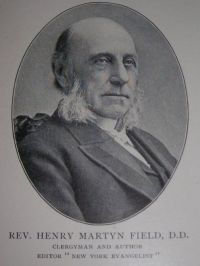
Alexander McCaul The old paths, or the Talmud tested by Scripture (1880)

If the oral law be mistaken, and mistaken it is if Moses spoke truth, their eternal salvation is forfeited by every one who follows it. We therefore entreat every reader of this paper to take up the law of Moses, and to investigate this question:—“What are the conditions of blessing and cursing, of life and death, according to the declarations of Moses? Does he promise life to that man whose merits exceed his sins, or does he require universal obedience?” To Moses himself we appeal, and him we constitute the arbiter of our differences.
Source: Gutenberg

Hebraic Literature; Translations from the Talmud…

God will not change or alter His law forever. He will never change the law of Moses our Rabbi—peace be unto him! The law will suffer no addition or diminution (but it will abide even) , as the prophet Malachi sealed it with the seal of the prophets in ending his words (Mal. iv. 4) , "Remember ye the law of Moses My servant, which I commanded unto him in Horeb for all Israel." Formerly the law was in a garment of light, but in consequence of sin, the law became materialized in a garment of skin, in the same proportion as man became materialized in a body of flesh.
Source: Gutenberg

Get perspective with Kwize: daily news enlightened by great literature