Lewis and Clark Expedition

Definition and stakes

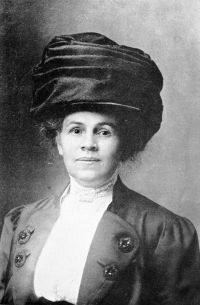
Portrait of Eva Emery Dye Eva Emery Dye The Conquest: The True Story of Lewis and Clark

The Americans had knives in their belts, pistols in their holsters, knapsacks on their backs, powder horns and pouches of ammunition, ink horns and quills, ready to face the wilderness and report. Lewis encouraged every one to keep a journal.
"I niver wint to school but nineteen days in me boyhood and that was whin I was a man," said Patrick Gass. But what Pat lacked in books he made up in observation and shrewd reasoning; hence it fell out that Patrick Gass's journal was the first published account of the Lewis and Clark expedition.
Source: Gutenberg

Oregon Historical Society The Quarterly of the Oregon Historical Society…

It is, surely, not preposterous to expect a revision of the verdict of history on the significance of the Lewis and Clark expedition. Henry Adams, than whom no scholar has done better work on the history of the United States, in volume IV of his history, with date mark, 1890, speaks of the Lewis and Clark expedition in this wise: "The crossing of the continent was a great feat, but it was nothing more. * * Great gains to civilization could be made only on the Atlantic coast under the protection of 8 civilized life."
Source: Gutenberg

Portrait of Eva Emery Dye Eva Emery Dye The Conquest: The True Story of Lewis and Clark (1902)

As Cameahwait had said, the way was utterly impracticable.
"I name this great branch of the Columbia for my comrade, Captain Lewis," said Clark.
Back from the Snake River, Clark found L ewis buying horses. The Shoshone women were mending the men's moccasins. The explorers were making pack-saddles of rawhide. For boards they broke up boxes and used the handles of their oars.
"I have ever held this expedition in equal estimation with my own existence," said Lewis, urging on the preparations. "If Indians can pass these mountains, we can."
Source: Wikisource

Get perspective with Kwize: daily news enlightened by great literature