“ But the Maidenhead reach is spoilt for fastidious people by its too great popularity. To those who love the river for itself, the endless passing and repassing, the impossibility of finding quiet, undisturbed corners, the noise and merrymaking, even the sight of too many fellow creatures, is a burden. From this the part above Marlow is protected by being less accessible. It is too far to be reached easily from Maidenhead, and those who come by train have an awkward change at a junction ”
Maidenhead
Definition and stakes
Maidenhead, a riverside locale on the Thames, appears in literature both as a physical location and a symbolic image. Authors like G. E. Mitton lament its bustling charm, while Lloyd Osbourne evokes its peaceful appeal as a backdrop for narrative tension.
Etymological studies, such as Harold Bayley’s, connect it to ancient dedications to “the Maid,” merging geography with legend. From Shakespeare’s whimsical use of “maidenheads” to historical references to figures like Maitland, the theme weaves local character with wider cultural significance, showing how place both influences and is influenced by human narratives.
Quotes about “Maidenhead”
“ Mr Edward Hugh Bloomfield having announced his intention to stay in the neighbourhood of Maidenhead, what more probable than that the Maestro Jimson should turn his mind toward Padwick? Near this pleasant riverside village he remembered to have observed an ancient, weedy houseboat lying moored beside a tuft of willows. ”
Harold Bayley, Archaic England
“ Not only does Long Meg of Cumberland stand upon Maiden Way, but there is in the same district a Maidenmoor probably like Maidenhead or Maidenheath, a heath or mead dedicated to the Maid. Our dictionaries define the name May as a contraction of either Mary or Margaret, i.e., Meg: in the immediate neighbourhood of Long Meg is another circle called Mayborough, of which the vallum or enclosure is composed of stones taken from the beds of the Eamount or Eden rivers ”
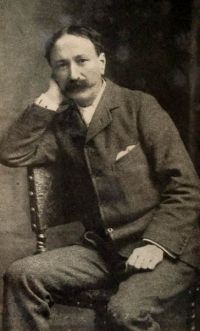 Morley Roberts,
The private life of Henry Maitland…
(1912)
Morley Roberts,
The private life of Henry Maitland…
(1912)
“ This passage I never read; but, when Maitland told me of it, it struck me greatly and remained in my mind. These influences are one of the great uses of literary companionship among men of letters. As Henry Maitland used to say: "We come together and strike out sparks." As I went north by train from St. Pée d'Ascain to Bordeaux, passing ancient Dax and all the sombre silences of the wounded serried rows of pines which have made an infertile soil yield something to commerce, Maitland's spirit, his wounded and often sickly spirit, was with me. ”
 William Shakespeare,
Romeo and Juliet
(1597)
William Shakespeare,
Romeo and Juliet
(1597)
“ 'Tis all one. I will show myself a tyrant. When I have fought with the men, I will be cruel with the maids- I will cut off their heads. Greg. The heads of the maids? Samp. Ay, the heads of the maids, or their maidenheads. ”
H. A. L. Fisher, Frederick William Maitland, Downing Professor of the Laws of England
“ That wet Sunday made Maitland a welcome guest at the Stephen's house; and it brought other happiness in its train. In 1886 Maitland was married in the village church of Brockenhurst, Hants, to Florence Henrietta, eldest daughter of Mr Herbert Fisher, some time Vice Warden of the Stannaries, and niece of Mrs Leslie Stephen. Two daughters, the elder born in 1887, and the younger in 1889, were the offspring of the marriage. ”
 George Burton Adams,
The History of England from the Norman Conquest to the Death of John…
George Burton Adams,
The History of England from the Norman Conquest to the Death of John…
“ Queen Matilda, "acting the part of a man," advanced with her forces to the neighbourhood of the city and brought home to the burghers the evils of civil war. They were easily moved. A sudden uprising of the city forced the Empress to "ignominious" flight, leaving her baggage behind. She retreated to Oxford, and Matilda the queen entered the recovered city. Geoffrey de Mandeville at once brought his allegiance to the new market and obtained, it is probable, another advance of price and Henry of Winchester was easily persuaded to return to his brother's side. ”
William Platt, Stories of the Scottish Border
“ Never will we bow to the conquerer. Let us go, my two brothers, and try our chance in an adventure?" Thereupon they saddled two black horses and a grey, and rode before day-dawn to King Edward's army. Arrived there, they hovered round, and Maitland begged to be allowed to carry the king's standard, the Golden Dragon."Where wast thou born and bred, and in what country?" demanded the knight who bore the banner. "I was born in the north of England," answered Maitland; "my father was a knight and my mother a lady, and I myself am a squire of high renown, and may well carry the banner of a king." ”
Morley Roberts,
The private life of Henry Maitland…
(1912)
“ Such as are interested in the art of letters, and in those who practise in the High Court of Literature, will perceive what we had in our minds. Here is life, not a story or a constructed diary, and the art with which it is done is a secondary matter. If Henry Maitland bleeds and howls, so did Philoctetes, and the outcry of Henry Maitland is more pertinent to our lives. For all life, even at its best, is tragic; and there is much in Maitland's which is dramatically common to our world as we see it and live in it. ”
H. A. L. Fisher, Frederick William Maitland, Downing Professor of the Laws of England
“ With health so broken that even the summers in England seldom passed without periods of illness and pain Maitland embarked upon one of the great undertakings of his life, an edition of the Year Books of Edward II. "These Year Books are a precious heritage. They come to us from life. Some day they [Pg 164] will return to life once more at the touch of some great historian." The spirit in which Maitland approached the work is indicated by two quotations, the first from Roger North, the second from Albert Sorel, which are printed on the title page of each volume. ”
Morley Roberts,
The private life of Henry Maitland…
(1912)
“ I have often thought since that Maitland felt that most of his disasters sprang from the premature death of his father, whom he loved so tenderly. Indeed the elder man must have been a remarkable figure, a gentle, courtly, and most kindly man, himself born in exile and placed in alien circumstances. Maitland often used to speak, with a catch in his voice, of the way his father read to him. I remember not what books, but they were the classic authors of England; Shakespeare, Wordsworth, and Tennyson. Some seem to imagine that the father had what is called a well-stocked library. ”
Morley Roberts,
The private life of Henry Maitland…
(1912)
“ Several people came to me with proposals about a book on Henry Maitland. One of the partners of a big publishing house made me a definite offer for it on behalf of his firm. On the other hand one of his executors, Miss Kingdon, a most kindly and amiable and very able woman employed in a great accountant's office in the city, who had done very much for Henry Maitland in his later life, begged me not to do the book, or if I did it to hold it over until her responsibilities as executrix and trustee for the sons were at an end. ”
Morley Roberts,
The private life of Henry Maitland…
(1912)
“ And Maitland knew that had his father lived he would never have been thrown alone into the great city of Moorhampton, "Lord of himself, that heritage of woe." Not all women understand the dangers that their sons may meet in such surroundings, and those who had charge of Henry Maitland's future never understood or recognized them in his youth. ”
Morley Roberts,
The private life of Henry Maitland…
(1912)
“ As I have said, I think that Maitland was really incapable of a great passion, and I am sure that he would have put up with the merest haus-frau, if she had known her work and possessed her patient soul in quiet without any lamentations. If there was any lamenting to be done Maitland himself might have done it in choice terms not without humour. And indeed he did lament, and not without cause. On my first visit to Ewell after his return from Devon I again met Mrs. Maitland. ”
Maria J. McIntosh, Evenings at Donaldson Manor; Or…
“ The intelligence thus conveyed to him who was now once more Sir Horace Danforth Maitland, was of mingled sweet and bitter. He could not be insensible to the joy of returning to the home of his childhood and the people among whom he had grown to manhood, yet neither could he leave, without tender regrets, that in which he had first learned to love, and to live a true, a noble, and a happy life.When Mary was first saluted as Lady Maitland by Edward, she turned a glance of inquiry upon her husband, and then upon her father, for both were present by previous arrangement ”
Morley Roberts,
The private life of Henry Maitland…
(1912)
“ Nothing pleased Maitland better than that any one he loved should do good work. If ever a man lived who was free from the prevalent vices of artistic and literary jealousy, it was Maitland. But now his time was drawing to an end. He and Thérèse and Madame Espinel left St. Pée d'Ascain in June 1903 and went thirty miles further into the Pyrenees. He wrote to me a few days after reaching the little mountain town of St. Christophe. ”
Morley Roberts,
The private life of Henry Maitland…
(1912)
“ I am far more concerned to write about Henry Maitland for those who loved him than for those who loved him not, and I shall be much better pleased if what I do about him takes the shape of an impression rather than of anything like an ordinary biography. ”
 J. S. Fletcher,
The Middle Temple Murder
(1919)
J. S. Fletcher,
The Middle Temple Murder
(1919)
“ He did well for most of his clients—there were, of course, ups and downs, but on the whole he satisfied his clients uncommonly well. But, naturally, nobody ever knew what was going on between him and Maitland." "I gather from this report," said Spargo, "that everything came out suddenly—unexpectedly?" "That was so, sir," replied Mr. Quarterpage. "Sudden? Unexpected? Aye, as a crack of thunder on a fine winter's day. Nobody had the ghost of a notion that anything was wrong. John Maitland was much respected in the town; much thought of by everybody; well known to everybody. ”
Morley Roberts,
The private life of Henry Maitland…
(1912)
“ Maitland knew, and none knew better, that in a triumphant passage there is triumphant rhythm, and in a passage full of mourning or melancholy the accompanying and native rhythm is both melancholy and mournful. How many times, too, I have heard him quote, again from Landor, "Many flowers must perish ere a grain of corn be ripened." All this time the wife was I know not where, nor did I trouble much to inquire. Miss Kingdon and Miss Greathead looked after her very patiently, and did good work for their friend Maitland, as he well knew. ”
 Cyrus Townsend Brady,
The Chalice Of Courage: A Romance of Colorado
Cyrus Townsend Brady,
The Chalice Of Courage: A Romance of Colorado
“ Maitland was no bad judge of men when his prejudices were not rampant and he looked with much satisfaction on the fine, clean limbed, clear eyed, vigorous man who was at present suing for his daughter's hand. Newbold had shaved his beard and had cropped close his mustache, he was dressed in the habits of civilization and he was almost metamorphosed. ”
 Louis Joseph Vance,
The Brass Bowl
(1907)
Louis Joseph Vance,
The Brass Bowl
(1907)
“ It may as well be admitted that Maitland's wits were gone wool-gathering, temporarily at least: a state of mind not unpardonable when it is taken into consideration that he was called upon to grapple with and simultaneously to assimilate three momentous facts. For the first time in his life he found himself nose to nose with a revolver, and that one of able bodied and respect-compelling proportions. For the first time in his life, again, he was under necessity of dealing with a housebreaker. ”
Morley Roberts,
The private life of Henry Maitland…
(1912)
“ This book was dictated by J.H. mostly in my presence, and I consider it well worth publishing. No doubt Henry Maitland is not famous, though since his death much has been written of him. Most of it, however, outside of literary criticism, has been futile and uninstructed. But J.H. really knew the man, and here is what he has said of him. We shall be told, no doubt, that we have used Maitland's memory for our own ends. Let that be as it may; such an accusation can only be met by denial. When there is no proof of guilt, there may well be none of innocence. ”
Morley Roberts,
The private life of Henry Maitland…
(1912)
“ I left Thérèse and Madame Espinel still at St. Christophe, and did not see them again before I started for England. They, I knew, would probably return to Paris, or perhaps would go to relatives of theirs in Spain. I could help them no more, and by now I discovered that my winter journey, or perhaps even my short visit to the death-chamber of Henry Maitland, had given me some kind of pulmonary catarrh which in my overwrought and nervous state seemed likely, perhaps, to result in something more serious. ”
Louis Joseph Vance,
The Brass Bowl
“ Maitland shook his head, scowling over the butler's burly shoulders at the rapidly augmenting concourse of servants in the hallway—lackeys, grooms, maids, cooks, and what-not; a background of pale, scared faces to the tableau in the library. "This won't do," considered Maitland. "Get back, all of you!" he ordered sternly, indicating the group with a dominant and inflexible forefinger. "Those who are wanted will be sent for. Now go! Higgins, you may stay." ”
 Henry C. Rowland,
Dicky
(1916)
Henry C. Rowland,
Dicky
(1916)
“ There were a few brief moments of conversation outside, and then Maitland came in with his usual brisk manner, accompanied only by Van Rippen. Maitland was a handsome man with an active, well-knit figure and alert, clean-cut features. His eyes were gray, very intelligent, and observant. Although never in any sense a popular man, he undoubtedly possessed an unusual amount of magnetism, as he seemed always to get what he went after and to induce people to carry out his wishes. ”
 Geraldine Bonner,
Miss Maitland, Private Secretary
Geraldine Bonner,
Miss Maitland, Private Secretary
“ This time it showed in a moving pattern of lilac and the sight made me brisk up for I'd seen Miss Maitland that morning in a lilac linen dress. I quickened my step until I came to a turning from which I could look up the branch trail, and sure enough, there she was, walking very lightly and spying out ahead. At the sight of me she too stopped and looked annoyed. But women are a good deal quicker than men—in a minute the look was gone and she was all smiles of welcome. "Oh, Miss Rogers, and Bébita too! How nice to meet you. Are you going to the beach?" ”
Morley Roberts,
The private life of Henry Maitland…
(1912)
“ There was, however, another incident in his life which occurred not long before I went to America. He was then living in one room in the house of a journeyman bookbinder. On several occasions when I visited him there I saw his landlady, a young and not unpleasing woman, who seemed to take great interest in him, and did her very best to make him comfortable in narrow, almost impossible, surroundings. Her husband, a man a great deal older than herself, drank, and not infrequently ill-treated her. This was not wholly Maitland's story, for I saw the man myself, as well as his wife. ”
Morley Roberts,
The private life of Henry Maitland…
(1912)
“ He who desired to be a Bentley or a Porson wrote bitterly about the slums of Tottenham Court Road. With Porson he damned the nature of things, and wrote beautifully about them. I remember on one occasion telling him of a piece of script in the handwriting of the great surgeon, John Hunter, which ran: "Damn civilisation! It makes cats eat their kittens, sows eat their young, and women send their children out to nurse." I think that gave him more appreciation of science than anything he had ever heard. For it looked back into the past, and for Henry Maitland the past was the age of gold. ”
H. A. L. Fisher, Frederick William Maitland, Downing Professor of the Laws of England
“ In the summer and autumn of that tenth year there was a sudden change for the worse and it became clear that Maitland could no longer winter in England. "If I have to sing a Nunc Dimittis," he wrote to Mr R. L. Poole, "it will run 'Quia oculi mei viderunt originalem Actum de Uniformitate primi anni Reg. Eliz.' Few can say as much.... I think of a voyage to S. America as S. Africa looks too warm for a man of peace." ”
Morley Roberts,
The private life of Henry Maitland…
(1912)
“ He was perfectly conscious after these experiences at Folkestone, and the east of England, that he owed very much both to Lake and Rivers. In fact he wrote to the doctor afterwards, saying that he and Rivers had picked him out of a very swampy place. He had always a great admiration for Rivers as a writer, and used to marvel wonderfully at his success. It seemed an extraordinary thing to Maitland that a man could do good work and succeed by it in England. It was in 1902 that Maitland and Thérèse took up their abode in St. Pée d'Ascain, under the shadow of the Pyrenees. ”
 Inez Haynes Gillmore,
Maida's little house
(1921)
Inez Haynes Gillmore,
Maida's little house
(1921)
“ Maida replied, “and always have some one near the telephone if anybody calls up. And remember, if the baby doesn’t seem all right, telephone for the doctor at once. Get the hospital on the telephone at nine o’clock and ask how Mrs. Dore is this morning.” Then mounting her machine in a flash, Maida was off like a bird.“Who would ever have thought,” Rosie said looking after her, “that the Maida Westabrook who first came to Primrose Court—so pale and thin and lame—would ever grow into such a strong girl? Do you remember, Laura?” ”
