Marcion of Sinope

Definition and stakes

S. Baring-Gould,  The Lost and Hostile Gospels

“ Marcion was too conscientious and earnest a man wilfully to corrupt a Gospel. He probably brought with him to Rome the Gospel in use at Sinope in Pontus, of which city, according to one account, his father was bishop. The Church in Sinope had for its first bishop, Philologus, the friend of St. Paul, if we may trust the pseudo-Hippolytus and Dorotheus. It is probable that the Church of Sinope, when founded, was furnished by St. Paul with a collection of the records of Christ's life and teaching such as he supplied to other “Asiatic” churches. ”
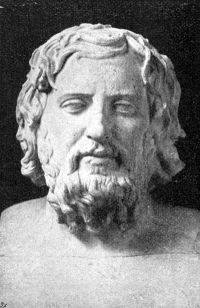
Source: Gutenberg

Portrait of Xenophon Xenophon,  Anabasis — Book 5, Chapter 5

“ As to ourselves, men of Sinope, having got so far, we are well content to have saved our bodies and our arms. Indeed it was impossible at one and the same moment to keep our enemies at bay and to despoil them of their goods and chattels. And now, since we have reached Hellenic cities, how has it fared with us? At Trapezus they gave us a market, and we paid for our provisions at a fair market price. In return for the honour they did us, and the gifts of hospitality they gave the army, we requited them with honour. ”
Source: Wikisource

Portrait of Tertullian Tertullian,  Ante-Nicene Fathers Vol. III, Anti-Marcion… (1885)

“ And as God is good, He so loves infants as to have blessed the midwives in Egypt, when they protected the infants of the Hebrews [20] which were in peril from Pharaoh’s command. [21] Christ therefore shares this kindness with the Creator. As indeed for Marcion’s god, who is an enemy to marriage, how can he possibly seem to be a lover of little children, which are simply the issue of marriage? He who hates the seed must needs also detest the fruit. Yea, he ought to be deemed more ruthless than the king of Egypt. ”
Source: Wikisource

Get perspective with Kwize: daily news enlightened by great literature