Marsilio Ficino

Definition and stakes

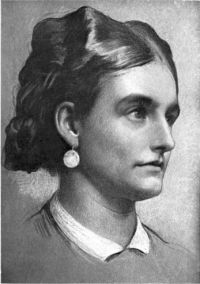
Portrait of John Addington Symonds John Addington Symonds,  1911 Encyclopædia Britannica, Volume 10… (1911)

“ As a supplement to these labours in the field of Platonic and Alexandrian philosophy, Marsilio next devoted his energies to the translation of Dionysius the Areopagite, whose work on the celestial hierarchy, though recognized as spurious by the Neapolitan humanist, Lorenzo Valla, had supreme attraction for the mystic and uncritical intellect of Ficino.
It is not easy to value the services of Marsilio Ficino at their proper worth. As a philosopher, he can advance no claim to originality, his laborious treatise on Platonic theology being little better than a mass of ill-digested erudition.
”
Source: Wikisource

Edward Hutton,  Florence and Northern Tuscany with Genoa

“ In truth in his fashion he was but a tyrant too—a tyrant, and a poor one, and therefore the more dangerous, the more disastrous. To the Medici we owe much of what is most beautiful in Florence—the loveliest work of Botticelli, of Brunellesco, of Donatello, of Lippo Lippi, of Michelangelo, and the rest, to say nothing of such a priceless collection of books and MSS. as this. Is, then, the work of Marsilio Ficino nothing, the labours of a thousand forgotten humanists? What do we owe to Savonarola? ”
Source: Gutenberg

Frederic Seebohm,  The Oxford Reformers: John Colet…

“ But, until such a man should arise, the lamp of philosophy must burn alone in Florence. Men might come from far and near to listen to Marsilio Ficino—to share the patronage of Lorenzo de’ Medici, to study Plato and [Pg 14] Plotinus,—to learn how to harmonise Plato and Aristotle, to master the Greek language and philosophies,—to drink in the spirit of reviving learning—but, of true Christian religion, the lamp had not yet been lit at Florence, or if lit it was under a bushel. ”
Source: Gutenberg

Get perspective with Kwize: daily news enlightened by great literature