“ National lands have been set aside in vast areas, and any inhabitant of the Republic may "denounce" or acquire a piece of such land, and retain it by annual tax-payment at prices varying from two pesos—a peso is about two shillings—in the remote regions, to twenty or thirty pesos per hectare—equal to 21⁄2 acres—in the more settled States. The Mexican peasantry is not debarred absolutely from the enjoyment of the land if he has the knowledge and means to perform the simple requirements necessary to its acquisition—which generally he has not. ”
Mexican peso
Definition and stakes
Quotes about “Mexican peso”
Clarence Walker Barron, The Mexican Problem (1917)
“ Yet, aside from the question of order and justice, Mexico is a simple proposition. The national expenses are less than $100,000,000 American gold, yet a little more than half must go to the national defense. The revenues have been but seventy-five per cent of the expenses, and because it never had any credit it never piled up any outside debt. Diaz not only built up Mexican foreign trade from $15,000,000 American gold to $250,000,000, but he built up the national treasury from emptiness to $30,000,000 American gold. ”
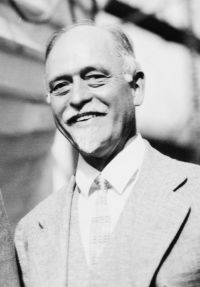
Irving Fisher,
Harper's Pictorial Library of the World War…
“ If today the dollar, instead of being 25.8 grains or about one-twentieth of an ounce of gold, were an ounce or a pound or a ton of gold it would surely buy more than it does now, which is the same thing as saying that the price level would be lower than it is now.A Mexican gold dollar weighs about half as much as ours and has less purchasing power. If Mexico should adopt the same dollar that we have and that Canada has, no one could doubt that its purchasing power would rise—that is, the price level in Mexico would fall. ”
Frederick Albion Ober,
Travels in Mexico and life among the Mexicans
(1884)
“ Through centuries of change, and every variety of discord and warfare, the dies of the mint have gone on, stamping the likeness of successive rulers upon the product of the mines. Coins of the realm, of the empire, of the republic, at last the steady stream shows only an even flow of coins of the republic, the emblem of Liberty upon every one. Every peso is stamped with its weight in drams and grains; and good weight it is, every dollar weighing just one ounce; for these good Mexicans hold that an honest dollar is alone the product of an honest man. ”
Nevin O. Winter, Mexico and Her People of To-day
“ Establishing the gold standard was a great achievement. Just a few years ago Mexican silver varied from $2.05 to $2.40 for a gold dollar, and all business was unsettled as a result. Now the government has established a rate of exchange of two silver dollars for one of gold, and all this was done without any friction or disturbance. It is to be hoped that the new administration will maintain the same high standard of financial integrity that has been handed down by its immediate predecessor.The foreign trade of Mexico runs into big figures. ”
Brantz Mayer, Mexico, Aztec, Spanish and Republican…
“ By this table, covering the commerce between the United States and Mexico for nineteen years, we observe that from having a trade worth, in imports and exports, about nineteen millions and a half, in 1835, it is now reduced, in years undisturbed by war or the results of war, to not more than two millions and a half or three millions. As commerce usually regulates itself, in spite of personal or national prejudices, this fact is doubtless attributable to the lower rates at which European manufacturers and producers are enabled to afford their merchandise in the Mexican market. ”
Clarence Walker Barron, The Mexican Problem (1917)
“ But Mexico, politically unsettled, with only two pipe lines in operation, has her oil wealth conserved, and Lord Cowdray can report to the English shareholders of the Mexican Eagle Company that earnings are ten million dollars per annum Mexican gold, or five million dollars per annum United States gold; and the Mexican Petroleum Company can report to its American shareholders net earnings of about the same amount— six millions for the $39,000,000 common stock the past year. ”
Philip Lake, Andrew J. Lamoureux, Edward B. Tylor, Walter Lehmann and James S. Mann, 1911 Encyclopædia Britannica (1911)
“ Of the former 46,500,000 pesos are credited to import duties, 31,930,000 pesos to stamps, excise taxes, &c., 10,930,000 pesos to direct taxes, and the balance to various sources. Owing to the circumstance that the great majority of the Mexican people own no property, carry on no industry, and are not even to be considered regular productive labourers, the revenues are small in relation to the population and are comparatively inelastic. ”
William Henry Bishop, Mexico, California and Arizona (1900)
“ To take the single instance of the crop called ixtle—a species of fibre—the Mexican National transported 224,788 pounds of it, grown along its line, in '82, and 3,531,000 in but seven months of '84. There is now said to be a total of $125,000,000 of American capital invested in Mexico. The proposed commercial treaty between the United States and Mexico has unhappily failed, defeated in our own Congress on what would seem most unstatesmanlike and fatuous grounds. The serious decline in silver has been also a very depressing influence. ”
:Mary Elizabeth Blake, Mexico, picturesque, political… (1888)
“ Is it wonderful that cotton costs more at Orizaba and Queretaro than in Lowell or Manchester? It is not strange that more is not grown in Mexico. The merchant finds it more convenient to pay all his burdens at the custom-house, than each of the lot to the internal-revenue collectors. This example may be slightly exaggerated, if taken literally. But the principle of Mexican taxation is fairly represented in it. The marvel is that so many blows in succession upon the arm of industry have not paralyzed it. ”
Chester Lloyd Jones,
Mexico and its reconstruction
(1921)
“ The total paper currency "legal" and "counterfeit" put out in 1913-16 is estimated to have had a face value of over $2,000,000,000 Mexican. The Carranza issues alone totaled about $1,250,000,000 as follows: [2] The record of the effects of the paper money issues upon the economic life of the nation reads like pages from the Arabian Nights, As long as the money, issued in large quantities, had any appreciable value, those who could command gold and who were in a position to profit by a rapidly falling exchange were able to build up fortunes in a way little short of fantastic. ”
Chester Lloyd Jones,
Mexico and its reconstruction
(1921)
“ If money went abroad, the charge was still greater. In 1868 the taxes and cost of transportation of silver sent from Mexico City to the Bank of England were 25 per cent of the value of the shipments. Conditions were rapidly developing to the northward which were sure to bring great impetus to Mexican trade, and at least partially remove its disadvantages. The United States was beginning to come into the market for raw products and to sell her manufactures. ”
Murat Halstead,
The Story of the Philippines
“ The standard of value has always, until within a few years, been the Mexican milled dollar. The Spanish dollar contains a little less silver and, in order to introduce it and profit by the coinage, the Spaniards prohibited the importation of Mexican dollars a few years since. Large numbers of Mexican dollars remained in that country, however, and others were smuggled in. ”
Channing Arnold, The American Egypt: A Record of Travel in Yucatan
“ You do not see the great contrasts of wealth so marked in Mexico City. The whole town has an air of prosperity, and it is not an air merely—it is a fact. During the past twenty years the group of large henequen growers—about a score—have divided among themselves as a result of this "green gold," no less than 800,000,000 Mexican dollars. And this vast sum has percolated through the whole place. Merida is a Monte Carlo for extravagance and extortion. There is no social standard but £ s. d. A man is or is not great socially in proportion to his banking account. ”
Chester Lloyd Jones,
Mexico and its reconstruction
(1921)
“ To the Germans, too, the revolution brought less percentage of loss than to the Americans and British. Mercantile stocks can be adjusted to changing political conditions more easily than can public services, mines, and similar enterprises. What the total amount of foreign capital in Mexico is and what is its relation to the total national wealth must, like the individual items, be matters of estimate. The American consular report of 1912 put the total value of all the enumerated properties at $2,432,000,000 and those of Mexican ownership at $793,187,242. ”
Ernst Johann Eitel,
Europe in China
(1895)
“ It was thus officially announced, that the new Mexican dollar consisted of 9 parts pure silver and 1 part alloy; that to pay 100 taels' weight of pure sycee, it would be necessary to pay 111·11 in new Mexican dollars; that 100 new Mexican dollars are equal to 101·41 old Mexican dollars, the new Mexican dollar being, within a fraction of 1.5 per cent., better than the old. ”
United States. Central Intelligence Agency, The 1995 CIA World Factbook
“ While the devaluation is likely to help Mexican exporters, whose products are now cheaper, it also raises the specter of an inflationary spiral if domestic producers increase their prices and workers demand wage hikes. Although strong economic fundamentals bode well for Mexico's longer-term outlook, prospects for solid growth and low inflation have deteriorated considerably, at least through 1995. ”
Chester Lloyd Jones,
Mexico and its reconstruction
(1921)
“ The period of wildest financial inflation fell between October, 1914, and October, 1916. On the whole the course of all the paper issues was steadily downward. By the latter part of 1915 Vera Cruz bills, for example. were worth about one per cent of their face. When the "infalsificable" came out in April, 1916, it was accepted at a gold value of about 20 cents Mexican. The government forced its acceptance by decree. For a time the old Vera Cruz issue was exchanged against the new money at ten of the old for one of the new. ”
Chester Lloyd Jones,
Mexico and its reconstruction
(1921)
“ Turning now to the export trade during the first half-century of Mexican independence, we find statistics as unsatisfactory as in the case of imports. They are, in fact, so unsatisfactory that the best method of arriving at the character and value of the goods that were sent abroad is to study the returns of imports from Mexico as published by her chief customers: Great Britain, France, and the United States. The shipments in the first quarter-century of independence were unimportant, except for precious metals and cochineal. ”
Frederick Albion Ober,
Travels in Mexico and life among the Mexicans
(1884)
“ Race prejudice is stronger here than in the interior, for the Border States have suffered more; and if any one imagines that the Mexican is disposed to allow the American to make a dollar, except by superior skill, he misunderstands the prevalent feeling. He is quite willing el Americano shall spend his own money in the building of railroads, tramways, and hotels, but he will resist strenuously any attempt to capture Mexican trade. ”
Chester Lloyd Jones,
Mexico and its reconstruction
(1921)
“ The greatest single American interest continued to be in the railroads, stocks and bonds of which were held to a value of $644,390,000. The estimate of money invested in mines had now risen to $223,000,000, and $15,000,000 or more was credited to each of the following: national bonds, smelters, bank deposits, rubber production, and the oil industry. Obviously, a development of investments on so large a scale was helping with the other changes in local conditions to bind the economic interests of the two countries together very rapidly and was giving an unprecedented stimulus to Mexican life. ”
Chester Lloyd Jones,
Mexico and its reconstruction
(1921)
“ What has occurred in a number of instances in the past may again prove to be the case in Mexico. At first sight even the highest figures discussed do not appear to be an overwhelming load for the nation to bear. Compared to the burden that the World War has put upon many Western nations, the debt seems small. Even assuming that the total may be as great as $1,500,000,000 Mexican, the debt per capita would be only about one-fourth as great as that which the people of the United States are now called upon to carry. ”
Hubert Howe Bancroft,
History of Mexico
(1883)
“ Foreign goods, home productions, the fruits of the soil, native produce of all kinds, [29] landed property, sold or even leased, in time all came within the reach of the elastic alcabala. The two per cent first exacted was doubled and trebled. In the decade 1601 to 1610 the yield in the Mexican department alone was 2,671,190 pesos; that of the decade 1781 to 1790, 13,575,528 pesos. The total amount which this tax yielded in the whole kingdom during 1780 to 1789 was 34,022,552 pesos, giving a net profit of 31,302,941 pesos. ”
John Kenneth Turner,
Barbarous Mexico
(1910)
“ An offer of fifty cents a day without found, would, without the slightest doubt, bring in Mexico City an army of 50,000 able-bodied laborers inside of twenty-four hours. From such miserable wages it must not be guessed that the cost of the necessities of life are less than they are here, as in the case of other low wage countries, such as India and China. On the contrary, the cost of corn and beans, upon which the mass of the Mexican people eke out their existence, is actually higher, as a rule, than it is in the United States. ”
:Mary Elizabeth Blake, Mexico, picturesque, political… (1888)
“ A study of the Mexican tariff, with the phenomenon of trade increasing in spite of it, justifies the high expectations which sanguine Mexicans hold of the industrial future of their country. They say that this mode of raising national revenue must in time be remedied. ”
Nellie Bly,
Six Months in Mexico
“ White, red, and blue—fifty cents, seventy-five cents, and one dollar. The drivers often try to get the best of a tourist, especially if he speaks Spanish, and charge him one dollar for a seventy-five cent carriage. The Mexicans do not differ much from the Yankee hackman. If any, it is in favor of the Mexican. They do not cheat so much, because they are not sharp enough.Pulque shops, where they deal out the national drink, are quite plenty. These are the only buildings in the city that are decorated. ”
Chester Lloyd Jones,
Mexico and its reconstruction
(1921)
“ The increase of income arose not so much from the creation of new taxes as from the increased receipts from old ones. From 1876 to 1892 no changes were made. The sources of income were first and most important the duties on imports and exports. These always have been the greatest contributors to Mexican revenue. Next in importance were the stamp taxes levied on all sorts of business transactions, contracts, sales, receipts, leases, promissory notes, bills of exchange, and the like. These two sorts of taxes together yielded well over four-fifths of the total revenue. ”
Clarence Walker Barron, The Mexican Problem (1917)
“ The United States had the first Mexican problem when it acquired from Mexico the Pacific Coast. It found the solution in gold; "gold at foot of tree," in the river-beds and banks and valleys. Gold paid high wages to him who could wash it out. It returned high wages for supplies. It invited roads across the continent, knitting this old Mexican territory into civilization and the Union. The solution was Business with a big B. Agriculture followed. Agriculture is not business. Agriculture is just existence. Business is expanding wages all around, wages to labor, wages to capital ”
Chester Lloyd Jones,
Mexico and its reconstruction
(1921)
“ Some factors of Mexican life favored industrial development in the last half of the nineteenth century. In the industries in which native labor could be used to advantage the low labor cost encouraged investment. The low exchange rate of silver raised the price of imported articles and thus favored local enterprise. Further, the government sought to help industry as it did agriculture by creating artificial advantages for local enterprise, not only in a protective tariff but, after 1893, by special exemptions. ”
Justin Harvey Smith, The War with Mexico, Volume 2…
“ British capitalists involved in Mexican silver mines and other investments, and British merchants and manufacturers, who enjoyed the lion’s pre-eminence in Mexican commerce, felt deeply interested. British finances required silver bullion, and British statesmen dreaded a further extension of our boundary toward the southwest. But the politics of Mexico excited such contempt, her financial conduct such disgust, her restrictions upon foreign trade such irritation, and her treatment of foreign powers such resentment that she could not be viewed with cordiality, confidence or even respect. ”