Musa

Definition and stakes

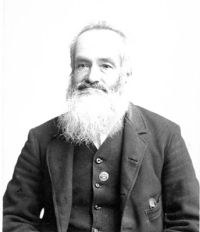
Portrait of Marie Louise de la Ramée Marie Louise de la Ramée,  In Maremma (1882)

“ In all that pallor and whiteness of the sickly town and the low-lying shore and the feeble people, the figure of Musa stood out with the grace and the rich colour of some crown imperial lily growing out of sand, straight as a young palm, luminous, golden, distinct.
She knew the danger of the marshes. She did not wish to die: who does that loves? Whilst the earth feels the steps of the feet we adore, to live is beautiful; whilst the eyes that we love unclose to the day, the sunrise that wakens them still smiles at us.
”
Source: Wikisource

Portrait of Marie Louise de la Ramée Marie Louise de la Ramée,  In Maremma (1882)

“ Sometimes, when Musa came up from the shadow of the tombs into all that abounding light, that universal fragrance, that immense sense of life and loveliness, in which she could almost hear the green earth growing, she would stretch out her arms in love of it all and gratitude, and cry out aloud to the sunlit solitude:
'I, too, am happy! I, too, live!'
Every pulse of life in her rejoiced with rejoicing nature. She envied no more the water birds sailing all day beside their nests; she no more wondered why the woodlark sang praise, praise, praise, and nothing but praise, to the Creator of all.
”
Source: Wikisource

Portrait of Marie Louise de la Ramée Marie Louise de la Ramée,  In Maremma (1882)

“ In this oppressive weather, when the heavens looked a vault of copper, and the sea a breathless noxious oily plain, and all the marshes and the moors were as though a destroying wind of fire had passed over and scorched them brown, Musa, all by herself, still sought the shadow and the shelter of that tomb whose secret was only known to her.
She was never afraid; she was always watching, watching for the dead to arise or to return.
”
Source: Wikisource

Get perspective with Kwize: daily news enlightened by great literature