Niccolò Antonio Paganini

Definition and stakes

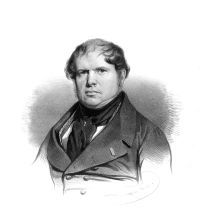
Portrait of François-Joseph Fétis François-Joseph Fétis Biographical notice of Nicolo Paganini

On returning to Italy, where he was almost worshipped by his countrymen, from the great triumphs he had obtained, and the honours conferred on him by foreign potentates, he was received with the most marked degree of respect. On the 14th of November, 1834, he gave a concert at Placentia, for the benefit of the poor. The following 12th of December, he played at the Court of Maria Louisa, Duchess of Parma, from whom he received the imperial Order of St. George. During the year 1835, Paganini alternately resided at Genoa, Milan, and at his retreat near Parma.
Source: Gutenberg

Stephen S. Stratton Nicolo Paganini: His Life and Work

In 1797 the father took the boy from Parma, and set out with him on a tour through Lombardy. Concerts were given in Milan, Bologna, Florence, Pisa, and Leghorn.
The young artist achieved an extraordinary reputation; the father took possession of the more material rewards of art. The "golden dreams" were in process of realisation! Returning to Genoa, young Paganini finished the composition of his Twenty-four Studies, which were of such excessive difficulty that he could not play them.
Source: Gutenberg

Stephen S. Stratton Nicolo Paganini: His Life and Work

Free at last, the youth, now in his seventeenth year, went on his way, his whole being thrilled with dreams of success and happiness. At Lucca he was most enthusiastically received, and, elated by his good fortune, Paganini extended his tour, playing in Pisa and other towns. Enabled now to earn his own living, Paganini determined never to return to the home where he had suffered so much. His father must have obtained information as to the youth's whereabouts, for it has been stated that he managed to obtain a large part of the young artist's earnings.
Source: Gutenberg

Get perspective with Kwize: daily news enlightened by great literature