North Borneo

Definition and stakes

Harry Johnston,  Pioneers in Australasia

“ Borneo, on the other hand—a very much larger island—was in a less advanced stage of culture, except on the north coast, along which both Indian and Chinese—and, later, Arab—civilization had come into play. North Borneo was a very old colony of the Chinese, and under Arab influence after the thirteenth century had become a region of considerable wealth and power. The Muhammadan religion had spread over the North Bornean kingdom of Brunei and thence to Palawan and the Sulu archipelago, between Borneo and the Philippines. ”
Source: Gutenberg

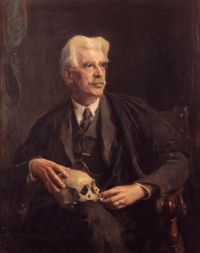
Portrait of Hugh Charles Clifford Hugh Charles Clifford,  1911 Encyclopædia Britannica (1911)

“ A chain running north-north-east, which forms the boundary between Sarawak and Dutch Borneo, the highest peak of which, Gunong Tebang, approaches 10,000 ft. This chain can hardly be said to extend continuously to the extreme north of the island, but it carries on the line of elevation towards the mountains of Sarawak to the west, and those of British North Borneo to the north, of which latter Kinabalu is the most remarkable. The mountains of North Borneo are more particularly referred to in the portion of this article which deals with that territory. ”
Source: Wikisource

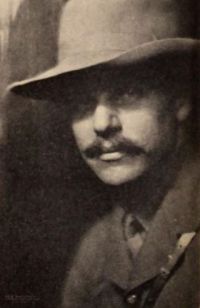
Portrait of Hugh Charles Clifford Hugh Charles Clifford,  1911 Encyclopædia Britannica (1911)

“ Races.—The peoples of Borneo belong to a considerable variety of races, of different origin and degrees of civilization. The most important numerically are the Dyaks, the Dusuns and Muruts of the interior, the Malays, among whom must be counted such Malayan tribes as the Bajaus, Ilanuns, &c., the Bugis, who were originally immigrants from Celebes, and the Chinese. The Dutch, and to a minor extent the Arabs, are of importance on account of their political influence in Dutch Borneo, while the British communities have a similar importance in Sarawak and in British North Borneo. ”
Source: Wikisource

Get perspective with Kwize: daily news enlightened by great literature