“ From north to south, six thousand miles heave white with ocean foam, Between the dear old land we've left and this our new-found home; Yet what though ocean stretch between—though here this hour we stand! Our hearts, thank God! are English still; God bless the dear old land! "To England!" men, a bumper brim; up, brothers, glass in hand! "England!" I give you "England!" boys; "God bless the dear old land!" ”
North of England
Definition and stakes
The theme of “North of England” has been addressed by authors such as Hilaire Belloc, Jens Jacob Asmussen Worsaae, D. H. Montgomery, Edward A. Freeman and E. Gordon Browne. It is often associated with terms like Scotland, South, great, Britain and London.
Quotes about “North of England”
 Theodore Parker,
The Collected Works of Theodore Parker
(1863)
“ I say the South is the enemy of the North. England is the rival of the North, a powerful rival, often dangerous; sometimes a mean and dishonourable rival. But the South is our foe,—far more dangerous, meaner, and more dishonourable. England keeps treaties ; the South breaks faith. ”
“ Whether you go north to Worcester beacon or south over Hereford beacon to Gloucester beacon, there is no finer walk in England than along these ten miles of breezy highlands, with fifteen English counties unrolled at your feet, the swifts wheeling around your path and that sense of exhilaration that comes from the spacious solitude of high places. ”
 Hilaire Belloc,
First and Last
“ The physical appreciation of England is to be reached by an appreciation of landscape. It so happens that England is traversed by remarkable and sudden ranges; hills with a sharp escarpment overlooking great undulating plains. This is not true of any other one country of Europe, but it is true of England, and a man who professes to consider, to understand, to criticize, to defend, and to love this country, must know the Pennines, the Cotswolds, the North and the South Downs, the Chilterns, the Mendips, and the Malverns ”

“ Of late years an abundant shower of curates has fallen upon the north of England: they lie very thick on the hills; ”
Hilaire Belloc,
First and Last
“ The whole stretch is framed in with definite hills, the last and highly marked line of the Pennines bounds the view upon the east; upon the west the first of the Welsh hills stands sharply in a long even line against the fading sun; and on the north you see the height of Delamere. There are three other views in the North of England, the first easy, the last two difficult to obtain, all between them making up a true picture of what the North of England is. ”
 Carl Ritter,
Comparative geography
(1865)
“ The center of the land hemisphere is in the northwest of Europe, at a point near southeast of England, the northeast of France, and the coast of Holland. The dwellers around the North Sea are the antipodes of the New Zealanders. Great Britain is the country which, as a whole, is the middle point of the continental world. ”
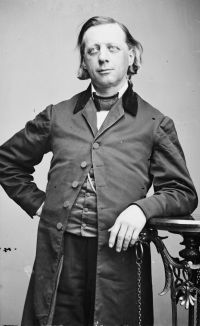 Henry Ward Beecher,
Conflict of Northern and Southern Theories of Man and Society
“ Do not think that all the danger lies in that bolted cloud which flashes in the Southern horizon. There is decay, and change, here in the North. Old New-England, that suckled American liberty, is now suckling wolves to devour it. ”
D. H. Montgomery, The Leading Facts of English History
“ The population was sparse, ignorant, and unprosperous. It was in the south that improvements originated. In the reign of Henry VIII, the North fought against the dissolution of the monasteries (SS352, 357) ; in Elizabeth's reign it resisted Protestantism; in that of George I it sided with the so-called "Pretender" (S535) .But steam transformed an immense area. Factories were built, population increased, cities sprang up, and wealth grew apace. Birmingham, Manchester, Leeds, Nottingham, Leicester, Sheffield, and Liverpool made the North a new country. (See Industrial Map of England, p.10.) ”
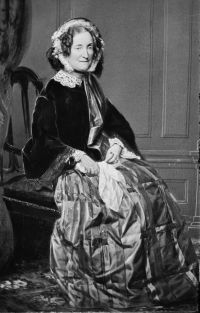 Lydia Huntley Sigourney,
Scenes in my Native Land
(1845)
“ But the prospect amply repays all the toil of the ascent. The landscape, though not so rich and luxuriant as many others, is perhaps as varied and interesting as any in New England. On the south, you have the Sound with its winding shores, its gliding sails and lovely islands, and on the north, the river Thames, retiring behind the hills towards Norwich. ”
Keith Clark, The Spell of Scotland
“ It is well to stand upon this hill, before you go on to the West and the Border, or on to the North and the gray metropolis, that you may [Pg 17] appreciate both the tragedy and the triumph that is Scotland's and was Mary's. The North Sea is turning purple far out on the horizon, and white sea birds are flying across beyond sound. The long level light of the late afternoon is coming up over England. ”
Paul B. Du Chaillu, The Viking Age. Volume 1 (of 2…
“ THE SETTLEMENT OF BRITAIN BY NORTHMEN. The Notitia—Probable origin of the name England—Jutland—The language of the North and of England—Early Northern kings in England—Danes and Sueones—Mythical accounts of the settlements of England.Britain being an island could only be settled or conquered by seafaring tribes, just in the same way as to-day distant lands can only be conquered by nations possessing ships. From the Roman writers we have the only knowledge we possess in regard to the tribes inhabiting the country to which they gave the vague name of Germania. ”
Clive Holland, From the North Foreland to Penzance
“ The North Foreland—Ramsgate—Deal—Dover—Hythe, and some other Cinque Ports The great headland, famous as the North Foreland, dazzling white on a bright summer’s day, and grey when the weather is cloudy; capped with green turf which is by turns, according to the season, the greenest and the least green in England, is familiar to all who have gone down Channel from the Thames estuary, and to many who have only crossed it. ”
Hilaire Belloc,
Sussex, Painted by Wilfrid Ball
(1906)
“ NATURE OF SOUTH DOWNS them from the north, as so many do now, motoring and bicycling south from London, their steep, sharp face showing black with the daylight behind it, is the principal feature of the south-east of England. ”
“ England has always tended to fall into two cross divisions—a northern and a southern one, separated at first by climate (the northern more rude, the southern more gentle) , then by agricultural conditions, the northern far less peopled, the southern more peopled and more wealthy; and to an eastern and western division separated by type of landscape, to some extent by climate, always to some extent by soil, difference in race, emphasized whenever an invasion came [128] from the Welsh lands on the one side or from the North Sea on the other. ”
Sir Cusack P. Roney, Rambles on Railways
“ England began in the south, and Winchester was its capital. The south was still England, until mining called the north into place and power. It was not that the north-country people lacked energy or intelligence,—far from it; but they had no manufactures, and, for want of them, they were left behind in numbers, riches, civilisation, and all that confers social and political importance. ”
Edward Hutton, England of My Heart : Spring
“ There can be no one who has stood upon one of the great heights of the Downs north and south, upon Ditchling Beacon, Chanctonbury or Leith Hill, who, looking across the Weald, has not wondered what this country, lying between the two great chalk ranges, might be, what is its nature and its history and what part it has played in the great story of England. ”
Paul B. Du Chaillu, The Viking Age. Volume 1 (of 2…
“ The story of the North is that of all countries whose inhabitants have spread and conquered, in order to find new fields for their energy and over-population; in fact, the very course the progenitors of the English-speaking peoples adopted in those days is precisely the one which has been followed by their descendants in England and other countries for the last three hundred years. ”
 Madison Grant,
The Conquest of a Continent; or…
“ At this point we may remark that Wales, especially along the coasts, has a very large Nordic population. It is absurd to distinguish between England, Scotland, North Ireland, and Wales as is done in the census of the United States. We might just as well distinguish between North England and South England on the ground that the first is Anglian and Danish and the other Saxon and Jutish. The lowlands of Scotland are pure English territory and have been such for a thousand years. ”
 James Harvey Robinson,
An Introduction to the History of Western Europe
“ The map of Great Britain at the accession of William the Conqueror has the same three great divisions which exist to-day. The little kingdoms had disappeared and England extended north to the Tweed, which separated it, as it now does, from the kingdom of Scotland. On the west was Wales, inhabited then, as it is still, by descendants of the native Britons, of whom only a small remnant had survived the German invasions. The Danes had been absorbed into the mass of the population and all England recognized a single king. ”
Ontario. Department of Education, Ontario Teachers' Manuals: History
“ In the north temperate zone is the climate best suited for the growth of peoples vigorous in mind and body, and lovers of freedom.ENGLANDPosition: The forming of the Straits of Dover cut off a corner of Europe, made Great Britain an island, and later a single political unit. Situated between Europe and America with ports opening toward each, her position gives her the opportunity for naval and commercial greatness. The narrow sea separating her from the continent is a defence in war and a means of intercourse in peace. ”
James Hain Friswell, Our American Holidays - Christmas (1949)
“ The whole coast of England is surrounded by a general “shake hands.” The coast-guard on their wintry walks do not greet each other more surely than old friends all over England do: one clasps another, and another a third, till from Dover to London and so on to York, from Yarmouth on the east to Bristol on the west, from John O’Groat’s house at the extreme north to the Land’s End, the very toe-nail of England on the south—a kindly greeting, we may be sure, will pass. ”
 Henry Thomas Buckle,
History of Civilization in England…
“ I use the word Highlands, in the common, though improper, sense of including all Scotland from the Pentland Firth to the beginning of the mountains, a few miles north of Glasgow, Stirling, Perth, and Dundee. All such distinctions are necessarily somewhat vague, because the boundaries of nature are never clearly marked. Compare Macky's Scotland, p. 124, London, 1732, with Anderson's Guide to the Highlands, Edinburgh, 1847, pp. ”
Edward Foord, The Invasions of England
“ If the first batch of battles occurred in the north, it is fair to assume that they were fought against the Angles, and this practically fixes them in the north-east. There is good reason for believing that the Angles had very early established themselves in this quarter. ”
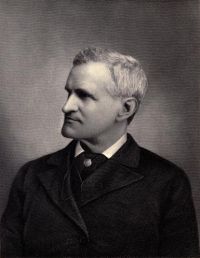 Francis Parkman,
France and England in North America…
“ The growth of New England was a result of the aggregate efforts of a busy multitude, each in his narrow circle toiling for himself, to gather competence or wealth. The expansion of New France was the achievement of a gigantic ambition striving to grasp a continent. It was a vain attempt. ”
 Grant Allen,
Post-Prandial Philosophy
“ England is beautiful by copse and hedgerow, by pine-clad ridge and willow-covered hollow, by meadows interspersed with great spreading oaks, by pastures where drowsy sheep, deep-fleeced and ruddy-stained, huddle under the shade of ancestral beech-trees. Its loveliness is human. In itself, I believe, the actual contour of England cannot once have been much better than the contour of northern France—though nowadays it is hard indeed to realise it. Judicious planting, and a constant eye to picturesque effect in scenery, have made England what she is—the garden of Europe. ”
 Jens Jacob Asmussen Worsaae,
An Account of the Danes and Norwegians in England…
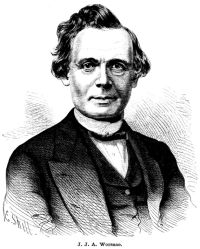
“ But as we proceed from the southern towards the middle and northern parts of England, we find that by degrees an entirely different physiognomy, which before we only got a glimpse of now and then, and which could scarcely be remarked in the confusion of people in London, becomes more and more the prevailing one. The farther one proceeds towards Northumberland, the more distinct does it become. ”
 Mark Twain,
Life on the Mississippi
(1883)
“ When did the r disappear from Southern speech, and how did it come to disappear? The custom of dropping it was not borrowed from the North, nor inherited from England. ”
Edward Hutton, England of My Heart : Spring
“ Of the uplifted moorlands which are a part of the mystery of the west, of the forests, of the greenwood, of the meads, of the laughing coast, white as with dawn in the east, darkling in the west, I know not how to speak, for in England of my heart we take them for granted and are satisfied. They fill all that quiet and fruitful land with their own joy and beneficence, and are a part of God's pleasure. ”
 Ralph Connor,
The Sky Pilot in No Man's Land
“ To them it seemed a toy landscape for children to play with, but, as they passed through the big towns and cities with their tall, clustering chimneys, their crowding populations, with unmistakable evidences of great wealth, their shipping, where the harbours bit into the red coast line, there began to waken in them the thought that this tiny England, so beautifully finished, and so neatly adorned, was something mightier than they had ever known. ”
Francis Parkman,
France and England in North America…
“ France built its best colony on a principle of exclusion, and failed; England reversed the system, and succeeded. ”
Francis Parkman,
France and England in North America…
“ The most momentous and far-reaching question ever brought to issue on this continent was: Shall France remain here, or shall she not? ”
H. W. Graber, The life record of H. W. Graber (1916)
“ For many years we of the South have been dwelling amicably with those of the North—this is as it should be. We are, united, the greatest country on the face of God’s footstool. And to both the North and the South belongs the credit. ”
Charles F. G. Masterman, The condition of England (1909)
“ But no one to-day would seek in the ruined villages and dwindling population of the countryside the spirit of an “England” four-fifths of whose people have now crowded into the cities. The little red-roofed towns and hamlets, the labourer in the fields at noontide or evening, the old English service in the old English village church, now stand but as the historical survival of a once great and splendid past. Is “England” then to be discovered in the feverish industrial energy of the manufacturing cities? In the vast welter and chaos of the capital of Empire? ”
William John Robertson, Public School History of England and Canada (1892)
“ Early Britain.—The land we call England is that part of the Island of Great Britain south of the River Tweed, with the exception of a small area on the western side, known as Wales. England covers about 50,000 square miles, and Wales a little over 7,000. Yet a great many people live in this little space, and a great many more have left its shores and settled all over the globe. ”
Charles Grant Blairfindie Allen, Popular Science Monthly (1880)
“ Southeastward we have the whole level country of England, comprising the plain of York, the great central plateau, the Fen district and the eastern counties, the valley of the Thames, and the watershed of the south coast. ”
Thos. D. Murphy, In Unfamiliar England
“ Of our last day’s wanderings I have already told in my chapter on East Anglia.Travel-stained but unwearied, the tried and trusty companion of our pilgrimage stands before our London hotel. It is hard to think of her—is the pronoun right?—as a thing of iron and steel; [Pg 378] she has won a personality to us; but, metaphor aside, what a splendid means to a splendid end the motor has become! In two summers we have seen more of Britain than one might find it practicable to see in years under old conditions, and we have seen the most delightful, though unfamiliar, side. ”
Keith Clark, The Spell of Scotland
“ But the flower of England was in France, while the flower of Scotland was here; and slain—the king, twelve earls, fifteen lords and chiefs, an archbishop, the French ambassador, and many French captains.You walk back from the Field, and all the world is changed. The green haughs, the green woodlands, seem even in the summer sun to be dun and sere, and those burns which made merry on the outward way—can it be that there are red shadows in their waters? ”
Grant Allen,
Anglo-Saxon Britain
“ But every shire and every kingdom fought for itself alone. If the Dorset men could only drive away the host from Charmouth and Portland, they cared little whether it sailed away to harry Sussex and Hants. If the Northumbrians could only drive it away from the Humber, they cared little whether it set sail for the Thames and the Solent. The North Folk of East Anglia were equally happy to send it off toward the South Folk. ”
Related terms
Authors who wrote about “North of England”
Hilaire BellocJens Jacob Asmussen WorsaaeD. H. Montgomery Edward A. FreemanE. Gordon BrowneWilliam John Robertson
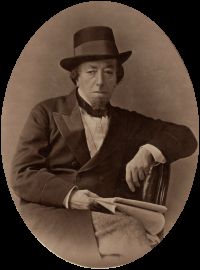 Benjamin DisraeliCharles F. G. MastermanThomas William ShoreHarry Perry Robinson
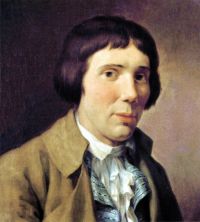 Karl Philipp Moritz
 Goldwin SmithJ. Ewing RitchieTheodore Parker
 Daniel DefoeJames Hain Friswell
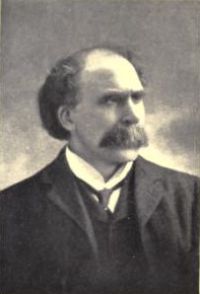 J. A. CrambDiana Fontaine Maury Corbin
 Michel Chevalier
 Rudyard Kipling
