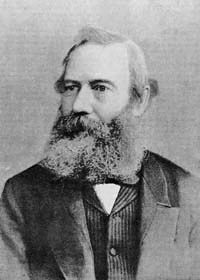
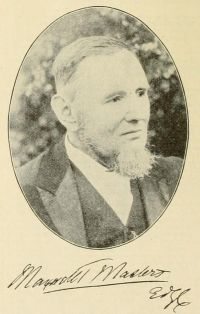
 Maxwell T. Masters,
Vegetable Teratology
Maxwell T. Masters,
Vegetable Teratology
“ I have in my possession a leaf of Antirrhinum majus, and also a specimen of Pelargonium, wherein the blade of the leaf is funnel-like, and the petiole is cylindrical, not compressed, and grooved on the upper surface, as is usually the case. A comparison of the leaves of Pelargonium peltatum with those of P. cucullatum ('Cav. [Pg 23] Diss.,' tab., 106) will show how easy the passage is from a peltate to a tubular leaf. In these cases the tubular form may rather be due to dilatation than to cohesion. ”