Peloponnesian League

Definition and stakes

The historians' history of the world in twenty-five volumes…

“ According to the constitution of the Peloponnesian league, every common action, such as a declaration of war, or the conclusion of a peace or treaty, was agreed on at a congress of the confederates. But, as there was no regular assembly of this kind, the several states sent envoys (ἄγγελοι) , like the deputies (πρόβουλοι) , of the Ionians, who generally remained together only for a short time. All the members had legally equal votes (ἰσόψηφοι) ; and the majority sometimes decided against a strong opposition; Sparta was often outvoted, Corinth being at all times willing to raise an opposition. ”
Source: Gutenberg

Portrait of George Grote George Grote,  History of Greece, Volume 06 (of 12…

“ Each party, however, maintained its separate alliance,—the Ambrakiots with the Peloponnesian confederacy, the Akarnanians with Athens: it was stipulated that the Akarnanians should [p. 312] not be required to assist the Ambrakiots against Athens, nor the Ambrakiots to assist the Akarnanians against the Peloponnesian league; but against all other enemies, each engaged to lend aid to the other. ”
Source: Gutenberg

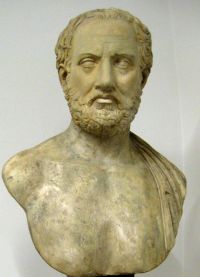
Portrait of Thucydides Thucydides,  The History of the Peloponnesian War

“ United, therefore, we have no cause to despair, but rather new encouragement to league together; especially as succour will come to us from the Peloponnesians, in military matters the undoubted superiors of the Athenians. And you need not think that your prudent policy of taking sides with neither, because allies of both, is either safe for you or fair to us. Practically it is not as fair as it pretends to be. ”
Source: Gutenberg

Get perspective with Kwize: daily news enlightened by great literature