“ It has always been and always will be only FOLK SPEECH. As such it is the perfect oral expression of our Pennsylvania Dutch folk and their rich folk culture. But as such it has also suffered greatly—mocked and despised and branded as ‘only a dialect,’ ‘a corrupt form of German,’ ‘a kind of Pennsylvania hog Latin’ by all those in the past who, not appreciating nor even knowing what folk culture really is and means, could see no good in a language which according to their puny and narrow educational background ‘did not even have a grammar or a dictionary’! ”
Pennsylvania Dutch
Definition and stakes
Quotes about “Pennsylvania Dutch”
Henry W. Shoemaker,
Allegheny Episodes
“ The Pennsylvania Dutch are the most adaptable race in the world, altering the spelling of their names, their genealogies and traditions with every generation. They find success in all callings and in all walks of life like the true Nomads that they are. A Pennsylvania Dutchman’s lineage is kaleidoscopic any way–possibly German, Jewish, probably Indian, with sure admixtures of Dutch, Quaker, Swiss, Scotch-Irish, Greek, Bohemian, Spanish or Huguenot. ”
“ Actually, then, the impress of Pennsylvania Dutch upon the Nation linguistically has been negligible. It is not enough to boast about the Pennsylvania Dutch ancestry of the Hoovers, the Earharts, and the Eisenhowers when the Nation as a whole has not been conscious of the existence of our deep-rooted folk culture over some nine generations. Meanwhile, however, we bid farewell to the visitor in the Dutch country with those familiar words heard in Lancaster County: koom boll widder! ”
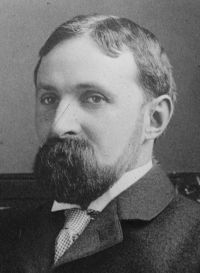
Phebe Earle Gibbons, "Pennsylvania Dutch," and other essays
“ If, now, we pass northerly to Lehigh County, we come to “Pennsylvania Dutch” land par excellence, for in no other county of our State are the people so nearly of unmixed German origin. I am told of Allentown, the county seat, with a population of about nineteen thousand, that Pennsylvania German, “Dutch,” is the prevailing language. A lawyer estimates that more than one-fourth of its inhabitants do not speak English if they can help it, and a considerable number in town, born in this region, do not speak English at all. ”
Edward Hungerford, The Personality of American Cities
“ More closely do the houses grow together, the farms disappear, an ancient mile-post thrusts itself into your vision. It is stone, but, after the fashion of these Pennsylvania Dutch, white-washed and readable. ”
“ Hex Signs and Distelfinks, Tulips and Cut Tomatoes, those marvelous motifs of Pennsylvania Dutch Folk Art, form a part of our American cultural background which is second to none as a true folk art. In America there is no equal to this gay, colorful and bold art form of the early settlers of southeast Pennsylvania. ”
“ The uniqueness of the situation is perhaps amazing to a European, but hardly to an American. Here in the greatest melting pot culture in the world it is no new thing to find widely diversified groups leveling off their ways and their speech to form a common American denominator. In the Pennsylvania Dutch country we have by far the most widely diversified folk culture in America and at the same time a unity of language which astounds the scholars of linguistic science. ”
“ Religion was one of the strong motives in the lives of our Pennsylvania Dutch forbears. It was upon the invitation of William Penn, who offered them a religious haven in Penn’s woods, that they came to America out of the Palatinate in Germany. The first ones to come were the Lutherans and Reformed, who even today form the largest segment of the Pennsylvania Dutch people. The Lutherans and Reformed were followed in quick succession by the so-called plain people, the Mennonites, the Amish and the [1] Brethren; the heart of whose life is still in Lancaster County, Pa. ”
Phebe Earle Gibbons, "Pennsylvania Dutch," and other essays
“ In Reading I am told in a lawyer’s office that three-fourths of the women who come in to do business speak “Pennsylvania Dutch.” My tavern-keeper says that many come to his house, born in the county, who cannot speak English. Another lawyer estimates that of the country people born in Berks County, three-fourths would rather speak Pennsylvania German than English; and another thinks that in the rural districts of the county from one-half to two-thirds prefer to speak the dialect, although perhaps half of these can talk English. ”
Ammon Monroe Aurand, Jr., Little Known Facts About the Amish and the Mennonites (1938)
“ Isn't it true that neither the Red Man, nor the Black, nor any other in America, present social studies as interesting or entertaining as the Germans settled in Pennsylvania--so-called Pennsylvania "Dutch?" ”
Unknown, Pennsylvania Dutch Cooking
“ The Pennsylvania Dutch are a hard working people and as they say, “Them that works hard, eats hearty.” The blending of recipes from their many home lands and the ingredients available in their new land produced tasty dishes that have been handed down from mother to daughter for generations. Their cooking was truly a folk art requiring much intuitive knowledge, for recipes contained measurements such as “flour to stiffen,” “butter the size of a walnut,” and “large as an apple.” ”
Phebe Earle Gibbons, "Pennsylvania Dutch," and other essays
“ Of those who are yoked together in life and do not pull together, the “Dutch” of Berks and Lehigh say, “Der ehne keht chee un der onnere keht haw.” (One gees and the other haws.) It is applied also to others who do not agree, and is heard also thus, “Ehnce will chee, oonce anner will ho.”Although our “Pennsylvania Dutch” are of undoubted German origin, yet in common speech they almost always speak of themselves as Dutch, which sounds much more like Deutsch than German does ”
Samuel Stehman Haldeman,
Pennsylvania Dutch: A Dialect of South German With an Infusion of English
“ Pennsylvania Dutch (so called because Germans call themselves Deutsch [4] ) is known as a dialect which has been corrupted or enriched by English words and idioms under a pure or modified pronunciation, and spoken by natives, some of them knowing no other language, but most of them speaking or understanding English. Many speak both languages vernacularly, with the pure sounds of each, as in distinguishing German tōd [p. 5] (death) from English toad ”
Samuel Stehman Haldeman,
Pennsylvania Dutch: A Dialect of South German With an Infusion of English
“ Like other languages, the dialect of German known as Pennsylvania Dutch presents variations due to the limited intercourse of a widely-scattered agricultural population, and to the several dialects brought from abroad, chiefly from the region of the Upper Rhine, and the Neckar, the latter furnishing the Suabian or Rhenish Bavarian element. ”
“ Only very recently have those of us who are interested in the study of folk cultures and folk linguistics seen the real and underlying values in the language—now, at a time when it is very rapidly dying out, when hardly any member of the new generation speaks anything but English (though that with often a heavy Pennsylvania Dutch savor) , when the near future will witness the almost complete disappearance of this interesting, humorous, beloved folk speech except for its persistent employment by the Old Order Amish in their religious services and most of their everyday conversations. ”
Phebe Earle Gibbons, "Pennsylvania Dutch," and other essays
“ As I sat the next morning a while with the landlady in her basement kitchen, she remarked, “Here is it as Dutch as Dutchlant.” But she said that my Dutch was not like theirs. The neighborhood, however, is not nearly so German as Germany. I was told by an intelligent young man that half the grown men did not speak English; I understand by this, not that they do not speak our language at all, but not habitually and with fluency. Many speak English very well, but the “Dutch” accent is universal. For several years the school-books in the township have all been English. ”
Albert Bushnell Hart,
The Southern South
“ Just as in central Pennsylvania, and the Valley of Virginia, the English, Scotch-Irish, and Pennsylvania Dutch were intermingled. It is an error to suppose that these highlanders are descended from the riffraff of the colonial South; they have been crowded back into the unfavorable parts of the mountains because, as the population increased, there was a lack of good land; and the least vigorous and ambitious of them, though sons or grandsons of stalwart men, have been obliged to accept the worst opportunities. ”
“ Situated but a few hours drive from many of the great cities of the eastern United States, the Pennsylvania Dutch Country offers more to the tourist than perhaps any other area of our country. Honeycombed with fine hard-topped roads, Lancaster County is the happy hunting ground for the visitor, who wishes to concern himself with the quaint and the historic. It is the ideal spot for quiet leisurely travel through the most picturesque and well-tended farm land to be found anywhere. ”
Don Peterson, The White Feather Hex
“ He was a proud descendant of a long line of staunch German settlers commonly known as the Pennsylvania Dutch. He grew up in his fundamental, religious sect having never known any other environment. He was exposed to the sun, soil, and wind from the early days of his childhood, and along with the elements he also was exposed to the evils of the hexerei. The hexerei, or witchcraft, was something that was never doubted or scoffed at by his people. Then why should he, a good Pennsylvania Dutchman, doubt or scoff at such tradition? ”
Phebe Earle Gibbons, "Pennsylvania Dutch," and other essays
“ The late hours which have been kept by our “Pennsylvania Dutch” when Fanny has a beau once do not prevail among the Welsh at Scranton. A gentleman who leads a large church choir, of which all the men are miners, and not half of these church members, tells me that the young men wait upon the young women home before nine, chat a while on the front porch or steps, and generally leave at ten.A physician says that most of the courtship of the Welsh is begun, and often finished, while walking the streets after church. “This street is thronged,” says he, “on Sunday nights in summer. ”
Constance Lindsay Skinner, Pioneers of the Old Southwest: a chronicle of the dark and bloody ground (1919)
“ The second largest racial stream which flowed into the Back Country of Virginia and 15 North Carolina was German. Most of these Germans went down from Pennsylvania and were generally called “Pennsylvania Dutch,” an incorrect rendering of Pennsylvänische Deutsche. The upper Shenandoah Valley was settled almost entirely by Germans. They were members of the Lutheran, German Reformed, and Moravian churches. The cause which sent vast numbers of this sturdy people across the ocean, during the first years of the eighteenth century, was religious persecution. ”
Hazard Stevens,
The Life of Isaac Ingalls Stevens…
“ The 50th Pennsylvania were Pennsylvania Dutch, descendants of the Germans who settled the central part of the State before the Revolution, and were slower, more heavily moulded than the others, but always steadfast and reliable. The Roundheads came from the western, more mountainous part of the Keystone State, and were of the vigorous Scotch-Irish stock, with many tall, rawboned men. ”
Phebe Earle Gibbons, "Pennsylvania Dutch," and other essays
“ The peculiarities of a people are always best observed by those who do not live among them, or rather by those who visit them occasionally. Most of my notes on this subject are taken from the conversation of physicians born in other localities than those in which they practise. One in my own county mentions the “apnehme,” or wasting away of children. He says that popular remedies are measuring the child and greasing it by certain old women. Another says that the “Pennsylvania Dutch” also measure for wild-fire or erysipelas, generally using a red silk string, and measuring about sundown. ”
Leonard Woolsey Bacon,
A History of American Christianity
“ So numerous were the fugitives from the Palatinate that the name of Palatine came to be applied in general to German refugees, from whatever region. This migration of the German sects (to be distinguished from the later migration from the established Lutheran and Reformed churches) furnished the material for that curious "Pennsylvania Dutch" population which for more than two centuries has lain encysted, so to speak, in the body politic and ecclesiastic of Pennsylvania, speaking a barbarous jargon of its own, and refusing to assimilate with the surrounding people. ”
Phebe Earle Gibbons, "Pennsylvania Dutch," and other essays
“ Although the hour was so early, and meeting was fixed to begin at one, I found a considerable number here, which did not surprise me, as I knew the early habits of our “Dutch” people. Taking a seat, I began to read a number of the Living Age, when a black-eyed maid before me, in Dunker dress, handed me her neatly-bound hymn-book in English and German. I told her that I could read German, and when I read a verse in that language she said, “But you don’t know what it means.” Reading German is with us a much rarer accomplishment than speaking the dialect. ”
Rupert Sargent Holland, Historic Events of Colonial Days
“ There was a moment's silence, then a few shouts, then the crowd began to make away by the side-streets, talking excitedly, gesticulating, very much startled at the governor's news. They knew that the English and Dutch settlements along the Atlantic Ocean had often had to defend themselves against enemies, both white and red, but here in Pennsylvania there had practically been no need of defense; they had always been on good terms with their Indian neighbors, and no other enemies had appeared. ”
Phebe Earle Gibbons, "Pennsylvania Dutch," and other essays
“ Always get money in before you pay it out.” In Northampton County an old resident is reported to have said, “Do you know the difference between a Yankee farmer and a Dutch one? When a Yankee farmer has apples, he sells the scrubby ones and eats the good ones at home; and a Dutch farmer picks out the scrubby ones to eat at home, and sells the good ones.” ”
Phebe Earle Gibbons, "Pennsylvania Dutch," and other essays
“ At the same period, about nine years ago, a physician told me that the public-school teachers in the rural parts must necessarily speak German for the children to obtain ideas, or must interpret English to them. These counties, with Lebanon, six in number, are the great German ones, beginning with York on the southwest, and ending with Northampton on the northeast; but the Pennsylvania German population is by no means confined to these counties. It spreads along the cultivated soil like grass. Adjoining Berks and Lehigh is Montgomery, the northern part of which is very “Dutch.” ”
Frederic Antes Godcharles, Daily stories of Pennsylvania (1924)
“ The republic of the Netherlands, after a struggle never surpassed for heroism and constancy, had won a truce with King Philip of Spain, and the Dutch merchants had sent the English captain out upon the old quest, a short route to China.Hudson’s appearance in Delaware Bay was before his discovery of the Hudson River, and, therefore, New Netherlands had its origin on the Delaware, called by the Dutch the Zuyd Revier, or South River. ”
John Gottlieb Ernestus Heckewelder, History, Manners, and Customs of the Indian Nations Who Once Inhabited Pennsylvania and the…
“ The Dutch made them understand that they would not stay here, that they would return home again, but would pay them another visit the next year, when they would bring them more presents, and stay with them awhile; but as they could not live without eating, they should want a little land of them to sow seeds, in order to raise herbs and vegetables to put into their broth. ”
Phebe Earle Gibbons, "Pennsylvania Dutch," and other essays
“ Far east of Franklin County, in Montgomery, I was told of peacemen, the Schwenkfelders and Mennonites, that they buy good farms. “They don’t buy the hilly, stony ones; and, at the same time, I don’t know how it comes they can afford to pay for them.”The severe economy of the Pennsylvania Germans has been just mentioned. One New-Year’s day I saw in a bank a young man who was asked to subscribe for something. He declined, and spoke of “our old Dutch rule that it is a bad plan to buy on New-Year’s morning. ”
Phebe Earle Gibbons, "Pennsylvania Dutch," and other essays
“ At a Quaker settlement in Lancaster County, nearly extinct among the “Dutch,” a father urged his son to activity thus: “Let me see if thee’ll go on and help me like a little Dutch boy would do, or whether thee’ll linger and loiter about.” When the boy had got into college he told of his neighbors’ saying, “Too much eddication, you know, makes a man lazy.” A neighboring farmer was inquiring for a person to help him in haying and harvest, and the lad spoke for himself, saying that some people thought he was lazy, but that he could work and was willing to work. ”