Persian court

Definition and stakes

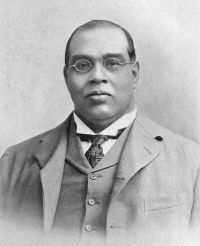
Portrait of Romesh Chunder Dutt Romesh Chunder Dutt,  The Slave Girl of Agra (1909)

“ The language of the Court—the Persian—is the spoken tongue of a few. Our Court poetry is like a pretty flower which we grow on a marble vase and admire for a day. But the poetry of nations is like a vast wood, which spreads over the broad and fertile earth and gives shade and shelter to the people."
"But I have heard, Abul Fazel, that the Hindus speak and write the Persian tongue as well as we, and that the late Raja Todar Mull spread the use of the Persian in our Courts and offices throughout India."
”

Source: Wikisource

Robert Grant Watson,  A History of Persia (1866)

“ About this time the Governor-General of the Caucasus who had been appointed to succeed the ill-fated Seeseeanoff, sent an envoy to the Persian court, to propose that peace should be concluded on the basis that Karabagh, Sheervan, and Sheki, should be made over to the Czar. He received a reply [9] to the effect that no peace could be concluded which should not provide for the restoration to the Shah of all the provinces that had formerly been the property of Persia. ”
Source: Wikisource

Robert Grant Watson,  A History of Persia (1866)

“ In return for the advantage conferred by this article, Persia, on her side, engaged to obstruct the advance of the armies of any European power seeking to pass through her territory for the purpose of invading India. From this time forth the Persian court was destined to become the place of residence of ministers plenipotentiary from the sovereigns of England and of Russia; and as Persia was thus assumed to be a civilized power, she was obliged thenceforth to conform herself in some respects to the practices of civilized nations. ”
Source: Wikisource

Get perspective with Kwize: daily news enlightened by great literature