R. L. Stevenson

Definition and stakes

Frank Swinnerton,  R. L. Stevenson (1914)

“ He was perhaps not wise enough in the mysteries of the human soul. Sensitiveness, and the desire to create a passionate beauty, were not fit substitutes for that patient and courageous, that fearless imagination which alone could have given truth to so simple and so unseizable a problem. More, in his handling of the conclusion of his tale, Stevenson’s emotion fell to a lower plane, and his talent played him quite false. He became too intent upon his rendering of the idea; his literary sense took command when his knowledge failed. ”
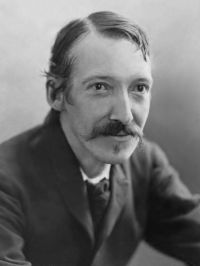
Source: Gutenberg

Frank Swinnerton,  R. L. Stevenson (1914)

“ I am saying nothing about the books as pieces of literary artifice. There is not one of Stevenson’s own original romances that is not made in two or three or even a hundred flights. There is not one that is not pieced together by innumerable inventions, so that it is a sort of patchwork. That is a persistent defect. It is in Treasure Island, it is in The Master, it is in The Wrecker and it is in Weir, patent to the most casual glance. And the cause of that is low vitality—his own and the book’s. ”
Source: Gutenberg

Frank Swinnerton,  R. L. Stevenson (1914)

“ Stevenson from the first saw himself as the central object in his essay: it is amusing to watch how soon he begins to make himself count as an effective central object. At first the personality is thin: it has not carried. Later it develops with the development of style: the use of words becomes firmer, and with that firmness comes greater confidence, greater ease, in the projection of the author’s self. It is perhaps not until we reach the familiar essays that we find Stevenson fully master of himself, for literary purposes; but the growth provides matter for rather ingenious study. ”
Source: Gutenberg

Get perspective with Kwize: daily news enlightened by great literature