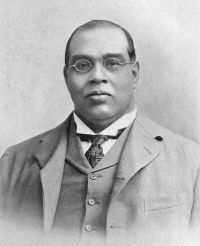
“ Then, briefly telling the soldier that he had done well, the rajah drew Ram Singh to one side, and in a few minutes learned from him how, in attending to the guru’s counsel, he had delayed to do the king’s message.In the end the rajah found from some papers the proofs of his dead brother’s treachery; and Ram Singh established his innocence and integrity. He continued to serve the rajah for many years with unswerving fidelity; and married a maiden of his own rank in life, with whom he lived happily; dying at last honoured and loved by all men. Sons were born to him ”
Ram Singh
Definition and stakes
Quotes about “Ram Singh”
“ Then, with plenty of money, he could bribe the soldiers and some of the rajah’s counsellors, head a rebellion, dethrone and kill his brother, and reign himself instead. He was too wary, of course, to tell Ram Singh of all these wicked plans; but he began by flattering him whenever he saw him, and at last offered him his daughter in marriage. But Ram Singh remembered the fourth counsel of the old guru—never to try to appear the equal of those above him in station—therefore he respectfully declined the great honour of marrying a princess. ”
“ He moved to reach the papers in his breast pocket, and was checked by the handcuffs. He glanced at Ram Singh angrily. The native looked at him complacently. It was an awkward moment. "Ram Singh!" The girl spoke sharply. "Have you bound the white man's hands?" The Sikh grunted non-committally. She pointed at Gray. "Undo his hands. Is a white man to be tied like a horse-stealing Kirghiz?" Reluctantly, Ram Singh obeyed, and stood near vigilantly. Gray felt in his pocket with stiffened fingers and produced his passport. This the girl scanned curiously. ”
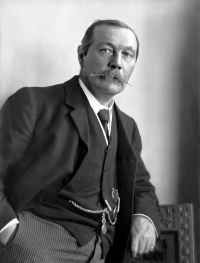
“ Catching sight of a prosperous-looking merchant standing in front of a shop full of grain of all kinds, Ram Singh went up to him and asked whether he could give him anything to do. The merchant gazed at him so long that the young man began to lose heart, but at length he answered:‘Yes, of course; there is a place waiting for you.’‘What do you mean?’ asked Ram Singh.‘Why,’ replied the other, ‘yesterday our rajah’s chief wazir dismissed his body servant and is wanting another. Now you are just the sort of person that he needs, for you are young and tall, and handsome ”
Reginald Thomas Maitland Scott, The Spider Strikes — The Spider Strikes (1933)
“ Ram Singh lost none of his self respect by looking upon the world and realizing that all men were not equal — and he increased his self-respect by the conviction that he served a master whom surpassed all men. Once when he had been wounded Wentworth had carried him in his arms like a baby while he rode a swaying camel for five hours over the Sind Desert. ”
Reginald Thomas Maitland Scott, The Spider Strikes — Wentworth Tastes Fear (1933)
“ Ram Singh, noticing the movement of the portieres, sprang into them with arms outstretched to seize what stood behind. His weight tore one of the portieres from its rings and he went to the floor with it. There was a muffled scream, and the Hindu staggered back into the room, carrying something which wriggled within the portiere. ”
Reginald Thomas Maitland Scott, The Wheel of Death — Master of Seven Million People… (1933)
“ It was just before dinner on the following evening that Ram Singh finally returned to Wentworth's Park Avenue apartment. His first act was to light some incense and place it before old Ganesh the elephant-headed god of India— the god which he had carefully brought away from the apartment which they had deserted. In his own room he squatted upon the floor while the incense burned and chanted a mantra in a low voice. Ganesh was a god who should be carefully cultivated if good luck were to remain with Ram Singh and with Ram Singh's master. ”
Arthur Conan Doyle,
The Mystery of Cloomber — Chapter 13
(1889)
“ Have you not gathered from all you have heard that the general's fears are in some way connected with India and the Indians?"The remark made me thoughtful."Why, now that you mention it," I answered, "I have some vague impression that the mystery is connected with some incident which occurred in that country. I am sure, however, that your fears would vanish if you saw Ram Singh. He is the very personification of wisdom and benevolence. He was shocked at the idea of our killing a sheep, or even a fish for his benefit—said he would rather die than have a hand in taking the life of an animal." ”
Jadunath Sarkar,
Shivaji and His Times
(1920)
“ But there is no remedy against Fate and what is written on a man's forehead. I learn from the letters of some Court agents that there is a proposal to dismiss Ram Singh from his rank (mansab) and jagir, because Shiva's Brahman followers, at the instigation of selfish men [my enemies at Court] , have alleged that the flight of Shiva was due to the advice of Ram Singh, and resulted from the latter s omission to watch him well. May God give death to the man who cherishes the very thought of such an act of faithlessness in his heart ! ”
Richard Savage, A Fascinating Traitor: An Anglo-Indian Story
“ Fear will make him bend, if he is guilty, and I will alarm Ram Lal at the right time. If they have any old bond of union, the ex-Commissioner may turn to me for help, and all this will bring me nearer to the still heart-whole woman who is hidden in that marble prison. I will make my strongest running on the Swiss woman. Once the bond of friendly secrecy established between us, she can be fed, bit by bit, for then she dare not break away.” Ram Lal Singh was the last watcher in Delhi who coveted a glimpse that night into the dim future. ”
Max Arthur Macauliffe,
The Sikh Religion
(1909)
“ The Sahijdharis include the Udasis founded by Sri Chand, son of Guru Nanak; the Sewapanthis founded by a watercarrier of Guru Gobind Singh; the Ramraiyas, followers of Ram Rai, son of Guru Har Rai; the Handalis, to be subsequently described, and other sects of minor importance. The Sikh religion differs as regards the authenticity of its dogmas from most other great theological systems. Many of the great teachers the world has known have not left a line of their own composition, and we only know what they taught through tradition or second-hand information. ”
Bhagat Singh,
Introduction to Dreamland
“ All these movement cannot rightly be designated as revolutionary movement.But L. Ram Saran Das is the first revolutionary recruited formally in the Punjab by a Bengali absconder in 1908. Since then he had been in touch with the revolutionary movements and finally joined the Ghadar Party but retaining his old ideas that people held about the ideal of their movement. It has another interesting fact to add to its beauty and value. L. Ram Saran Das was sentenced to death in 1915, and the sentence was later on commuted to life transportation. ”
Bhagat Singh,
Blood Sprinkled on the Day of Holi Babbar Akalis on the Crucifix
(1925)
“ Anoop Singh ran with all the bombs and surrendered. The remaining four people were standing, surrounded from all sides. The British police captain said: "Karam Singh! drop the weapons and you will be pardoned." The hero responded challengingly: "We will die a martyr's death while fighting, as a real revolutionary, for the sake of our motherland, but we shall not surrender our weapons." He inspiringly called his comrades. ”
Bhagat Singh,
Blood Sprinkled on the Day of Holi Babbar Akalis on the Crucifix
(1925)
“ Bullets flew in all directions. After their ammunition exhausted, these brave people jumped into the river and bravely died after hours of ceaseless fighting.Sardar Karam Singh was 75 years old. He had been in Canada. His character was pure and behaviour ideal. The government concluded that the Babbar Akalis were finished, but actually they grew in strength. The 18-year old Dilip Singh was a very handsome and strong, well-built, though illiterate, young man. He had joined some dacoit gang. His association with Shri Dhanna Singhji turned him from a dacoit into a real revolutionary. ”
Dalip Singh Saund,
My mother India
(1930)
“ At the time of the Guru Ka Bagh incident the physical Gandhi was locked behind iron bars in a jail of India, but his spirit accompanied every Sikh as he stepped across the line to receive the enemy’s cowardly blows.The amazing part of this whole story is the perfect peace that prevailed throughout its entire course. The program of passive resistance was carried to completion without one slip of action on the part of the passive resisters. No community in the whole length and breadth of India is more warlike and more inflammable for a righteous cause than the Sikhs ”
Romesh Chunder Dutt,
The Slave Girl of Agra
(1909)
“ None among my many brave and faithful servants is so rarely seen in Court—none is so frequently heard of for his deeds in the remotest parts of my Empire. Thou hast confirmed our rule in Kabulistan and Zabulistan in the West, thou hast wrested Bengal and Orissa from the determined Afghans in the East, success has ever attended thy great endeavours." "Monarch of many nations," spoke Man Singh in his gruff voice, "I am ill fitted to speak, but gratitude dwells in my heart. ”
Dalip Singh Saund,
My mother India
(1930)
“ Once aroused to sense of duty towards the weak and the oppressed, they have always been found willing to give their lives without remorse or regret. Sikhs constitute a major portion of the military and police forces of India and of several British colonies. Those tourists who have been in the East will recall the tall, bearded Sikh policemen of the British principalities of Shanghai and Hongkong. Since the Sepoy Mutiny of 1857, Sikhs have always been regarded as the most loyal and devoted subjects of the British Crown in India. ”
Talbot Mundy, Hira Singh — Chapter II (1918)
“ Telegrams translated into Punjabi were nailed to the door of a hut, telling of India in rebellion and of men, women and children butchered by the British in cold blood. Other telegrams stated that the Sikhs of India in particular had risen, and that Pertab Singh, our prince, had been hanged in public. Many other lies they posted up. It would be waste of time to tell them all. They were foolishness—such foolishness as might deceive the German public, but not us who had lived in India all our lives and who had received our mail from home within a day or two of our surrender. ”
Dalip Singh Saund,
My mother India
(1930)
“ Punjab in the northwest part of India. They constitute by themselves a very important community, which is closely bound together by a feeling of common brotherhood. They all go by the name of Singh, meaning the lion, and are rightly proud of their history, which though brief in scope of time, is yet full of inspiring deeds committed by the Sikh forefathers in the defense of religious freedom and justice during the evil days of a few corrupt and fanatic Moghul rulers of India. As a rule Sikhs belong to the agriculturist class and both men and women are stalwart and healthy-looking. ”
John James Hood Gordon, The Sikhs (1904)
“ This act has been observed by the faithful Govindi Sikhs through the many years; but little remains now, as the railway contractor some years ago appeared on the scene and carried away the mass of old Sirhind as ballast on which to lay the iron track—the iron made sacred by the martial Guru, and which every true Singh was commanded to wear always in some shape, either as a sword, a small hatchet, or as a bangle. ”
Bhagat Singh,
Blood Sprinkled on the Day of Holi Babbar Akalis on the Crucifix
(1925)
“ Sardar Karam Singhji, Sardar Dhanna Singhji and Sardar Uday Singhji stepped forward. Just keep aside the question of its propriety for a moment and imagine the scene when they took the oath: We will sacrifice our all in the service of the country. We swear to die fighting but not to go to the prison. ”
John James Hood Gordon, The Sikhs (1904)
“ In 1803 the British captured Delhi from the Mahrattas, the one strong native power then left in India. Those who still kept the field were followed up by Lord Lake, who defeated them wherever they stood. He pursued Holkar, their chief, who fled to the Punjab with the remnants of his once powerful and numerous army in the hope of finding an ally in the Sikhs. In alarm at finding the Mahrattas and British in their midst, a "Guru Mata," or National Council of the Khalsa, was held at Amritsar for the last time. They decided to stand aloof, and Ranjit Singh acted as mediator. ”
John James Hood Gordon, The Sikhs (1904)
“ King and political head of the Punjab, as well as chief of the Khalsa, he aimed at reconciling the varied divisions of race and creed among his subjects by employing all in his service. He kept up, however, the theory of the Khalsa, attributing every success to the favour of the Guru in the name of the Lord. "God the helper—Ranjit Singh," was his sign-manual. The Sikhs retained special privileges as the ruling race, the heart and soul of the military nation—the favoured of the State. ”
Bhagat Singh,
The Problem of Punjab’s Language and Script
(1923)
“ We find later that when Sikhs are reduced to mere groups of anarchists, declared outlaws, and were continuously compelled to be confined to the forests, no new literature could be created. They had a warrior spirit, a sense of courage and sacrifice and a spirit to continue their war against Muslim rulers, but they could not chalk out their future beyond this . This explains why these warrior groups fought among themselves. It is here that their lack of contemporary spirit worries us. ”
Talbot Mundy, Hira Singh : when India came to fight in Flanders
“ Our Guru tells us Sikhs should fight ever on the side of the oppressed; the weaker the oppressed, the more the reason for our taking part with them. Our officers made no secret about the strength of the enemy, and we made none with them of our feeling in the matter. They were proud men that day. Colonel Kirby was a very proud man. We were prouder than he, except when we thought of Ranjoor Singh. ”
Talbot Mundy, Hira Singh : when India came to fight in Flanders
“ I fought with a sense of shame as I have since then fought with thirst and hunger. All the teachings of our Holy One accused me. Above all, Ranjoor Singh's face accused me. I remembered that for more than twenty years he had stood to all of us for an example of what Sikh honor truly is, and that he had been aware of it. "I know the thoughts ye think!" said he, beginning again when he had given us time to answer and none had dared. "I will give you a real thought to put in the place of all that foolishness. This is a regiment. I am its last surviving officer. ”
Talbot Mundy, Hira Singh : when India came to fight in Flanders
“ But of Risaldar-major Ranjoor Singh bahadur in the flesh, I have not had another glimpse. I went in search of him the very first evening, only to learn that he had "passed his medical" that afternoon and had returned at once to active service. We Sikhs have a proverb, sahib, that the ruler and the ruled are one. That has many sides to it of which one is this: India having many moods and minds, the British are versatile. Not altogether wise, for who is? When, for instance, did India make an end of wooing foolishness? ”
Talbot Mundy, Hira Singh : when India came to fight in Flanders
“ Then you have heard lies, sahib. I know the burden of their song. A bad Sikh and a bad Englishman alike resemble rock torn loose. The greater the height from which they fall, the deeper they dive into the mud. Which is the true Sikh, he who marched with us or he who abuses us? Yet I am told that in America men believe what hired Sikhs write for the German papers. ”
Harold MacGrath,
The Adventures of Kathlyn
“ No help there, no guidance. "Is the life of a decrepit old man," asked Lal Singh, "worth the lives of these white people who love and respect you?" Pundita rose and placed her hands upon her husband's shoulders. "We owe them our lives. Strike, Ramabai; but only if our need demands it." "Good!" said Lal Singh. "I'm off for the bazaars for the night. I will buy chupatties and pass them about, as they did in my father's time at Delhi, in the Great Mutiny." ”
Various, Blackwood's Edinburgh Magazine…
“ But the vigour of the Sikh kingdom, and the discipline and efficiency of their troops, have greatly declined in the hands of the present sovereign, Shere Singh, who, though a frank and gallant soldier, has little genius for civil government, and is thwarted and overborne in his measures by the overweening power of the minister, Rajah Dhian Singh, who originally rose to eminence by the favour of Runjeet. ”