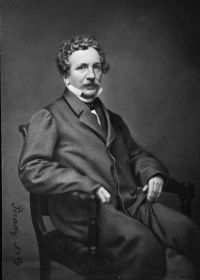
Richard de Clare

Definition and stakes

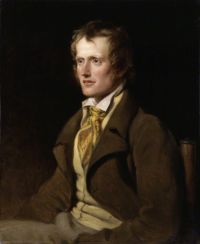
Portrait of G. P. R. James G. P. R. James,  The Woodman: A Romance of the Times of Richard III

“ Clare. Women's minds being, weak, cannot be injured by such softnesses; but they suit ill with a philosopher, a soldier, or a statesman. But it is upon this subject that I came to speak with your highness."
"What, regarding the abbess of St. Clare?" said Richard, with a start.
"Of her presently," replied Lord Calverly; "but first of my niece. I wish to crave your highness's permission to complete the marriage of this little Iola with my friend, and the son of my friend, Arthur Lord Fulmer."
”
Source: Gutenberg

John Horace Round,  Dictionary of National Biography… (1887)

“ CLARE, WALTER de (d. 1138?) , founder of Tintern Abbey, was probably son of Richard de Clare (d. 1070?) , founder of the house of Clare [q. v.] In Dugdale’s ‘Baronage’ (i. 207) he is also son of Gilbert, a brother of the Richard de Clare who died about 1070. His history is sadly confused. The few facts related concerning him have been mainly taken from two documents (Mon. Angl. v. 269-70) , of which the one, his ‘Genealogia,’ is clearly based upon the continuation of William of Jumièges (viii. 37) , itself inaccurate, but is sadly garbled; while the other, a chronicle, is even more erroneous. ”
Source: Wikisource

John Horace Round,  The Commune of London, and other studies (1899)

“ It has indeed been suggested that for “Gilbert” we should read “Richard,” [607] but this will not help us. For, to secure consistency, we should have to read “Richard de Clare.” Nevertheless, it has been loosely assumed, on no other evidence, that Richard de Clare, earl of Pembroke (“Striguil”) acted as Marshal of England at the coronation of Henry II. in 1154. [608] And on this foundation antiquaries have raised theories to which we must return. ”
Source: Gutenberg

Get perspective with Kwize: daily news enlightened by great literature