Kiln

Definition and stakes

Portrait of Nathaniel Hawthorne Nathaniel Hawthorne,  Nathaniel Hawthorne

“ The kiln, however, on the mountain-side, stood unimpaired, and was in nothing changed since he had thrown his dark thoughts into the intense glow of its furnace, and melted them, as it were, into the one thought that took possession of his life. It was a rude, round, tower-like structure, about twenty feet high, heavily built of rough stones, and with a hillock of earth heaped about the larger part of its circumference; so that the blocks and fragments of marble might be drawn by cart-loads, and thrown in at the top. ”
Source: Gutenberg

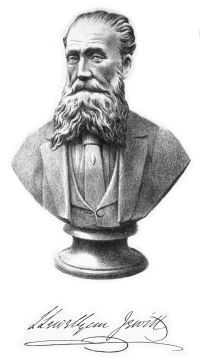
Portrait of Llewellynn Frederick William Jewitt Llewellynn Frederick William Jewitt,  The ceramic art of Great Britain from pre-historic times down to the present day… (1878)

“ The only furnace or kiln which we have tried with any degree of success, is the kiln used by the potters who make brown stone. It is called the 36-hole kiln. Wood is the fuel used in it. They burn billets before and under it, where there is an oven or arch pierced by 36-holes, through which the flame ascends into the chamber which contains the ware, and goes out at as many holes of the same dimensions in the crown of the furnace. The safeguards at bottom stand on knobs of clay, which won’t melt, about two inches square, and two inches and a half or three inches high ”
Source: Gutenberg

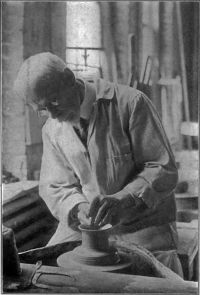
Portrait of Charles Fergus Binns Charles Fergus Binns,  The Potter's Craft: A Practical Guide for the Studio and Workshop

“ Kilns are of two types, open and muffle. In the open kiln the flames pass through the firing chamber and the ware may be exposed to their action, as in stoneware and brick; or it may be enclosed in the fire-clay cases, called saggers, as in the many forms of pottery, dishes or faience. The muffle kiln is a closed chamber which is surrounded by flames but which is not entered by them. These kilns are used in the manufacture of terra cotta and heavy enamel wares, and the portable kilns made for studio use are of this type. ”
Source: Gutenberg

Get perspective with Kwize: daily news enlightened by great literature