“ The free hand was raised to Romney, who bowed to his knee before the man and woman."You mean beauty and manhood to me—you precious two," he whispered. "The packets shall be sunk as you say. I have been proud to serve you both. Always I shall feel you above and beyond.""Ah, America—so often you bring her home to my heart. Godspeed to you, Romney. All is well with us. All is better than the best we could know or ask for.... We will be alone together. We shall have silence here.... Yes, that is well. Toss the yellow rug about us. Now we shall know the deeper dreaming." ”
Romney
Definition and stakes
The literary concept of "Romney" represents a multifaceted figure found in 19th- and early 20th-century texts, often embodying romantic idealism, artistic drive, or moral depth. Elizabeth Barrett Browning depicts Romney as a conflicted lover in Aurora Leigh, caught in emotional and existential conflict, while C. Lewis Hind presents George Romney as a young painter striving for recognition in London.
Other works, such as The Last Ditch, feature Romney as a symbolic figure within stories of sacrifice and transcendence. These diverse portrayals underscore Romney’s versatility as a literary symbol, reflecting themes of art, love, and human aspiration across various contexts. The character’s lasting appeal stems from his ability to convey both personal struggle and universal longing.
Quotes about “Romney”
 Elizabeth Barrett Browning,
Aurora Leigh
Elizabeth Barrett Browning,
Aurora Leigh
“ To take between his dainty, milk-fed lips, God love him! I should certainly be glad, Except, God help me, that I’m sorrowful, Because of Romney. Romney, Romney! Well, This grows absurd!—too like a tune that runs I’ the head, and forces all things in the world, Wind, rain, the creaking gnat or stuttering fly, To sing itself and vex you;—yet perhaps A paltry tune you never fairly liked, Some ‘I’d be a butterfly,’ or ‘C’est l’amour:’ We’re made so,—not such tyrants to ourselves, We are not slaves to nature. ”
Elizabeth Barrett Browning,
Aurora Leigh
(1857)
“ Far off in London, there to work and hope. With that they parted. She kept sight of Heaven, But not of Romney.He had good to do To others: through the days and through the nights, She sewed and sewed and sewed.She drooped sometimes, And wondered, while, along the tawny light, She struck the new thread into her needle’s eye, How people without mothers on the hills, Could choose the town to live in!—then she drew The stitch, and mused how Romney’s face would look, And if ’twere likely he’d remember hers, When they two had their meeting after death. ”
Related terms
Authors who wrote about “Romney”
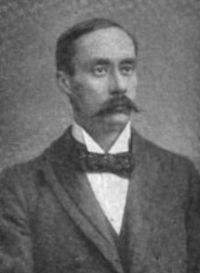 C. Lewis HindGeorge C. WilliamsonElizabeth Barrett BrowningRandall DaviesMaud Wilder Goodwin
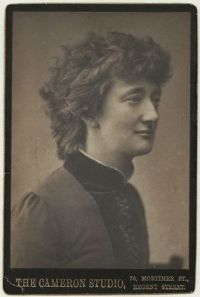 Alice Stopford Green
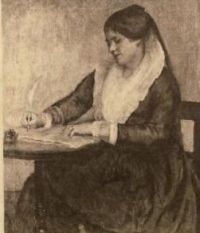 Anne Gilchrist
 Leslie Stephen
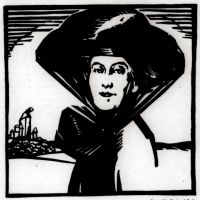 L. Adams Beck
 Mrs. Humphry WardRon Paul, Mitt Romney, Mike Huckabee…Ron Paul, Mitt Romney, Mike Huckabee…Ron Paul, Mitt Romney, Mike Huckabee…
 Ellen Anderson Gholson GlasgowClarence Albert FonerdenRichard Austin Freeman
 Marjorie Bowen
 Ella Wheeler Wilcox
 Samuel R. Watkins
 Dutton Cook