“ Here, as is customary in the Argentine, the English are greatly in evidence and occupy an important place in the business life. They have a pleasant Club and are very hospitable. Rosario has also an advantage over Buenos Aires in being naturally more open and picturesque. It is built on the bank of the Parana, some 300 feet high, and a fine view is obtained of the great waterway and the far-off, poplar-clad islands. The climate is said to be more relaxing than that of the capital, but the difference is not great. ”
Rosario, Argentina
Definition and stakes
Quotes about “Rosario, Argentina”
“ However, Rosario remains a favourite port, and large vessels load and unload there.In one respect Rosario produces a much more pleasant impression than Buenos Aires, for its streets are wide and it has large parks. The Calle Cordoba is an extremely handsome thoroughfare with good shops. There is a busy Bolsa, many fine public buildings, and much-frequented cafés. Large hotels have sprung up, and, it may be hoped, will in course of time become comfortable. The people of Rosario have taken great pains in the laying out of their town and have provided for plenty of open spaces and boulevards. ”
Nevin O. Winter, Argentina and Her People of To-day
“ In the way of municipal improvement Rosario is up to date, and contains all the advantages of the metropolis except population. There are a number of plazas after the usual style, and a beautiful park adorns one section of the city. Electric light and cars serve the entire city, so that in physical comforts Rosario [100] is not behind similar cities in Europe, or North America. There is quite a considerable foreign colony and each one boasts its club where the members can meet, eat, drink and be merry. ”
Henry Stephens, Journeys and Experiences in Argentina…
“ The largest importing house in Argentina, that of Chiesa Brothers, is located here as well as the largest drug firm. The city is essentially Italian, its influence predominating, although numerically the other foreigners and natives together have a larger population than the immigrants from the Lavinian shores. Rosario is also a center for artisans, their sculptors vying with those of Genoa in the chiseling of marble for tombs and statuary in Buenos Aires and in different parts of South America. The city is by no means beautiful nor can it ever be on account of the flatness of its location. ”
Nevin O. Winter, Argentina and Her People of To-day
“ The second city in Argentina is Rosario de Santa Fé. It is the Chicago of Argentina, for it is the chief wheat market, and is about as far inland as Pittsburg. It is connected with Buenos Aires by two branches of the Central Railway, as well as river communication. Rosario is to a great extent a replica of the national capital on a much smaller scale. The streets all cross each other at right angles. One-storied buildings predominate everywhere, and I do not believe that there is a structure which exceeds three stories in the city. Even in the business section one story is the general rule. ”
“ In 1907 this port was entered by British ships with a tonnage of 80,457, and German with a tonnage of 15,838. Much of the prosperity of Rosario—and its advance is very rapid—is due to its excellent railways. The town has every natural advantage and possesses an industrious and enterprising community which would be one of the most favoured in the world if its government were better.Santa Fé, the capital of the Province, is a comparatively insignificant town with about thirty thousand inhabitants. It is an old place, dating from 1573, and thus is really [272] more ancient than Buenos Aires. ”
Argentina from a British Point of View…
“ The first part of this province to be developed was the country around Rosario, the large port on the River Parana, where ocean-going steamers call. This, together with good railway accommodation in all directions combined with excellent land in the district, facilitates the cultivation of cereals on a very large scale. Property in Rosario itself is very valuable, and from £30 to £50 a yard is a common figure. In the immediate district of Rosario land is rarely sold in large areas, but may be calculated at £20 an acre, whilst 40 leagues further north it is to-day worth £50,000 a league. ”
“ There is great wealth and the love of display is also great, and doubtless, like Paris, it exercises a dangerous fascination on the people at large, who are apt to think that there is no profit or pleasure anywhere except at Buenos Aires. It occupies in Argentina a more important position than does Paris in France, and probably the development of Rosario and Bahia Blanca will have a good effect in modifying its pretensions. ”
Nevin O. Winter, Argentina and Her People of To-day
“ Argentina is a country that is purely pastoral and agricultural, for the proportion of those engaged in manufacturing is numerically very small. And yet one city contains nearly one-fifth of the total population. When you include the other cities, such as Rosario, Tucuman, Mendoza, etc., the proportion of city dwellers is still greater. The cities of Argentina have outgrown the rest of the country. With people of an excitable nature, such as the Latins are, it may bode serious trouble in the future. ”
C. Reginald Enock, Spanish America, Its Romance, Reality and Future…
“ The city is the outlet to a rich productive region, and stands on the eastern margin of the great Pampas. Rosario is, in the main, a commercial centre, whence many products of Northern Argentina are embarked on the full-flowing Paraná which washes its quays. Sacks of wheat, bales of hay, cattle and all their products, bags of sugar, maize in large quantities, and quebracho extract, are the principal of these exports. It reflects, or indeed in part gives rise to, the activities of Buenos Ayres, to which it comes second in importance as regards size and commerce. ”
Henry Stephens, Journeys and Experiences in Argentina…
“ The hotel is owned by a Spaniard who has resided for over thirty years in the country. In the meantime he took one trip back to Spain but returned as he preferred Matto Grosso. Rosario is 998 feet above sea level, being 597 feet higher than Cuyabá. I think its population is in excess of two thousand. There is a project on hand to inaugurate an electric lighting plant and to build a charqueada. From here to Diamantino it is a hard two days' ride if one wishes to visit the source of the Paraguay owing to the detour of about six hours. ”
Nevin O. Winter, Argentina and Her People of To-day
“ You are travelling toward the equator, and the vegetation changes. The trees become still larger, and the grass is more luxuriant. Many varieties of palms make their appearance. A thousand miles from Rosario is the junction with the Iguassú River, and a few miles from its mouth are the famous falls of the same name. They are on the boundary line between Brazil and Argentina, and only a few miles away from the border of Paraguay. At some imaginary point on the broad Paraná, in the midst of these vast solitudes, these three republics meet. ”
“ The great waterways that characterise Argentina, although they are now less used for passenger traffic into the hinterland than formerly, must still in the future be a great, if not the principal, highway for the produce of the distant interior. Rosario, some two hundred miles above Buenos Aires on the Paraná, is a progressive and improving port, serving the rich maize and grain-growing expanses of the province of Santa Fé ”
J. A. Hammerton, The real Argentine: Notes and Impressions of a Year in the Argentine and Uruguay
“ Conditions in the capital city differ, of [156] course, in various ways, from those in the larger provincial towns, such as Rosario, Córdoba, and Mendoza, and still more widely from the life of the smaller rural communities; but we must always bear in mind in speaking of the Argentine that more than a fifth—and the most important fifth—of the entire population is concentrated in the capital, so that while London is not the embodiment of England, nor New York of the United States, Buenos Ayres does stand for Argentina. ”
Henry Stephens, Journeys and Experiences in Argentina…
“ There is but one brewery within the city limits, that of Palermo, whose product is vile. There was a so-called automobile factory which bought parts and assembled them, but it had to go out of business. There is not much future for manufacturing unless iron ore is found in paying quantities in Argentina. Without iron and without coal in Argentina, but little can be done although there are several large oil fields in Northern Patagonia. Rosario is a better commercial city than Buenos Aires, but the latter will always keep on growing and retain its lead as the metropolis of South America. ”
“ Possibly the hasty traveller of to-day loses something by the development of the railways, for he naturally takes the quick train in preference to the slow steamboat. Rosario is only 186 miles from Buenos Aires, and the journey occupies some seven hours on the Central Argentine Railway, which for comfort is all that can be desired. The officials (English) are most obliging; there is good sleeping and dining accommodation, and the managers are most anxious to show the traveller all that is to be seen ”
Henry Stephens, Journeys and Experiences in Argentina…
“ They attack everything but the garden truck, and by their sputum poison the streams. A man should never buy land for crops in Argentina without reckoning on this plague. The Province of Santa Fé had, according to the last census, a population of 1,111,426, ranking in this line the second of the Argentine provinces. Its area is 50,916 square miles and has as its capital city, Santa Fé, which has a population of 91,636. Rosario, frequently called Rosario de Santa Fé to distinguish it from Rosario de [146] La Frontera in the Province of Salta, is the largest city. ”
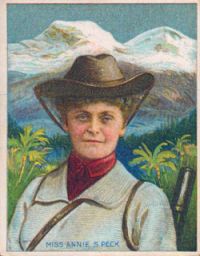
Annie S. Peck,
The South American Tour
“ RESIDENCE ON AN ARGENTINE ESTANCIA Rosario is a great railway center, roads leading to Mendoza and the Trans-Andine, to Bolivia, of course to the Capital and to other cities; it is expected that a road soon will extend to the Amazon basin. Rosario compares with Buenos Aires somewhat as Chicago with New York; it may have a similar if less rapid development. On higher land, with wider streets than Buenos Aires, in other respects it is naturally inferior. There are several hotels, the Grand, Central, Royal, Britannia, and Frascati called comfortable, with prices more moderate, as they should be ”
Nevin O. Winter, Argentina and Her People of To-day
“ There are almost a million and a quarter of these busy people who make their homes in Buenos Aires. In the New World it is exceeded in population by only three cities of the United States. It is as cosmopolitan as New York, and is the hub and centre of the whole republic. On the vast pampas grow the grain and meat which sustain the energies of the factory workers of Europe, who, in turn, send to Argentina the product of their looms and machine shops. ”
J. A. Hammerton, The real Argentine: Notes and Impressions of a Year in the Argentine and Uruguay
“ The River Paraná is wide and easily navigable for sea-going vessels of considerable tonnage at Rosario, and this, combined with the privileged situation of the town in the centre of one of the richest agricultural regions of the Republic, marks Rosario out for a future of the greatest prosperity. Its history already is second to none as a modern romance of commercial expansion, and the brisk business air that pervades the community, exhaled by all its citizens, legitimately proud of its rapid progress, render it a most attractive centre for the commercial man. ”
“ From Buenos Aires to Mendoza, from Bahia Blanca to Tucuman, are to be seen all the signs of wealth and [2] prosperity, all the unmistakable portents of coming potency usually apparent in a new country that has emerged from the stage of childhood and weakness and feels the vigour of lusty youth in its veins, impelling it to take its place in the system of world politics.If a single volume is all too short to represent Argentina in its manifold aspects, still less adequate is a single chapter to sketch its physical characteristics. ”
Guglielmo Ferrero,
Ancient Rome and Modern America…
“ I very soon realised that American progress, the rapid increase, that is to say, of the wealth of Argentina and the incessant modernisation of the customs and institutions of the country, were a sort of national religion, which was accepted by most people with a blind credence. So in the end, I was persuaded that this ardent faith in progress must be attributed to the preponderating influence of Buenos Aires, that immense city, almost half the population of which is composed of European immigrants in search of wealth. ”
J. A. Hammerton, The real Argentine: Notes and Impressions of a Year in the Argentine and Uruguay
“ In a country where population and commerce are the determining factors of importance, it can easily be imagined how Rosarians chafe under the domination of the political groups in sleepy Santa Fé. That is a state of things that cannot endure, and some day the agitation, periodically renewed, for the shifting of the seat of provincial government, will surely succeed, and give to Rosario the political importance which the enterprise of its citizens and its commercial prosperity demand. ”
Gordon Ross, Argentina and Uruguay
“ Uruguayans never developed the love of display so characteristic of Argentine aristocracy.With its some 11⁄2 million inhabitants, Buenos Aires has the largest population of any Capital City in America. Montevideo, with some 400,000 inhabitants, surpasses Washington in this respect. ”
Gordon Ross, Argentina and Uruguay
“ In point of population it ranks fourth among the Argentine Provinces.Until the accomplishment of the Entre Rios railway this Province was known as the “Poor Sister” of Buenos Aires and Santa Fé. Now, this disparagement cannot be thrown on her; for her prosperity is advancing literally by leaps and bounds. ”
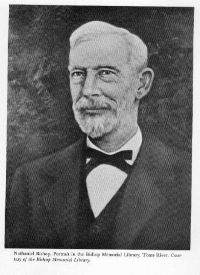
Nathaniel H. Bishop,
The Pampas and Andes: A Thousand Miles' Walk Across South America
(1868)
“ The people of Rosario, unlike the inhabitants of most Spanish-American towns, appear to take great pride in the advancement of the place, which is beginning to rival Santa Fé, a large town to the northward, which formerly monopolized the interior trade; but of late years, in consequence of the energy of its merchants and its proximity to Buenos Ayres, Rosario has diverted a huge portion of the business from Santa Fé to herself, and continues to encourage it by proposing to build a bridge seventy yards in length across a river that lies between Cordova and Paraná. ”
Henry Stephens, Journeys and Experiences in Argentina…
“ In order to compare the architecture of Buenos Aires to that of another city, let us choose Paris or Vienna because the Argentine capital is a city that is fundamentally European. Although more beautiful in buildings than either Paris or Vienna, it can hold no comparison to them in the massiveness and solidity of the edifices in either of them. Nearly all the buildings in Argentina are built of the poorest imaginable brick, loosely fitted together, but little mortar having been used. ”
“ The increased number of English people visiting Buenos Aires this year will add to the interest which the average newspaper reader takes in this country. Our stake in the country is already so large that, well known as Argentina now is compared to most parts of South America, it is surprising that the country does not fill a larger space in the public mind. The English railways are being fast extended by English capital. English farmers and ranchers are busily at work, and English blood is improving the breeds of sheep and cattle. ”
Gordon Ross, Argentina and Uruguay
“ As one travels towards the ancient capital of this Province one begins to realize that the cosmopolitan delights of the city of Buenos Aires do not reflect the soul of the Republic: the soul that fought for its liberty under the blue sky and warm sun of 25th of May, now over a hundred years ago. One begins involuntarily to dream of the Gaucho Wars and to feel the atmosphere of wilder bygone times amid the steep water-cut and cacti-crowned banks of the five great rivers which traverse the land from west to east. ”