Royal Air Force

Definition and stakes

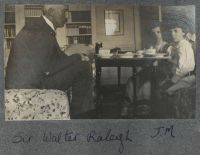
Portrait of Sir Walter Alexander Raleigh Sir Walter Alexander Raleigh,  The War in the Air; Vol. 1

“ At a later time in the war some senior officers, skilled in the handling of men, learned to fly, and were at once given the command of squadrons. A man with a talent for command, who can teach and maintain discipline, encourage his subordinates, and organize the work to be done, will have a good squadron, and is free from those insidious temptations which so easily beset commanding officers who have earned distinction as pilots. Yet the instinct of the Royal Air Force is strong—that a commanding officer should know the air, if he is to control aircraft. ”
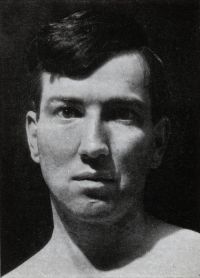
Source: Gutenberg

Portrait of Sir Walter Alexander Raleigh Sir Walter Alexander Raleigh,  The War in the Air; Vol. 1

“ The engine is the heart of an aeroplane, but the pilot is its soul. They succeeded so well that at the opening of the battles of the Somme, on the 1st of July 1916, the Royal Flying Corps held the mastery of the air, that is to say, they held a predominant position in the air, and were able to impose their will upon the enemy. At the date of the armistice, the 11th of November 1918, the united Royal Air Force was incomparably the strongest air force in the world. ”
Source: Gutenberg

A. J. L. Scott,  Sixty Squadron R.A.F.: A History of the Squadron from its Formation

“ They were armed with one or two machine guns, and they engaged in a form of warfare new in the history of the world, and the most thrilling that can be imagined—for each man fought with his own hand, trusting wholly to his own skill, and that not on his own element, but in outrage of nature, high in the air, surrounded only by the winds and clouds.
The embodiment of the fighting scout squadrons was part of the expansion and organisation of what became the Royal Air Force.
”
Source: Gutenberg

Get perspective with Kwize: daily news enlightened by great literature