“ The air is full of the breath of life, the deep earth is still soft, and all trees and flowers and grasses still feel the tender youth of the spring that is not yet quite gone.Then, too, the gilliflowers are out, and on Saint John's Eve before Vespers the Canons used to bless thousands upon thousands of them, tied up in neat bunches, in small flat baskets, and the poor of Rome came to the door of the sacristy on the south side and received them to take home to their sick and infirm, with the blessing of Saint John and a reviving breath of blossoming nature. ”
Saint John's Eve
Definition and stakes
Quotes about “Saint John's Eve”
James George Frazer,
The Golden Bough: A Study in Magic and Religion…
“ John's Eve. On the night of the twenty-third of June, the day before the festival of the Saint, great fires are kindled in the streets, squares, and market places of the towns and villages of the Island, and as fire after fire blazes out of the darkness of that summer night, the effect is singularly striking. These fires are sometimes kept up for hours, being continually fed by the scores of bystanders, who take great delight in throwing amidst the flames some old rickety piece of furniture which they consider as lumber in their houses. ”
James George Frazer,
The Golden Bough: A Study in Magic and Religion…
“ On the Vigil of Saint John the Baptist, commonly called Midsummer Eve, it was usual in most country places, and also in towns and cities, for the inhabitants, both old and young, and of both sexes, to meet together, and make merry by the side of a large fire made in the middle of the street, or in some open and convenient place, over which the young men frequently leaped by way of frolic, and also exercised themselves with various sports and pastimes, more especially with running, wrestling, and dancing. ”
“ John’s Eve at midnight near a mustard-plant. It is suggested by Sir James Frazer in his Golden Bough that, in the chilly air of the upper world, this prince from a warmer clime may be attracted by the warmth of the mustard.It is believed in many parts of Europe that treasures can be found on St. John’s Eve by means of the fern-seed. Even without the use of this plant treasures are sometimes said to bloom or burn in the earth, or to reveal their presence by a bluish flame on Midsummer Eve. As guardian of treasures the devil is the successor of the gnome. ”
Madison Julius Cawein,
The Poems of Madison Cawein, Volume 4…
“ Good, sirs!—Marry!—'Twas the cock!—Hey, away! the moon's lost fire!—Ho! the cock! our dial and clock—Hide beneath this brier! [149] ON THE EVE OF ST. JOHN (Scandinavian) Dizzily round,On the elf-hills, white in the mellow moonlight,To a sweet, unholy, ravishing soundOf wizard voices from underground,Their mazy dance the Elle-maids woundOn St. John's Eve. Beautiful white,Like a wreath of mist by the starbeams kissed,Their frail, sweet faces bloomed out of the night,With floating tresses of firefly light,That puffed like foam to the left and the right,On St. John's Eve. ”
Charles J. Kickham, St. John's Eve
“ That little home-world of our own. And happy thoughts each heart would fill — What else but happy could we be, While Hope stood smiling on the hill And in the valley, Memory ? Original footnotes ↑ A relic of ancient fire-worship practised on St John's Eve, and still lingering in some parts of Ireland. ”
Anthony Hope,
Helena's Path — XIII. The Feast of St…
(1907)
“ Years of life shall I live in that moment to-morrow! If it end ill, no human being but myself shall know. If it end well, the world is not great enough to hold, nor the music of its spheres melodious enough to sound, my triumph!"It will be observed that Lord Lynborough, though indeed no novice in the cruel and tender passion, was appreciably excited on the Eve of the Feast of St. John Baptist. In view of so handsome a response, the Marchesa's kiss of the hand and her murmured "To-morrow" may pass excused of forwardness. ”
James George Frazer,
The Golden Bough: A Study in Magic and Religion…
“ Thus in Saintonge and Aunis, two of the ancient provinces of Western France, we read that “of all the festivals for which the merry bells ring out there is not one which has given rise to a greater number of superstitious practices than the festival of St. John the Baptist. The Eve of St. John was the day of all days for gathering the wonderful herbs by means of which you could combat fever, cure a host of diseases, and guard yourself against sorcerers and their spells. ”
Various, Blackwood's Edinburgh Magazine…
“ Throughout all the trials of life and the intricacies of science, amid all his passions and stormy nights, the gentle sun of St John's Day will ever illumine the deepest recesses of his heart with the immortal blossom of the purest, best love. ”
Madison Julius Cawein,
The Triumph of Music, and Other Lyrics
“ Where the beak-nosed Trolls were holding a ball On St. John's Eve. [Pg 136] VIII Reveling flew From beakers of gold the wassail old; And she reached me a goblet brimmed bright with dew— But her wily witcheries well I knew, And the philtre over my shoulder threw On St. John's Eve. [Pg 137] LALAGE. What were sweet life without her Who maketh all things sweet With smiles that dream about her, With dreams that come and fleet! Soft moods that end in languor; Soft words that end in sighs ”
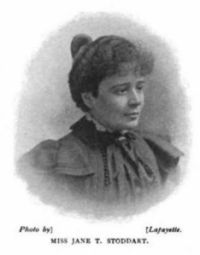
Jane T. Stoddart,
The case against spiritualism
(1919)
“ John’s Eve, when the bonfire is lit and the priests and choir have gone past in long procession with banners and relics, places are set beside the glowing embers for those whose bodies are in the churchyard, that they, too, may look in at the dancers. ”
Various, Blackwood's Edinburgh Magazine…
“ The last circumstance takes back the imagination to the old primitive worship of the sun; and perhaps the very fires of St John might date their history from those kindled in honour of Baal or Moloch. Dr Hecker suggests that mingling with these heathen traditions or customs a remembrance of the history of St John’s death—that dance which occasioned his decapitation—might also have had its share in determining the peculiar manner in which this saint’s day should be observed. ”
Hamish Hendry, Holidays & Happy-Days
“ John the Baptist is celebrated by the Christian Church. During the Middle Ages it was a joyous time of feast and merry-making, for in these old times, as you must have gathered from this little book, people did not work and worry so much as they do nowadays. But here is a curious thing: nearly all the ceremonies connected with this holiday were performed the night previous—variously called Midsummer's Eve, or St. ”
George Ludington Weed, A Life of St. John for the Young
“ Through the door of the Upper Room left ajar by three Evangelists, we catch glimpses of the group around the table of the Last Supper. Through it as opened wide by John we hear the voice of Jesus as He utters His farewell words. He comforts His disciples and tells of heavenly mansions. He gives His peace in their tribulations. He promises the Holy Spirit as a Comforter. He closes His address, even in this hour of sadness and apparent defeat, with these wonderful words, "Be of good cheer; I have overcome the world." ”
Abram Herbert Lewis, Paganism Surviving in Christianity
“ John, the commemoration of the slaughter of the Innocents, the feasts of Epiphany, the feast of Purification, and others, until the Catholic Church had some celebration for some saint and martyr for every day in the year. They contributed to create a craving for outward religion, which appealed to the sense and the sensibilities rather than the heart. ”
Joyce Kilmer,
Main Street, and Other Poems
“ Saint John, pray for us, weary souls that tarry Where life is withered by sin's deadly breath. Pray for us, whom the dogs of Satan harry, Saint John, Saint Anne, and Saint Elizabeth. And, Mother Mary, give us Christ to carry Within our hearts, that we may conquer death. ”
Thomas A. Janvier,
The Christmas Kalends of Provence
“ I am persuaded, so thoroughly did they all enjoy their own carolling, that the singing of noëls would have gone on until broad daylight had it not been for the intervention of the midnight mass. But the mass of Christmas Eve—or, rather, of Christmas morning—is a matter not only of pleasure but of obligation. Even those upon whom churchly requirements at other times rest [119] lightly rarely fail to attend it; and to the faithful it is the most touchingly beautiful—as Easter is the most joyous—church festival of the year. ”
John Ashton, A Righte Merrie Christmasse: The Story of Christ-Tide
“ Another Roman Catholic custom on Christmas eve is the preparation of "the Manger," which in some places is a very elaborate affair. The Christ is lying on straw between the ox and ass, Mary and Joseph bending over Him; the shepherds are kneeling in adoration, and the angels, hovering above, are supposed to be singing the gloria in excelsis. ”
T. F. Thiselton-Dyer, The Folk-lore of Plants
“ John's wort on Midsummer Eve.In Denmark [1] many an anxious lover places the St. John's wort between the beams under the roof for the purpose of divination, the usual custom being to put one plant for herself and another for her sweetheart. Should these grow together, it is an omen of an approaching wedding. In Brittany young people prove the good faith of their lovers by a pretty ceremony. On St. John's Eve, the men, wearing bunches of green wheat ears, and the women decorated with flax blossoms, assemble round an old historic stone and place upon it their wreaths. ”
William Hone,
The Every-day Book and Table Book…
“ On Christmas-eve indeed, there is some bustle for a midnight mass, to which immense numbers flock, as the priests, on this occasion, get up a showy spectacle which rivals the theatres. The altars are dressed with flowers, and the churches decorated profusely; but there is little in all this to please men who have been accustomed to the John Bull mode of spending the evening. The good English habit of meeting together to forgive offences and injuries, and to cement reconciliations, is here unknown. ”
Frederick Denison Maurice,
The Gospel of St. John: A Series of Discourses
“ I spoke, last Sunday, of the domestic tone which pervades the history of the resurrection of Lazarus; how St. John refused to regard death except as the breaking of a family bond—resurrection except as the renewal of it. The same tone is preserved here. The family feast is the resurrection feast; it is the union of the several limbs of a body which had been torn asunder. There is no change of relation or of sympathy; the old ways of expressing it are retained. Only service has been ennobled. He who sits at meat, and she who serves, are brother and sister. ”
Thomas K. Hervey, The Book of Christmas
“ The progress of the Christmas celebrations has at length brought us up to the immediate threshold of that high day in honor of which they are all instituted; and amid the crowd of festivities by which it is on all sides surrounded, the Christian heart makes a pause to-night. Not that the Eve of Christmas is marked by an entire abstinence from that spirit of festival by which the rest of this season is distinguished, nor that the joyous character of the event on whose immediate verge it stands requires that it should. ”
Frederick Denison Maurice,
The Gospel of St. John: A Series of Discourses
“ And a great multitude followed Him, because they saw His miracles which He did on them that were diseased. And Jesus went up into a mountain, and there He sat with His disciples. And the Passover, a feast of the Jews, was nigh.' The addition to the story is in the last verse. It has puzzled the harmonists. It does occasion serious difficulties in the chronology of this Gospel. Yet I hesitate to call it an interpolation. The Jerusalem feasts are continually present to the mind of St. John. Even when he leads us into Samaria and Galilee, we are never allowed to forget them. ”
Frederick Denison Maurice,
The Gospel of St. John: A Series of Discourses
“ But He who had sat by the well did not ask this proof of her desire for reformation. 'Woman,' He said, 'believe me, the hour cometh when ye shall neither in this mountain, nor yet at Jerusalem, worship the Father.' All she had asked—all that most Samaritans or Jews would have disputed about—was where they ought to worship. The thought upon which Jesus fixes her mind, is the Being to be worshipped. That new name, which John said the Son was come to reveal, is now proclaimed in the ears of a separatist and a sinner. He speaks not of the God of Abraham, and Isaac, and Jacob, but of the Father. ”
Augustus Welby Northmore Pugin, A Treatise on Chancel Screens and Rood Lofts
“ John, is very singular, as they are placed in front of the loft, instead of being elevated above it. The two thieves are also represented, as is usual in the Crucifixions and Calvaries in Brittany. The crosses to which they are attached are composed of branches of trees.On the Epistle side the Fall of Man caused by the first Eve, and on the opposite angle the Redemption of Man, through the second Eve, the Blessed Virgin, to whom the angel is announcing the mystery of the incarnation. ”
Mrs. Henry Wood,
St. Martin's Eve: A Novel
“ St. John's widowhood, the fête or fêtes, so it was now--a gathering to be remembered in the county. The invitations had gone out far and wide; visitors were staying in the house, as many as it would hold; day-guests came from all parts, near and distant. It was one of those marked days that never fade from the memory.But the guests, as it drew towards the close of the afternoon, might have searched for their host in vain, had they happened to want him. Mr. St. John was then in his own sitting-room (the one where you last saw him) , leaning back in an easy-chair, and looking tired to death. ”
Charles Kingsley,
The Good News of God
“ But there is one comfort for us in St. John’s vision; that brittle, and uncertain, and dangerous as life may be, yet it is before the throne of God, and before the feet of Christ. St. John saw it lying there in heaven, for a sign that in God we live, and move, and have our being. Let us be content, and hope on, and trust on; for God is with us, and we with God.But St. John saw another wonder. Four beasts—one like a man, one like a calf, one like an eagle, one like a lion, with six wings each. ”
Frederick Denison Maurice,
The Gospel of St. John: A Series of Discourses
“ Could they say, then, that the love of Christ was a partial love, that it was not directed to mankind, that it was not the expression of a universal love? St. John is the especial witness against these heresies. He declares that God loved the world; and Christ came to do His Father's will in saving it. What, then, might be—what has been—the effect of the name, 'the disciple whom Jesus loved,' upon the Church? It has been felt that the story of Judas needed this foil. The dark, solitary, separate man must be brought into direct contrast to a man who lives only on trust. ”
Elwood Sylvester Berry, The Apocalypse of St. John (1921)
“ And they shall bring the glory and honor of the nations into it. 27. There shall not enter into it anything defiled, or that worketh abomination or maketh a lie, but they that are written in the book of life of the Lamb. 9, 10. One of the seven angels who poured out the vials of wrath, takes St. John in spirit upon a high mountain that he may have a bird's eye view, as it were, of the new Jerusalem, coming down from heaven, all ablaze with divine splendors. The great dimensions of the city are also indicated by the necessity of viewing it from a lofty mountain. ”
George Ludington Weed, A Life of St. John for the Young
“ It is this, "Verily I say unto you, 'Wheresoever this gospel shall be preached in the whole world, that also which this woman hath done shall be spoken of for a memorial of her.' Let it be known that this woman was Mary of Bethany, then at Jesus' feet. Henceforth let her name be linked with her deed."Thus ends the words we have imagined St. John might have spoken with the Gospels of Matthew and Mark in his hand. The additions to their story are suggested by his own Gospel. He has drawn a beautiful picture of Mary, in brighter colors and more delicate shades than has any other. ”
John Ashton, A Righte Merrie Christmasse: The Story of Christ-Tide
“ New Year's eve is variously kept—by some in harmless mirth, by others in religious exercises. Many churches in England have late services, which close at midnight with a carol or appropriate hymn, and this custom is especially held by the Wesleyan Methodists in their "Watch Night," when they pray, etc., till about five minutes to twelve, when there is a dead silence, supposed to be spent in introspection, which lasts until the clock strikes, and then they burst forth with a hymn of praise and joy. ”