Sakti

Definition and stakes

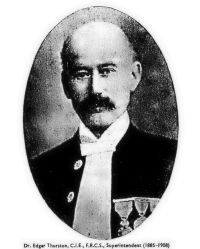
Portrait of Edgar Thurston Edgar Thurston,  Castes and Tribes of Southern India…

“ The novices, of whatever caste, eat and drink together during the period of pūja. Men and women participate in the secret rites. A solemn oath is taken that the mystery of Sakti will not be revealed, except with the permission of the guru, or on the death-bed. The spirit of the goddess (for Sakti is thought of as the female principle) must be withdrawn from the body of the Sakti worshipper when he is at the point of death. A lamp is lighted beside him. A few leaves of the tulsi plant (Ocimum sanctum) , a little rice, and a lighted wick are given to the dying man. ”
Source: Gutenberg

Hans Julius Eggeling,  1911 Encyclopædia Britannica (1911)

“ The Saktas, as we have seen, are worshippers of the sakti, or the female principle as a primary factor in the creation and reproduction of the universe. And as each of the principal gods is supposed to have associated with him his own Saktas. particular sakti, as an indispensable complement enabling him to properly perform his cosmic functions, adherents of this persuasion might be expected to be recruited from all sects. To a certain extent this is indeed the case ”
Source: Wikisource

Portrait of Edgar Thurston Edgar Thurston,  Castes and Tribes of Southern India (1909)

“ The temple of Kotiyūr in North Malabar is also a shrine to which Tiyans make pilgrimage. Indeed, it may be said that they follow Hinduism generally in rather a low form, and that Sakti worship is perhaps more peculiarly theirs than others', owing to their being able to use arrack, a product of the palm, and therefore of their own particular métier. The highest merit in Sakti can be reached only through arrack. The Sakti goddess, Bhagavati, the Tiyans look upon as their own guardian spirit. ”
Source: Wikisource

Get perspective with Kwize: daily news enlightened by great literature