Sassanid Empire

Definition and stakes

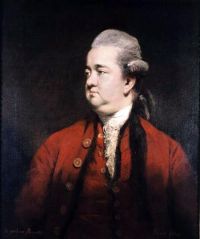
Portrait of Eduard Meyer Eduard Meyer,  1911 Encyclopedia Britannica (1911)

“ The Arsacidian empire was overthrown in A.D. 226 by Ardashir (Artaxerxes) , the founder of the Sassanid empire, whose conquests began about A.D. 212. The name Arsaces of Persia is also borne by some kings of Armenia, who were of Parthian origin. ”

Source: Wikisource

Philip Lake, Albert Houtum-Schindler, Eduard Meyer, Karl F. Geldner and Karl H. Ethé,  1911 Encyclopædia Britannica (1911)

“ Meanwhile, about A.D. 560, a new nation had sprung up in the East, the Turks. Chosroes concluded an alliance with them against the Ephthalites and so conquered Bactria south of the Oxus, with its capital Balkh. Thus this province, which, since the insurrection of Diodotus in 250 B.C., had undergone entirely First Appearance of the Turks. Sassanid Conquest of Bactria. different vicissitudes from the rest of Iran, was once more united to an Iranian Empire, and the Sassanid dominions, for the first time, passed the frontiers of the Arsacids. ”
Source: Wikisource

Philip Lake, Albert Houtum-Schindler, Eduard Meyer, Karl F. Geldner and Karl H. Ethé,  1911 Encyclopædia Britannica (1911)

“ Consequently the national impetus—already clearly revealed in the title of the new Sassanian Wars
with Rome. sovereign—again becomes strikingly manifest. The Sassanian Empire, in fact, is once more a national Persian or Iranian Empire. The religious element is, of course, inseparable from the national, and Ardashir, like all the dynasts of Persis, was an ardent devotee of the Zoroastrian doctrine, and closely connected with the priesthood.
”
Source: Wikisource

Get perspective with Kwize: daily news enlightened by great literature