Summary

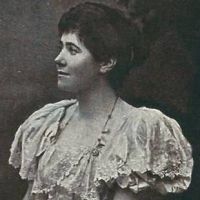
Portrait of Ella Sykes Ella Sykes Through deserts and oases of central Asia (1920)

We left the Russian Pamirs by a pass that seemed, when we reached its summit, to have an almost interminable descent, as we saw miles of a stony track stretching out below our feet. Half-way down we were met by a contingent of tribesmen clad in long red, blue, yellow, or crimson coats, with the white felt Kirghiz hats or leather and sheepskin caps, their bedding of vividly coloured felts being strapped on to their saddles; and when we finally emerged from the long winding valley, great Muztagh Ata was so close that it seemed as if we could easily ride up to its snow-line.
Source: Gutenberg

Portrait of Ella Sykes Ella Sykes Through deserts and oases of central Asia (1920)

Unless cultivated it is inexpressibly dreary, in dry weather the traffic stirs it up into clouds of suffocating dust, and in wet it turns into a sea of slippery mud, in which the surest-footed horse may come down. If the rain be of long duration the soil is apt to turn into a veritable morass, which engulfs many a poor little donkey and chokes it to death.
I was fond of riding through the bazar on a Thursday, the day of the weekly fair, when crowds of people poured in from the many hamlets in the Oasis, making a feast of colour.
Source: Gutenberg

Portrait of Ella Sykes Ella Sykes Through deserts and oases of central Asia (1920)

Golden autumn was on the land as we rode out of Kashgar along the broad tree-shaded road that leads to the New City, and turned off after a couple of miles to cross the imposing-looking Kalmuck bridge. Along the river bank the rice was being cut and then threshed by means of a stone roller, which bullocks and donkeys were pulling round and round over the heaped-up ears, the handsome millet crop was turning yellow, the big leaves of melons, pumpkins and gourds were withering, and only the lucerne kept its vivid green.
Source: Gutenberg

Get perspective with Kwize: daily news enlightened by great literature