“ Natheless, I find it hard to believe as how Sir Austin will clip me and kiss me and call me brother. Sir Austin 's a proud man,—lord o' the manor,—and I a silly shepherd. Christ knoweth us poor,—for that he came to earth a poor man. He put our garb upon him. Till Sir Austin and his ilk do put them in poor men's weeds and ploughman's weeds and shepherd's weeds, how shall they know what 't is I suffer, or that rejoiceth me? Men know that they live. Small blame to Sir Austin, or to the King.O Diggon,—my brother! This is a true word, cried the peddler. ”
Quotes about “Sir Austin”
 George Meredith,
The Ordeal of Richard Feverel: A History of a Father and Son
“ Had Sir Austin given vent to the pain and wrath it was natural he should feel, he might have gone to unphilosophic excesses, and, however much he lowered his reputation as a sage, Lady Blandish would have excused him: she would not have loved him less for seeing him closer. But the poor gentleman tasked his soul and stretched his muscles to act up to her conception of him. He, a man of science in life, who was bound to be surprised by nothing in nature, it was not for him to do more than lift his eyebrows and draw in his lips at the news delivered by Ripton Thompson, that ill bird at Raynham. ”
George Meredith,
The Ordeal of Richard Feverel…
“ Any wildness in him that his father noted, any remoteness or richness of fancy in his expressions, was set down as incidental to the Blossoming Season. There is nothing like a theory for binding the wise. Sir Austin, despite his rigid watch and ward, knew less of his son than the servant of his household. ”
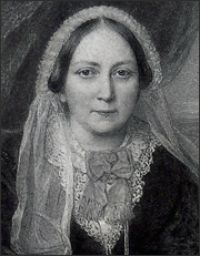 Mrs. Henry Wood,
A Life's Secret: A Novel
“ Austin, with some of his workmen who had remained—the greater portion of them were pursuing the vanquished—raised Abel White. His head was cut, his body bruised, but no serious damage appeared to have been done. 'Can you walk with assistance as far as Mr. Rice's shop?' asked Austin.'I daresay I can, sir, in a minute: I'm a bit giddy now,' was White's reply, as he leaned his back against the wall, being supported on either side. 'Sir, what a mercy that you had that light with you!''Ay,' shortly replied Austin. 'Quale, there's the blood dripping upon your sleeve. ”
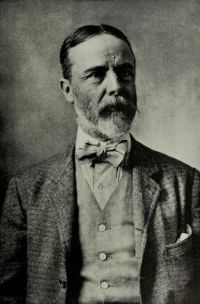 Frederic Jesup Stimson,
The Residuary Legatee; Or, The Posthumous Jest of the Late John Austin
(1888)
“ And they used to sit there, he and his uncle, in this same pavilion, smoking, close hedged in from womankind. And when the old man had fallen asleep, Austin would creep out into the park, and walk there with his lovely cousin May. And on one summer day, for all the world like this, he won her heart, this gay young Harvard senior, all among the rushes by the lily-pool. And Austin had gone back into the pavilion, quaking, to tell his uncle, and found the latter very dignified and dead, a bottle of the famous Eclipse Lafite close by his elbow. ”
George Meredith,
The Ordeal of Richard Feverel: A History of a Father and Son
“ Austin is not like other men. Austin requires the most delicate management. You must—whether you feel it or no—present an appearance of contrition. I counsel it for the good of all. He is just like a woman, and where his feelings are offended he wants utter subservience. He has you in town, and he does not see you:—now you know that he and I are not in communication: we have likewise our differences:—Well, he has you in town, and he holds aloof:—he is trying you, my dear Richard. No: he is not at Raynham: I do not know where he is. He is trying you, child, and you must be patient. ”
Frederic Jesup Stimson,
The Residuary Legatee; Or, The Posthumous Jest of the Late John Austin
(1888)
“ Poor Austin! A boy’s love feeds on the romance of hopelessness, flourishes apace in the shadow of despair; it delights in patient waiting, in faithful fidelity, in lapses of years; but a man’s is peremptory, immediate, uncompromising. ”
George Meredith,
The Ordeal of Richard Feverel: A History of a Father and Son
“ After five years of marriage, and twelve of friendship, Sir Austin was left to his loneliness with nothing to ease his heart of love upon save a little baby boy in a cradle. He forgave the man: he put him aside as poor for his wrath. The woman he could not forgive; she had sinned every way. Simple ingratitude to a benefactor was a pardonable transgression, for he was not one to recount and crush the culprit under the heap of his good deeds. ”
John Macdonell, Dictionary of National Biography… (1885)
“ The record of Austin's life is, in many respects, one of failure and disappointment. 'I was born out of time and place,' he himself said. 'I ought to have been a schoolman of the twelfth century or a German professor.' Asked why he did not do more for his brother, the brilliant and successful Charles Austin said: 'John is much cleverer than I, but he is always knocking his head against principles.' He found for his teaching no appreciative public. When first published his 'Province of Jurisprudence' was little noticed. ”
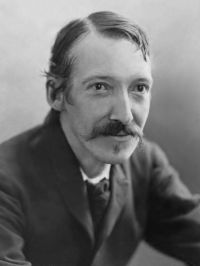 Robert Louis Stevenson,
The Works of Robert Louis Stevenson - Swanston Edition…
“ When Austin is not engaged in building forts, nor on his lessons, which are just as annoying to him as other children’s lessons are to them, he walks sometimes in the bush, and if anybody is with him, talks all the time. When he is alone I don’t think he says anything, and I dare say he feels very lonely and frightened, just as the lean man does, at the queer noises and the endless lines of the trees. ”
M. H., "Thy kingdom come." (1886)
“ Austin drew near his sister, and put his arm lovingly round her. "Prissy," he said, "don't you think if we were really doing well, the little things God has given us to do, we would be living to some purpose, and helping on his kingdom?"Austin's grave, earnest words touched the girl's heart."I do believe you are helping it on," she said; "but as for me, everything seems wrong. Even in what I thought was to be my great work I have come to a standstill. I can go no further in either mathematics or astronomy without a teacher, and my father would not instruct me in either, I know." ”
Mabel Hale, The Hero of Hill House
“ Every day they heaped Austin with advice and counsel. The children heard them talking to him telling him just how to make the changes on their journey and how to arrange the baggage, and how to conduct themselves, and it filled them with respect for their brother. They felt safe in his care and certain that he would bring them safely to their father once more. “Austin,” said his uncle one day, “there is one promise I wish you to make me. You are a good boy and have started out the right way to make a noble man. ”
Littlebury Woodson Allen, A Family Sketch (1837)
“ William Austin became a Baptist in 1827, in September, I think, and joined Boar Swamp Church, under pastoral care of Elder John Carter. On the 16th July 1829, he married his second wife, Miss Eliza Price. In the year 1830 (Feb. 25) he removed to the state of Kentucky where he now resides. So far as this life is concerned Austin is doing well. He has risen astonishingly in the estimation of the citizens of his county and is making a fortune. About his spiritual condition, I fear, I cannot say as much. This world has doubtless engrossed too much of his feelings. ”
Mrs. Henry Wood,
A Life's Secret: A Novel
“ It has been said that the gravel pits were not far from the path. Austin was close upon them, when the sound of a horse's footsteps caused him to turn. A gentleman was riding fast down the common path, from the opposite side to the one he and Miss Gwinn had come, and Austin shaded his eyes with his hand to see if it was any one he knew. No; it was a stranger. A slender man, of some seven-and-thirty years, tall, so far as could be judged, with thin, prominent aquiline features, and dark eyes. ”
 Hannah Lynch,
George Meredith: A Study
(1891)
“ Sir Austin, marching onward, hears strange talk, between his son and Master Ripton, of fire and delay, and violence and vengeance, when Sir Austin condescends to play the spy. He discovers that the Hope of Raynham has embarked in his own vessel upon the waters of life. A sensation of infinite pity overcomes the poor baronet, asking himself what the years will do when one day has done so much; but he is consoled by the consciousness of his own [62] part of Providence to his son. Baited and worried by his sagacious cousin, who shrewdly suspects his guilt, Richard takes refuge in lies. ”
John Macdonell, Dictionary of National Biography… (1885)
“ There might be seen, in his old age, Bentham, the two Mills, Carlyle, the rising lawyers Bickersteth, Erle, and Romilly; wits of the brilliancy of Charles Buller, Sydney Smith, and Luttrell; and among poets, critics, and statesmen, Rogers, Jeffrey, and Lansdowne, Austin did not obtain at the bar the success to which his great talents, acuteness, and powers of lucid and eloquent exposition entitled him in the opinion of his friends. His inability to work rapidly, his habit of taking trouble quite out of proportion to the importance of the matter in hand, were grave obstacles. ”
Robert Louis Stevenson,
The Works of Robert Louis Stevenson - Swanston Edition…
“ Barbara. Why, madam, I did think it was a case with Mr. Austin.Miss Foster. With Mr. Austin? why, how very rustic! The attentions of a gentleman like Mr. Austin, child, are not supposed to lead to matrimony. He is a feature of society: an ornament: a personage: a private gentleman by birth, but a kind of king by habit and reputation. What woman could he marry? Those to whom he might properly aspire are all too far below him. I have known George Austin too long, child, and I understand that the very greatness of his success condemns him to remain unmarried. ”
George Meredith,
The Ordeal of Richard Feverel: A History of a Father and Son
“ He was half disposed to arrest the two conspirators on the spot, and make them confess, and absolve themselves; but it seemed to him better to keep an unseen eye over his son: Sir Austin's old system prevailed.Adrian characterized this system well, in saying that Sir Austin wished to be Providence to his son.If immeasurable love were perfect wisdom, one human being might almost impersonate Providence to another. ”
Sidney Lee, Dictionary of National Biography… (1885)
“ In an address to the reader it is stated that the poem was written at the request of 'very worthy persons in the countrey at the time of the sickness when the mortality in London' reached 'seven or eight thousand a week with some hundreds over and above.' Although Austin here dispenses with classical allusions and annotations, he employs a number of Latin and Greek words in a slightly anglicised form. A portrait of the author is prefixed to the volume. Austin was buried in the parish church of Southwark, near the monument of his father, but the year of his death is uncertain. ”
Frederic Henry Balfour, Austin and His Friends
“ The effect of this red, throbbing light upon the garden in which he stood was almost unearthly, something resembling that of an eclipse viewed through warm-coloured glass; beautiful in itself, yet abnormal, fantastic, suggestive of weird imaginings. Austin, absorbed in contemplation, moved slowly through the shrubbery until he reached the lawn; then came to a dead stop. An astounding vision appeared before him. Standing by the old stone fountain, scarcely ten yards away, he saw the figure of a youth. ”
Freeman Wills Crofts, The Ponson case (1921)
“ Finding the boy was determined to go his own way, Sir William had decided discretion was the better part of valour, and withdrawing his opposition to Austin’s plans, had instead enabled him to carry them out, increasing his allowance to £1000 a year. Austin was extremely clever and versatile. Something of a dreamer, his opinions and ideals irritated his practical father almost beyond endurance. He was a Socialist in politics, and held heterodox views on the relations of capital and labour. ”
Frederic Henry Balfour, Austin and His Friends
“ The conversation now became more general, and Austin, thinking that the countess would like to be alone with her nephew for a few minutes before returning to the Castle, watched for an opportunity of taking leave. He soon rose, and said he must be going home. The old lady shook hands with him in the most cordial manner, telling him that in no case must he ever forget his mother—oblivious, apparently, of the fact that by no earthly possibility could he remember her; and St Aubyn accompanied him to the door. "You've quite won her heart," he said, laughingly, as he bade the boy farewell. ”
Louis A. Barbé, In Byways of Scottish History
“ Austin drew southward, so that he came to Dorchester; there he found the worst men that dwelt in the land. He told them God's lore, and they had him in derision; he taught them Christendom, and they grinned at him. Where the Saint stood, and his clerks with him, and spake of Christ, as was ever their custom, there they approached to their injury, and took tails of rays and hanged them on his cope, on each side. ”
Frederic Henry Balfour, Austin and His Friends
“ One day a great joy came to Austin. He was hobbling about the garden with his aunt, when all of a sudden he saw Roger St Aubyn approaching them across the lawn. It was with immense pride that he presented his friend to Aunt Charlotte, who, as may be remembered, had been just a little huffy that St Aubyn had never called on her before; but now that he had actually come the small grievance was forgotten in a moment, and she welcomed him with charming cordiality."It is all the pleasanter to meet you," she said, "as I have now an opportunity of thanking you for all your kindness to Austin. ”
Mrs. Henry Wood,
A Life's Secret: A Novel
“ Austin obeyed, a comical look of grievance on his face. 'I declare you order me about just as you did when I came here first, a miserable little muff of [Pg 17] fourteen. You'll never get another like me, Mrs. Thornimett. As if I had not enough outdoor work every day in the week! And I don't know where on earth to go to. It's like turning a fellow out of house and home!''You are going out for me, Austin. The master left a message for the Lowland farm, and you shall take it over, and stay the day with them. They will make as much of you as they would of a king. ”
George Meredith,
The Ordeal of Richard Feverel: A History of a Father and Son
“ He said to his intimates: "Every act, every fostered inclination, almost every thought in this Blossoming Season, bears its seed for the Future. The living Tree now requires incessant watchfulness." And, acting up to his light, Sir Austin did watch. The youth submitted to an examination every night before he sought his bed ”
Mabel Hale, The Hero of Hill House
“ It took but a little probing by this smooth fellow to get from Austin all his story; for the boy was entirely unacquainted with the ways of the world. And to his new friend the whole thing seemed a joke. He confided to Austin that he was in nearly the same predicament, but that he knew a way to ride about the country without funds. Austin had heard of such things but did not know how it was done, and showed some interest; and the young man proceeded to explain to him the tricks of his trade, for he was by profession a loafer, a tramp. ”
 Charles Garvice,
Wild Margaret
“ Who is Austin?" she asked."What an idiot I am!" he exclaimed, with a laugh. "I am talking as if you knew everybody I know, and everything I know! You see, it seems as if I had known you for years, and that we had been one since we were boy and girl!"She laid her hand timidly on his head, and lovingly smoothed the black, clustered hair."Austin is Austin Ambrose," he went on; "the best fellow in the world. He is the greatest friend I have, Madge, and I want you to like him awfully.""I like him already if he is a friend of yours—Blair," she said. ”
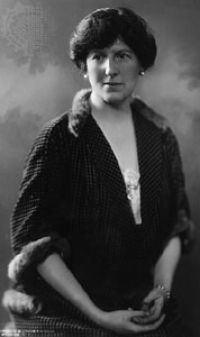 Alice Duer Miller,
The Charm School
(1919)
“ On which Austin moved his car and went into the house. The appearance of a young man in morning-clothes at half past ten at night in the midst of a party would have been repellent to Mr, Johns's butler, who liked entertainments and liked them well done. He, however, was busy in the dining-room, and the footman, who let Austin in, not only remembered him from his former visit, but, like Portia, remembered him worthy of praise. ”
Frederic Henry Balfour, Austin and His Friends
“ And a heresy, you must recollect, has always some forgotten truth at the bottom of it.""I'm sure I hope so," replied Aunt Charlotte. "But the wind's getting a trifle chilly, and I think it's about time for tea. Austin isn't very strong just now, and mustn't run any risks."So they went indoors and had their tea in the drawing-room, when St Aubyn let fall the information that he was starting in a few days for a short tour in Italy. It would not be long, however, before he was back, and then of course he should look forward to seeing a great deal of Austin at the Court. ”
