“ As men have reaped great Europe—pouring down From Scandinavia and far Baltic’s wave, So must our future too be reaped—now sown, The crops will grow above this era’s grave. South Afric calls aloud to Europe, filled With overflowing energy and youth, Come in your thousands—work as your fathers willed,{114} With strength, with power, with energy and truth. Good Hope will turn to Hope at last fulfilled, And Southern Africa be great—as God has willed. ”
Southern Africa
Definition and stakes
Southern Africa, the southernmost region of the African continent, includes a variety of nations and landscapes, shaped by geography, politics, and culture. From its resource-rich terrain and contrasting climates to its intricate history of colonization and social issues, the region has inspired a range of literary works. Authors such as Mrs.
Ward described its topography as a series of terraces leading toward the Orange River, while Viscount Bryce emphasized its distinctive warmth and color, contrasting it with Europe’s natural beauty. Others, like J. N. Larned, concentrated on its colonial past and strategic importance. These viewpoints together highlight Southern Africa’s complex identity, combining physical majesty, human challenges, and historical heritage.
Quotes about “Southern Africa”
Mrs. Ward, The Cape and the Kaffirs: A Diary of Five Years' Residence in Kaffirland
“ Southern Africa may be described as consisting of a series of terraces rising one above the other as they recede from the sea, and then declining towards the great Orange River, which, after a long course, generally from east to west, falls into the Atlantic Ocean about 500 miles north of the Cape. ”
Frank Richardson Cana and Alfred Peter Hillier, 1911 Encyclopædia Britannica (1911)
“ The history of South Africa is, almost entirely, that of its colonization by European races, of their conflicts with, and influence over, its native inhabitants, and of the struggle for supremacy between the British and Dutch settlers. The little that is known concerning the doings of the natives before the appearance of the white man belongs to the domain of ethnology rather than of history. When the Portuguese first reached the southern part of Africa there was but one place in it where a civilized race held sway. ”
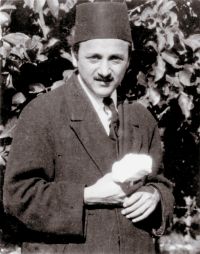
G. G. Robinson, The Empire and the century — The Prospects of a United South Africa (1905)
“ Is it desirable that the Empire should be able to produce its own equipment within its own limits? South Africa offers a great mineral and agricultural and pastoral country, richer in metals than Australia, more favoured in climate than Canada. Is the command of the sea important, and the possession of harbours and dockyards in all parts of the world? South Africa holds the key of the Southern Ocean, and forms, after Egypt, the second line of communication with India and the East. ”
Viscount James Bryce Bryce, Impressions of South Africa
“ Though I must admit that South Africa, taken as a whole, offers far less to attract the lover of natural beauty than does Southern or Western Europe or the Pacific States of North America, there are two kinds of charm which it possesses in a high degree. One is that of colour. Monotonous as the landscapes often are, there is a warmth and richness of tone about them which fills and delights the eye. ”
J. N. Larned, History For Ready Reference, Volume 7 (1895)
“ Nearly all German South-West Africa is arid desert, but inland there are plateaux and mountains which sometimes exceed 8,000 feet in altitude, and which have a sufficient rainfall to make European agriculture possible. ... About two-thirds of the Transvaal, a third of Rhodesia, a small portion of southern Bechuanaland, two-thirds of the Orange River Colony, four-fifths of Cape Colony, and a third of Natal sum up the areas attributed to the white man in South Africa. ”
Mary Henrietta Kingsley,
West African studies
“ Dennett. I will speak no further now concerning these schools of Fetish, for Nkissism is the most southern of the West African schools, its domain extending over the whole of the regions once forming the kingdom of Kongo down to Angola. Below Angola, on the West Coast, you come to the fringing zone of the Kalahi desert, and to those interesting people the Bushmen, of whose religion I am unable, with any personal experience, to speak. Below them you strike South Africa. South Africa is South Africa; West Africa is West Africa. ”
J. N. Larned, History for ready reference, Volume 5… (1895)
“ AFRICA: 1891. Extension of the British Protectorate of Lagos over the neighboring districts of Addo, Igbessa, and Ilaro, which form the western boundary of Yoruba. AFRICA: 1891. Treaty between Great Britain and Portugal defining their possessions; conceding to the former an interior extension of her South African dominion up to the southern boundary of the Congo Free State, and securing to the latter defined territories on the Lower Zambesi, the Lower Shiré, and the Nyassa, as well as the large block of her possessions on the western coast. AFRICA: 1891. ”
J. N. Larned, History for ready reference, Volume 5… (1895)
“ AFRICA: 1892. French expedition under Captain Binger to explore the southern Sudan and to act conjointly with British officials in determining the boundary between French and English possessions. AFRICA: 1892. Journey of Mr. Sharpe from the Shiré River to Lake Moero or Mweru and the Upper Luapula. AFRICA: 1892-1893. Construction of a line of telegraph by the British South African Company, from Cape Colony, through Mashonaland, to Fort Salisbury, with projected extension across the Zambesi and by the side of Lakes Nyassa and Tanganyika to Uganda,—and ultimately down the valley of the Nile. ”
Effendi Shoghi,
Messages to the Bahá'í World: 1950–1957
“ That of the second will extend over the Union of South Africa, South-West Africa, Northern Rhodesia, Southern Rhodesia, Mozambique, Angola, Bechuanaland, Basutoland, Swaziland, Nyasaland, Zululand, Madagascar, Mauritius, Réunion Island and St. ”
William Edward Burghardt Du Bois,
Darkwater
(1920)
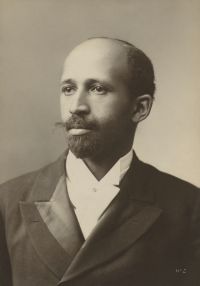
“ I have not mentioned North and South Africa, because my eye was centered on the main mass of the Negro race. Yet it is clear that for the development of Central Africa, Egypt should be free and independent, there along the highway to a free and independent India; while Morocco, Algeria, Tunis, and Tripoli must become a part of Europe, with modern development and home rule. South Africa, stripped of its black serfs and their lands, must admit the resident natives and colored folk to its body politic as equals. ”
Sol. T. Plaatje, Native Life in South Africa
“ What a happy land in which to live South Africa would be if, instead of the present god of colour prejudice, we had some such confidence as is reposed in the blacks by the British authorities in East Africa and elsewhere. ”
From the Cape to Cairo: The First Traverse of Africa from South to North
“ No one at home can realize the stupendous difficulties that have been overcome. But I from observation know, and take off my hat in awed admiration of that gallant band who, quietly, relentlessly, and without a murmur, have accomplished the seemingly impossible. It stands out in bold relief as a colossal monument of what the Anglo-Saxon can do, and will ever sigh to the African wind the greatness of that master mind which, in spite of the fossilized apathy of the British Government, has raised a British South Africa to be a dominant factor in the world's history of the future. ”
Gordon Le Sueur, Germany's Vanishing Colonies
“ The only real settlers in South West Africa are Boers who trekked from the Transvaal and Cape Colony. It has been said that where you find Boers you may be sure to find the pick of the farming land, and the Boer farms are widely scattered over Damaraland. ”
Viscount James Bryce Bryce, Impressions of South Africa
“ Though divided into two British Colonies, with several other pieces of British territory, and two Boer Republics, the habitable parts of South Africa form one community, all the parts of which must stand or fall together. The great plateau is crossed by no lines of physical demarcation all the way from the Zambesi to the Hex River (some fifty miles north-east of Cape Town) , and the coast regions are closely bound by economic ties to the plateau, which through them touches the outer world. Popular speech which talks of South Africa as one whole is scientifically right. ”
Henry Gannett, Ernest Ingersoll, George Parker Winship, Edwin A. Start, and others, The New International Encyclopædia…
“ Between the two latter and German West Africa and Angola, the territories of British South Africa and British Central Africa in the interior extend northward to the Congo State and to German East Africa, which occupies the east coast north of Lake Nyassa and the Ruvuma River. The Orange River and Vaal River colonies adjoin Natal and British South Africa. North of German East Africa lies British East Africa, which touches on the north the British sphere of influence in the Sudan, Abyssinia, and on the coast, Italian Somaliland. ”
Viscount James Bryce Bryce, Impressions of South Africa
“ Variety of form, boldness of outline, the presence of water in lakes and running streams, and, above all, foliage and verdure, are the main elements of beauty in those landscapes; while if any one desires something of more imposing grandeur, he finds it in snow-capped mountains like the Alps or the Cascade Range, or in majestic crags such as those which tower over the fiords of Norway. But the scenery of South Africa is wholly unlike that of Europe or of most parts of America. ”
Sir Samuel White Baker,
Ismailia
“ The commercial aspect of the equatorial provinces is improving, but our recent experience in South Africa must teach the most sanguine that very many years must elapse before the negro tribes become amenable to the customs and improvements of civilized communities. ”
“ If our victory is great enough, we can hope to unite under our hand the whole of Central Africa with our old colony South-west Africa; Senegambia, Sierra Leone, the Gold Coast, Dahomey, well-populated Nigeria with the port of Lagos, Kamerun, the rich islands of San Thomé and Principe with their splendid ports, the Katanga ore district, Northern Rhodesia, Nyasaland, Mozambique, and Delagoa Bay, Madagascar, German East Africa, Zanzibar, and Uganda ”
John Lord, Beacon Lights of History, Volume 14…
“ We may look for remarkable development in South Africa, whose promise is larger than that of any other part of the continent. Whatever may be said of some of the methods by which the British have enlarged their empire, their rule has blessed the barbarous peoples whose countries they have absorbed. The task of improving the few millions of blacks in South Africa, and of developing the large and in some respects wonderful resources of that region, will be greatly assisted by the incoming of hundreds of thousands of Europeans, bringing with them the arts and other blessings of civilization. ”
Isaac Frederick Marcosson,
An African Adventure
“ For the South African end of my adventure I provided myself with letters from Lloyd George and Smuts. In the Congo I realized that I would require equally powerful agencies to help me on my way. Wandering through sparsely settled Central Africa with its millions of natives, scattered white settlements, and restricted and sometimes primitive means of transport, was a far different proposition than travelling in the [Pg 141] Cape Colony, the Transvaal, or Rhodesia, where there are through trains and habitable hotels. ”
Emil Holub,
The Past, Present and Future Trade of the Cape Colonies with Central Africa
(1879)
“ Undisputably the access from the south is yet the healthiest way into the heart of Africa. Mashona country, the most fertile part of South Africa, is unhealthy, but the neighbouring Matabele land is very healthy. We can trade and cultivate in the former there for months, and we can live in the latter during the unhealthy season. There are more reasons which make me believe that really the south is the proper way to come into the interior, and not by the other routes. ”
Edith A. How, People of Africa
“ So that in this great land of Africa we have people living very different kinds of life, in the deserts, in the forests of the Congo, in Uganda and on the Nile, in the mines of South Africa, and on the great farms on the veld and in the great towns. The country itself is different in different parts: the sand in the north; Central Africa, with its hot sun and its lakes and rivers and mountains and forests; South Africa, with its great grassy plains, and the mines and towns joined by the railways which make it easy to get quickly to places far away. ”
James P. Boyd, Stanley in Africa
“ South Africa next engages our attention. Passing by its natural scenery, soil, productions, climate, its cities, towns and villages, manners and customs of its many native tribes, and the character of its colonists, we will confine ourselves strictly to what has been done for the moral and religious welfare of the inhabitants. ”
Viscount James Bryce Bryce, Impressions of South Africa
“ It is also in this physical character that one must seek the explanation of the remarkably slow progress of the country in wealth and population. South Africa began to be occupied by white men earlier than any part of the American continent. The first Dutch settlement was but little posterior to those English settlements in North America which have grown into a nation of seventy-seven millions of people, and nearly a century and a half prior to the [Pg 453] first English settlements in Australia. ”
H. A. Bryden, Tales of South Africa
“ From every corner of South Africa—from the old Colony, the Free State, the Transvaal, from far Bechuanaland—they had come. You might see sun-scorched wanderers from the far interior, hunters, explorers, prospectors, and pioneers. Some had come to restore broken health; some to taste again the sweets of civilisation, to spend hard-won money ”
Emil Holub,
The Past, Present and Future Trade of the Cape Colonies with Central Africa
(1879)
“ You cannot travel along a single road into the interior from Port Elizabeth without seeing waggon-load after waggon-load of ploughs destined for native use. (Hear, hear.) What does all that mean? Why, that our colonisation in South Africa is stimulating the whole native populations there into the better life, as I have described it, of industrious, peaceful, prosperous communities. ”
Luna May Ennis, Our Little Boer Cousin
“ Far away in the African antipodes—at the extreme opposite side of the world from us—lies South Africa. Vast as is this British possession, it forms but the southernmost point or tip of the great dark continent. In its very heart lies the Transvaal—the home of our little Boer cousins.The great "thirst-veldt" of the Kalahari Desert lies to the north-west of their land, which is about the size of England, and with a very similar climate, and to the south, beyond the Drakensberg Mountains, lies Natal, Kaffraria and Zululand. ”
Viscount James Bryce Bryce, Impressions of South Africa
“ The chief charm of travel through a new country is the curiosity which the thought of its future inspires. In South Africa, a land singularly unlike any part of Europe or of North America, this curiosity is keenly felt by the visitor. When he begins to speculate on the future, his first question is, Will these wildernesses ever become peopled, as most of North America and a large part of Australia have now been peopled, and if so, what will be the character of the population? Will South Africa become one of the great producing or manufacturing countries of the world? ”
Viscount James Bryce Bryce, Impressions of South Africa
“ There are, of course, rough and ill-omened explorers and settlers in South Africa, as in other new countries: but having wandered a good deal, in different countries, on the outer edge of civilization, I was struck by the large proportion of well-mannered and well-educated men whom one came across in this tropical wilderness. ”
Owen Thomas, The Empire and the century — Land Settlement and Colonization in South Africa (1905)
“ It is, of course, true that, roughly speaking, the general features of South African colonization resemble each other in all the five States of which that area is composed, but it is none the less a fact that, when it comes to practice, each Colony must be taken separately. ”
Freiherr von Rudolf Carl Slatin, Fire and Sword in the Sudan
“ From the east, Italy, England, Germany, from the west, the Congo State, France, and England, are daily enlarging their spheres of influence, and are now on the point of joining hands in Central Africa. ”
Edith A. How, People of Africa
“ These people still move their villages from time to time, and each man makes only what he needs in his own home. There is often fighting between the tribes, and many people are killed. These Congo people have learnt very little, and some eat the flesh of men and women, and the little Pigmies do not even live in villages, but each family by itself.Farther south still is the great country of South Africa. Here it is not so hot, and Europeans have made their homes in it. There are Africans living in tribes and villages, but learning to be peaceful and to help each other by their work. ”
Viscount James Bryce Bryce, Impressions of South Africa
“ But assuming, as most men, perhaps too hastily, do assume, that this sudden development is desirable, the English are the people most likely to carry it out effectively, and the strong and strenuous man who, with little encouragement from the government of his country, founded the British South Africa Company and acquired these territories for his countrymen, took one of the most fateful steps that statesman or conqueror has ever taken in the African continent. ”