Sumburgh Head

Definition and stakes

Daniel Turner Holmes,  Literary Tours in The Highlands and Islands of Scotland

“ After Peterhead is left behind, the steamer soon gets entirely away from land. All night long she battles through the surges, passes about 2 a.m. the lonely Fair Isle, encompassed by the rushing roost, and two{221} hours later Sumburgh Head is visible. The approach to Bressay, especially if the rocks and precipices are half seen through driving haze, is suggestive, to a student, of the landscape of "Beowulf," with its windy walls, shadow-helms, broad nesses, and glimmering sea-cliffs. ”
Source: Gutenberg

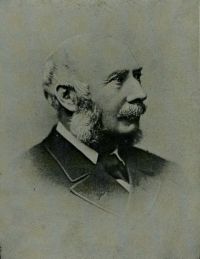
Portrait of John Cordeaux John Cordeaux,  Report on the Migration of Birds in the Spring and Autumn of 1880…

“ Nov. 21st, at 3.30 p.m., a flock on island at Pentland Skerries; wind fresh S.W., clear. At Pentland Skerries, Dec. 16th, a flock flying N. at 10.30 a.m.; wind fresh S.W., and snow. At Isle of May, Dec. 22nd, one bird. "They are not seen here every year, and most in severe weather."
Oystercatcher, Hæmatopus ostralegus.—At Sumburgh Head, Aug. 28th, all left after the fog of 21st—28th cleared away; as did other species, including Wheatears, Wagtails, and Rock-birds. At Auskerry, five arrived, with light S. wind and haze, and remained a week.
”
Source: Gutenberg

Portrait of John Cordeaux John Cordeaux,  Report on the Migration of Birds in the Autumn of 1879…

“ This shows migration between Aug. 21st and Oct. 27th. A "rush" appears to have taken place at the Isle of May on Sept. 19th, at 2 a.m., wind light E. with fog, when a flock of young birds was seen and four of them were wounded against the glass. Swallows migrate in August and September with an E. to S.E. wind, light to strong. In October my only record at Tarbet Ness gives wind N.W., light with fog. When the wind has been N.W., S.E. or E. there has been fog; when, in summer, at Sumburgh Head, W.S.W., there has been haze and rain. ”
Source: Gutenberg

Get perspective with Kwize: daily news enlightened by great literature