Supreme Court of Indiana

Definition and stakes

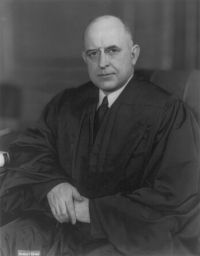
Owen J. Roberts,  Indiana ex rel. Anderson v. Brand…

“ The clear purport of Indiana law is that its Legislature cannot surrender any part of its plenary constitutional right to repeal, alter or amend existing legislation relating to the school system whenever the conditions demand change for the public good. Under Indiana law the Legislature can neither barter nor give away its constitutional investiture of power. It can make no contract in conflict with this sovereign power. The construction of the constitution of Indiana by the Supreme Court of Indiana must be accepted as correct. ”

Source: Wikisource

Portrait of William R. Day William R. Day,  Supreme Tribe of Ben Hur v. Cauble…

“ Owing to the number of interested parties and the impossibility of bringing them all before the court, the original suit was peculiarly one which could only be prosecuted by a part of those interested suing for all in a representative suit. Diversity of citizenship gave the District Court jurisdiction. Indiana citizens were of the class represented, their rights were duly represented by those before the court. The intervention of the Indiana citizens in the suit would not have defeated the jurisdiction already acquired. ”
Source: Wikisource

Portrait of William R. Day William R. Day,  Supreme Tribe of Ben Hur v. Cauble…

“ The ancillary bill alleges that the commencement of the suit in the state courts of Indiana will have the effect to relitigate questions conclusively adjudicated against the defendants as members of Class A in the action in the United States District Court; that to permit them to do so would destroy the effect of the decree rendered in that suit; that in the several suits commenced in the state courts plaintiffs therein challenged the rights of the society to create Class B ”
Source: Wikisource

Get perspective with Kwize: daily news enlightened by great literature