Tamatave

Definition and stakes

1911 Encyclopædia Britannica (1911)

“ Of the whole foreign trade of Madagascar, 46 per cent, is through Tamatave. Owing to the character of the soil and the formerly crowded native population, the town has often been attacked by epidemics: the plague broke out in 1898, and again in 1900; but since the draining of the neighbouring marshes, there has been improvement. Since 1895 the native population has been removed from the town and settled in a new village to the north-west. A telegraph, 180 miles in length, connects Tamatave with the capital. ”

Source: Wikisource

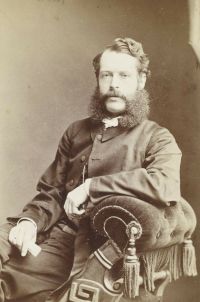
Portrait of Élisée Reclus Élisée Reclus,  Africa by Élisée Reclus/Volume 4 (1890)

“ Tamatave. lies nearest to the capital. Hence travellers bound for Tananarivo follow the coast from Tamatave to Andovoranto, and then strike inland from a neighbouring estuary, whence they soon reach the escarpments of the central plateau. This would consequently be an excellent site for a great commercial or naval station, but for the dangerous character of the neighbouring coastlands and the difficult approaches, which render it quite inaccessible to vessels of heavy draught. ”
Source: Wikisource

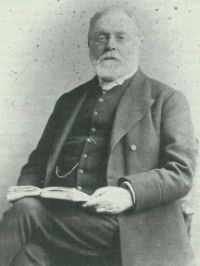
Portrait of James Sibree James Sibree,  A naturalist in Madagascar (1915)

“ This appeared to give Europeans living here a good opportunity of reaching England, avoiding the unpleasant experience of the “bullocker” (see Chapter II.) , between Tamatave and Port Louis, and taking a mail steamer direct from Madagascar. As we were leaving this country for Europe in September 1877, we determined to take this new route, which, although a little longer than that by Tamatave, was far less difficult, besides being partly by canoes, and the last day or two by a dhow, thus giving a pleasant variety to the journey. ”
Source: Gutenberg

Get perspective with Kwize: daily news enlightened by great literature