Tarim Basin

Definition and stakes

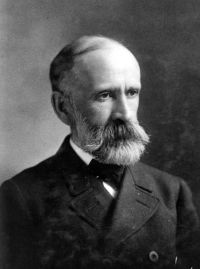
Portrait of H. G. Wells H. G. Wells,  The Outline of History: Being a Plain History of Life and Mankind

“ This basin was much more fertile in the past than it is now. The mountain barrier to the west of this Tarim Basin is high, but not forbidding; there are many practicable routes downward into Western Turkestan, and it is possible to travel either along the northern foothills of the Kuen Lun or by the Tarim valley westward from China to Kashgar (where the roads converge) , and so over the mountains to Kokand, Samarkand, and Bokhara. Here then is the natural meeting-place in history of Aryan and Mongolian. ”
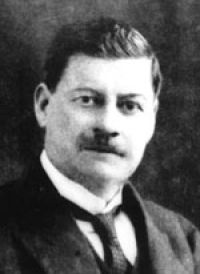
Source: Gutenberg

Various,  Encyclopaedia Britannica, 11th Edition…

“ Thus the old Lop-nor no longer exists, but in place of it there are a number of much smaller lakes of newer formation. It may fairly be inferred that, owing to the uniform level of the region, the sluggish flow of the Tarim, its unceasing tendency to divide and reunite, conjoined with the violence and persistency of the winds (mostly from the east and north-east) , and the rapid and dense growth of the reed-beds in the shallow marshes, the drainage waters of the Tarim basin gather now in greater volume in one depression, and now in greater volume in another ”
Source: Gutenberg

John Thomas Bealby,  1911 Encyclopædia Britannica (1911)

“ The remaining 182,000 sq. m. (51-2 per cent.) of the potential catchment area fails to contribute one drop of water, being nothing but arid, rainless desert. Throughout the catchment-basin of the Tarim the precipitation is governed by the general law, that it increases from N. to S. and from E. to W. Hence, in conformity with this, the largest affluents are in the west. In general shape the basin of the Tarim is elliptical, but the lowest part lies near the extreme E. end of the ellipse. ”
Source: Wikisource

Get perspective with Kwize: daily news enlightened by great literature