Wakanda

Definition and stakes

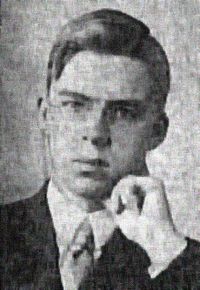
Portrait of James Owen Dorsey James Owen Dorsey,  A Study of Siouan Cults

“ One of the Dakota words for “aged” is kan (kaŋ in Riggs’s alphabet) ; but though this refers to persons we can not tell whether it is related to wakan (or wakaŋ) .
In the Ȼegiha, the language spoken by the Ponka and Omaha, Wakanda means “the mysterious” or “powerful one,” and it is applied in several senses. It is now used to denote the God of monotheism. Some of the old people say that their ancestors always believed in a supreme Wakanda or Mysterious Power. It sometimes refers to the Thunder-being. On one occasion, a Ponka shaman, Cramped Hand, said to the author: “I am a Wakanda.”
”
Source: Gutenberg

W J McGee,  The Siouan Indians

“ Thus, among many of the tribes the sun is wakanda—not the wakanda or a wakanda, but simply wakanda; and among the same tribes the moon is wakanda, and so is thunder, lightning, the stars, the winds, the cedar, and various other things; even a man, especially a shaman, might be wakanda or a wakanda. ”
Source: Gutenberg

Portrait of James Owen Dorsey James Owen Dorsey,  Omaha sociology (1884 N 03 / 1881-1882…

“ Only one of his kindred was allowed to remain with him at his tent. No one wished to eat with him, for they said, "If we eat with him whom Wakanda hates, for his crime, Wakanda will hate us." Sometimes he wandered at night, crying and lamenting his offense. At the end of the designated period, the kindred of the murdered man heard his crying and said, "It is enough. Begone, and walk among the crowd. Put on moccasins and wear a good robe." Should a man get a bad reputation on account of being quarrelsome, his gens might refuse to defend him. ”
Source: Gutenberg

Get perspective with Kwize: daily news enlightened by great literature