“ For the purpose of this argument I take Monotheism to be the doctrine ‘that the universe owes its existence and continuance in existence to the wisdom and will of a supreme, self-existent, eternal, infinite, omnipotent, omniscient, righteous, and benevolent personal being, who is distinct from and independent of what he has created.’ By wisdom and will I mean that which I should mean using the same words of any animal able to perceive, remember, reflect, judge, and determine, and active in that ability or those abilities. ”
Monotheism
Definition and stakes
Monotheism, the belief in a single, supreme deity, has shaped religious thought across civilizations, from Abrahamic traditions to ancient philosophies. It includes exclusive forms that reject other gods, as well as inclusive interpretations that recognize multiple divine manifestations as aspects of one God.
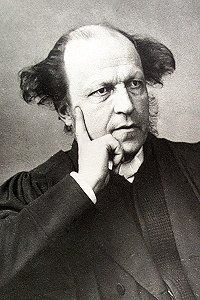
Scholars such as Edwin Hatch examined its theological implications, questioning how a benevolent deity allows suffering, while John Fiske connected scientific unity to monotheistic principles. Kersey Graves contrasted monotheism’s singular focus with polytheism’s fragmented divinities, emphasizing its perceived intellectual clarity. These viewpoints reveal monotheism’s lasting influence in shaping humanity’s relationship with the cosmos, bridging metaphysical inquiry and ethical considerations.
Quotes about “monotheism”
George Ticknor Curtis, Creation or Evolution? A Philosophical Inquiry
“ Monotheism and polytheism are alike in their origin. The one has imputed to different beings all the phenomena in the different departments of Nature, one being having the charge and superintendence of one department and another being having another department. Good and evil have thus been parceled out to different deities or demons. On the other hand, monotheism attributes all to some one being, and his existence is no [Pg 343] more rational than the existence of the whole catalogue of the mythologies of all antiquity, or the stupid beliefs of the present barbarous tribes. ”
 John Fiske,
Through Nature to God
John Fiske,
Through Nature to God
“ The advance of modern science carries us irresistibly to what some German philosophers call monism, but I prefer to call it monotheism. In getting rid of the Devil and regarding the universe as the multiform manifestation of a single all-pervading Deity, we become for the first time pure and uncompromising monotheists,—believers in the ever-living, unchange [Pg 23] able, and all-wise Heavenly Father, in whom we may declare our trust without the faintest trace of mental reservation. ”



Related terms
Authors who wrote about “monotheism”
 Ignác GoldziherRobert FlintFrank F. EllinwoodSharaf al-Din Ahmad ibn Yahya ManiriRoy Wood SellarsCharles A. H. Tuthill
 Georg Philipp Friedrich Freiherr von Hardenberg
 Mahmoud AhmadinejadTheodore GraebnerVarious
 Theodore Parker
 John Stuart Mill
 Kersey Graves
 Crawford Howell Toy
 Daniel G. BrintonJohn FiskeWilliam James
 Edwin Hatch
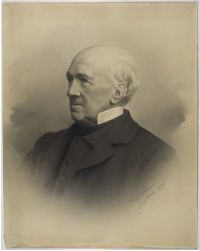 Ernest Naville
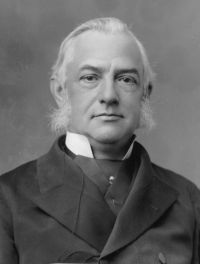 F. Max Müller