“ Griselda, who—in order to convey her contempt for official authority and disgust at official insolence—had been pointedly surveying the meeting of hill and horizon, heard a whack and scuffle, a guttural grunt and a gasp; and turned to see William, with a hand to his cheek, lying prone at the feet of his assailant. She rounded on the man like a lion, and perhaps, with her suffragette training behind her, would have landed him a cuff in his turn ”
William the Lion
Definition and stakes
The theme of “William the Lion” has been addressed by authors such as Richmal Crompton, Aesop, Edgar Rice Burroughs, Charles Boutell and William Blake. It is often associated with terms like England, conqueror, king, orange and Germany.
Quotes about “William the Lion”
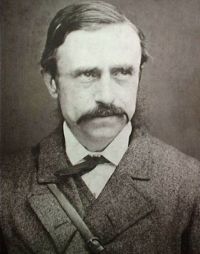 William Boyd Dawkins,
Popular Science Monthly
(1883)
William Boyd Dawkins,
Popular Science Monthly
(1883)
“ It is a lion, indeed, the king of beasts, the story of whose coming into Britain is a part of the greater story of his sojourn in Europe, that can not be told properly without discussing the ancient geography and climate, or without dealing with some vexed points in historical criticism. ”
“ We thought we was all going to flap about like birds—and instead the most of us go scuttling into holes like beetles what the cook's trying to stamp on. That's flying—for them as don't fly.""Yes," said William, "that's flying." The beetle simile caught his fancy oddly, and he found himself contrasting it with his old idea of a soldier. After all, the beetle-warrior was a new development—it was impossible to think of Napoleonic heroes as beetles. Yet if they were alive they would have to scuttle too—even Murat the magnificent, and Ney, the Red Lion ... ”
William Boyd Dawkins,
Popular Science Monthly
(1883)
“ THE British Lion to be dealt with in the following pages is not that of the heralds, nor is it the amiable, shy, rather tame animal just now crouching down behind "the silver streak," pretending to fear lest the foreigner should get at him unawares through a tunnel, nor yet is it the ephemeral much-to-be-pitied creature of the drawing-room. ”
 Richmal Crompton,
Just William
Richmal Crompton,
Just William
“ William considered deeply.“Well,” he repeated lamely, “in ‘Tigers an’ Tamers’ half of you is tigers—you see—and the other half——”“It’s exactly the same thing, William,” said Mrs. Brown with sudden spirit.“I don’t see how you can call it the same thing,” said William doggedly. “You can’t call a lion a tiger, can you? It jus’ isn’t one. They’re in quite different cages in the Zoo. ‘Tigers an’ Tamers’ can’t be ’zactly the same as ‘Lions an’ Tamers.’”“Well, then,” said Mrs. Brown firmly, “you’re never to play ‘Tigers and Tamers’ either. ”
Various, The Bay State Monthly, Volume 3…
“ In William's army there was a brave warrior named Taillefer, who was as renowned for minstrelsy as for arms. Like Tyrtæus and Alemon, in Sparta, he inspired his comrades with courage by his martial strains, and actually led the van in the fight against the English, chanting the praises of Charlemagne, and Roland. Richard Cœur de Lion was a distinguished patron of minstrels as well as "the mirror of chivalry." He was sought out in his prison in Austria by a faithful harper who made himself known by singing a French song under the window of the castle in which the king was confined. ”
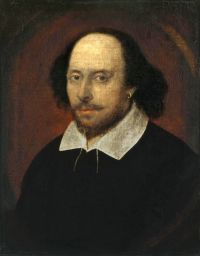 William Shakespeare,
Henry IV Part 1
(1597)
William Shakespeare,
Henry IV Part 1
(1597)
“ Why, thou knowest I am as valiant as Hercules: but beware Instinct, the Lion will not touch the true Prince: Instinct is a great matter. I was a Coward on Instinct: I shall thinke the better of my selfe, and thee, during my life: I, for a valiant Lion, and thou for a true Prince. ”
William Shakespeare,
Henry VIII
(1623)
“ What sudden anger's this? How have I reap'd it? He parted frowning from me, as if ruin Leap'd from his eyes; so looks the chafed lion Upon the daring huntsman that has gall'd him- Then makes him nothing. ”
William Shakespeare,
The Works of William Shakespeare…
“ Let me play the lion too: I will roar, that I will do any man’s heart good to hear me; I will roar, that I will make the duke say, ‘Let him roar again, let him roar 065 again.’ 066 Quin. ”
William Shakespeare,
A Midsummer Night's Dream
(1601)
“ Now the hungry lion roars, And the wolf behowls the moon; Whilst the heavy ploughman snores, All with weary task fordone. ”
William James, Psychology: Briefer Course
“ Thus a hungry lion starts to seek prey by the awakening in him of imagination coupled with desire; he begins to stalk it when, on eye, ear, or nostril, he gets an impression of its presence at a certain distance; he springs upon it, either when the booty takes alarm and flees, or when the distance is sufficiently reduced; he proceeds to tear and devour it the moment he gets a sensation of its contact with his claws and fangs. ”
William Shakespeare,
A Midsummer Night's Dream
“ God shield us!- a lion among ladies is a most dreadful thing; for there is not a more fearful wild-fowl than your lion living; ”
William Shakespeare,
King Lear
(1623)
“ Where's the King? Gent. Contending with the fretful elements; Bids the wind blow the earth into the sea, Or swell the curled waters 'bove the main, That things might change or cease; tears his white hair, Which the impetuous blasts, with eyeless rage, Catch in their fury and make nothing of; Strives in his little world of man to outscorn The to-and-fro-conflicting wind and rain. This night, wherein the cub-drawn bear would couch, The lion and the belly-pinched wolf Keep their fur dry, unbonneted he runs, And bids what will take all. ”
 William Blake,
Vala, or The Four Zoas: Night the First
William Blake,
Vala, or The Four Zoas: Night the First
“ Why does the Raven cry aloud and no eye pities her? Why fall the Sparrow & the Robin in the foodless winter? Faint! shivering they sit on leafless bush, or frozen stone 5 Wearied with seeking food across the snowy waste; the little Heart, cold; and the little tongue consum'd, that once in thoughtless joy Gave songs of gratitude to waving corn fields round their nest. Why howl the Lion & the Wolf? why do they roam abroad? Deluded by summers heat they sport in enormous love 10 And cast their young out to the hungry wilds & sandy desarts [ page 18 ] ”
William Shakespeare,
Much Ado about Nothing
“ He hath borne himself beyond the promise of his age, doing in the figure of a lamb the feats of a lion. ”
“ He made his entrance into Laon, and the people laughed at him and made jests on his tall, thin horse; but William let them laugh, and rode on until he reached the Palace. There he alighted under an olive tree, and, fastening his horse to one of the branches, took off his helmet and unbuckled his breastplate. The people stared as they passed by, but nobody spoke to him. Someone told the King that a strange man without even a squire was sitting before the Palace under an olive tree. The King's face grew dark as he heard their tale, for he loved to keep his gardens for his own pleasure. ”
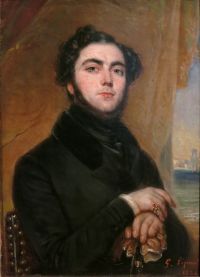 Eugène Sue,
The Pilgrim's Shell; Or, Fergan the Quarryman…
Eugène Sue,
The Pilgrim's Shell; Or, Fergan the Quarryman…
“ William carries neither arms or armor. With his left hand he guides his horse; on his right, covered with a gauntlet of embroidered leather, sits his favorite falcon, hooded in scarlet and its legs ornamented with little gold bells. Such is the courage of this bird that often does its master fly it against the vultures of the desert, as he more than once starts against the hyenas and jackals, the large hunting dogs with red collars that, breathing heavily, follow his horse. At the crupper of his prancing horse is a negro boy, eight or nine years of age, and quaintly arrayed. ”
The English and Scottish popular ballads…
“ King William, ‘returning to London from Limerick fight,’ stops at a farm-house ‘for merriment sake,’ and asks country cheer for himself and his nobles. The farmer and his wife have gone to the next market-town to see the king pass, and their daughter alone is at home. She serves bacon and eggs, all that she has; the king throws her ten guineas, and one of his lords adds two for loyal sentiments which the girl had expressed. ”
 Mary Mapes Dodge,
Hans Brinker; Or, The Silver Skates
Mary Mapes Dodge,
Hans Brinker; Or, The Silver Skates
“ Then a feathery fire of crimson and green shook millions of rubies and emeralds, into the ruddy depths of the ice—and all this time the people were shouting—God bless William of Orange—long live the King! They were half mad with joy and enthusiasm. William their own prince, their stadtholder, had become the ruler of three kingdoms; he had been victorious in council and in war, and now in his hour of greatest triumph, had come as a simple guest to visit them. The king heard their shouts with a beating heart. It is a great thing to be beloved by one's country. ”
John Richard Green, History of the English People, Volume I
“ The pitiless warrior, the stern and aweful king was a tender and faithful husband, an affectionate father. The lonely silence of his bearing broke into gracious converse with pure and sacred souls like Anselm. If William was "stark" to rebel and baron, men noted that he was "mild to those that loved God." William and feudalism But the greatness of the Conqueror was seen in more than the order and peace which he imposed upon the land. Fortune had given him one of the greatest opportunities ever offered to a king of stamping his own genius on the destinies of a people ”
 Sarah Orne Jewett,
The Normans; told chiefly in relation to their conquest of England
Sarah Orne Jewett,
The Normans; told chiefly in relation to their conquest of England
“ This King William that we speak about was a very wise man and very rich; more worshipped, and stronger than any of his foregangers were. He was mild to the good men that loved God, and beyond all metes stark to those who withsaid his will. On that same ground where God gave him that he should win England, he reared a noble minster and set monks there and well endowed it. ”
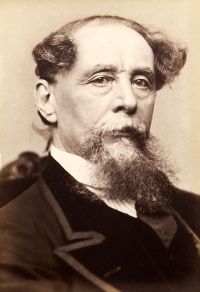 Charles Dickens,
A Child's History of England — Chapter 37
(1900)
Charles Dickens,
A Child's History of England — Chapter 37
(1900)
“ King William died on Sunday, the seventh of March, one thousand seven hundred and two, of the consequences of an accident occasioned by his horse stumbling with him. He was always a brave patriotic prince, and a man of remarkable abilities. ”
 E. V. Lucas,
A Wanderer in Holland
E. V. Lucas,
A Wanderer in Holland
“ Yet remembering the struggle of William the Silent against Spain and Rome, it is impossible to stand unmoved before the marble figure of the Prince, lying there for all time with his dog at his feet—the dog who, after the noble habit of the finest of such animals, refused food and drink when his master died, and so faded away rather than owe allegiance and affection to a lesser man. ”
“ An orderly border of orderly flowers, espaliered walls and a tree or two ruddy with apples; and on a shaven plot of the greenest grass an empty basket chair with beside it a white cat reposing with her paws tucked under her chin. The white cat may have been deaf, or she may have been merely intrepid; whatever the cause her nerves were unaffected by the fury of conflict and she dozed serenely under shell-fire, the embodiment of comfortable dignity. She opened a warily observant eye when William rushed into her garden ”
The English and Scottish popular ballads…
“ King William the Third, forbidden to hunt by a forester who does not recognize him, tries in vain to bribe the man, makes himself known, presents the forester with fifty guineas, and appoints him ranger. ”
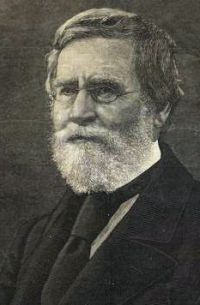 Jacob Abbott,
William the Conqueror
Jacob Abbott,
William the Conqueror
“ In the execution of his threat to make Philip's dominions too hot to hold him, William, as soon as he was able to mount his horse, headed an expedition, and crossed the frontiers of Normandy, and moved forward into the heart of France, laying waste the country, as he advanced, with fire and sword. He came soon to the town of Mantes, a town upon the Seine, directly on the road to Paris. William's soldiers attacked the town with furious impetuosity, carried it by assault, and set it on fire. William followed them in, through the gates, glorying in the fulfillment of his threats of vengeance. ”
“ Very dimly, and one by one, little things that had happened in his childhood began to come back to William; but he wondered greatly how he seemed to know this land, where he had never been before. The king his father had been long dead, but the queen (his mother) and his sister were besieged in the city of Palermo by the king of Spain, who was full of wrath [22] because the princess had refused to marry his son. The queen was in great straits, when one night she dreamed that a wolf and two harts had come to help her, and one bore the face of her son, while both had crowns on their heads. ”
Mary Mapes Dodge,
Hans Brinker, or The Silver Skates…
“ He saw also over the carved upright piano, life-sized portraits of William of Orange and his English queen, a sight that, for a time, brought England and Holland side by side in his heart. William and Mary have left a halo round the English throne to this day, he the truest patriot that ever served an adopted country, she the noblest wife that ever sat upon a British throne, up to the time of Victoria and Albert the Good. As Ben looked at the pictures he remembered accounts he had read of King William's visit to The Hague in the winter of 1691. ”
“ When William beheld the smoke, and whence it came, he cried 'Orange is burning! Holy Saint Mary, Gibourc is carried captive! To arms! To arms!' And he spurred his horse to Orange, Rainouart running by his side. From her tower Gibourc saw through the smoke a thousand banners waving and the sparkle of armour, and heard the sound of the horses' hoofs, and it seemed to her that the Infidels were drawing near anew. 'Oh, William!' cried she, 'have you really forgotten me? Noble Count, you linger overlong! ”
“ A man stepped suddenly out from behind the shifting horses—so suddenly that they both started. He had been standing by the gate with the bridles gathered in his hand, hidden by his charges from William and Griselda as they had been hidden from him. When, hearing their voices, he stepped into sight, he stood with his heels together, very erect and staring at them—a young man squarely and sturdily built, with under his helmet a reddish face and a budding black moustache. He was clad in a tight-fitting greyish uniform, and a sword hung by his side. ”
 Edward A. Freeman,
William the Conqueror
Edward A. Freeman,
William the Conqueror
“ William was now lord of all Normandy, and able to put down all later disturbers of the peace. His real reign now begins; from the age of nineteen or twenty, his acts are his own. According to his abiding practice, he showed himself a merciful conqueror. Through his whole reign he shows a distinct unwillingness to take human life except in fair fighting on the battle-field. No blood was shed after the victory of Val-ès-dunes; one rebel died in bonds; the others underwent no harder punishment than payment of fines, giving of hostages, and destruction of their castles. ”
Various, Harper's Round Table, March 10…
“ Swinging himself down by the branches of the oak, William found himself in possession of the very things that he most needed. In their unaccountable flight the strange party had left behind them a rough blanket and a blue woollen cape, and a huge flint-lock pistol, whose dark butt protruded from the snow, where it had been dropped, like some new growth of the forest.A short distance away was a placid-looking horse who had commenced again to gnaw the trunk of a white birch."Refuse not the gifts the gods provide," quoted William. ”
 Harold Frederic,
The Young Emperor, William II of Germany
Harold Frederic,
The Young Emperor, William II of Germany
“ He holds himself with arrow-like straightness, bears his uniform or robes with proud grace, and draws his features into a kind of mask of imperial dignity and reserved wisdom and strength very impressive to the beholder. It is with what may be called this official countenance of William’s that the general public is chiefly familiar, for he assumes it in front of the photographer’s camera, just as he does on parade, at formal gatherings, and even in his carriage when he drives through the streets. ”
Harold Frederic,
The Young Emperor, William II of Germany
“ Unfortunately, this swift and unexpected shifting of history’s lime-light revealed young William in extremely repellent colours. Many circumstances, working together in the shadows behind the throne, had combined to put him into a temporary attitude toward his parents, which showed very badly under this sudden and fierce illumination. “Ho, ho! He is a bad son, then, is he?” we all said, and made up our minds to dislike him on the spot. ”
Jacob Abbott,
William the Conqueror
“ William and Arlotte. William's mother.Although the dukes of Normandy were very powerful potentates, reigning, as they did, almost in the character of independent sovereigns, over one of the richest and most populous territories of the globe, and though William the Conqueror was the son of one of them, his birth was nevertheless very ignoble. His mother was not the wife of Robert his father, but a poor peasant girl, the daughter of an humble tanner of Falaise; and, indeed, William's father, Robert, was not himself the duke at this time, but a simple baron, as his father was still living. ”
Related terms
Authors who wrote about “William the Lion”
Richmal Crompton Aesop
Aesop Edgar Rice BurroughsCharles BoutellWilliam BlakeWilliam ShakespeareThe Lion and the Cat
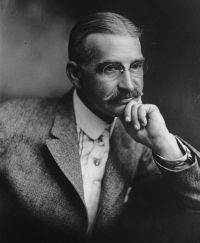 L. Frank Baum
 Niccolò MachiavelliVariousWilliam Boyd DawkinsWilliam JamesJohn Camden Hotten
 Gilbert Abbott À Beckett
 John Bunyanof Phlossa near Smyrna Bion
 Ralph Waldo Emerson
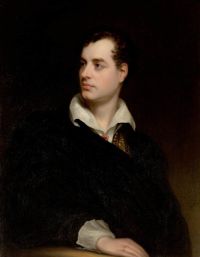 Lord Byron
 Ambrose Bierce
 John Milton