
“ Absolute stillness everywhere down here by the Yarra Yarra, not even the river making a noise as it sweeps swiftly down on its winding course between its low mud banks. No bark of a dog or human voice breaks the stillness ”
Yarra River
Definition and stakes
The theme of “Yarra River” has been addressed by authors such as T. L. Mitchell, Charles Sturt, Sir Alexander Burnes, Hermann Hesse and James T. Nichols. It is often associated with terms like lake, creek, Jordan, railway and Yarmouth.
Quotes about “Yarra River”
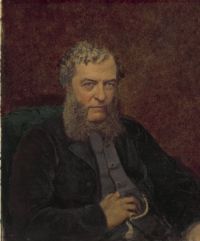 John Lort Stokes,
Discoveries in Australia, Volume 1
“ One disadvantage under which this place labours is badness of water, while the country around it is a dead level, with clumps of very open woodland. The formation is whinstone, but the soil's fertile quality shows an absence of sandstone. RIVER YARRA-YARRA. Proceeding up the Yarra-yarra, we found that about two miles from the mouth, the river divides, one branch continuing in a northerly direction, and the other, a narrow sluggish stream, turning suddenly off to the eastward. The banks are so densely wooded, that it is seldom if ever that its surface is ruffled by a breeze. ”
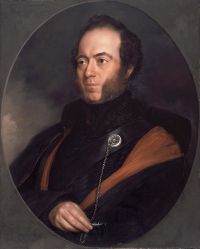 T. L. Mitchell,
Three Expeditions into the Interior of Eastern Australia…
“ The yarra is certainly a pleasing object in various respects; its shining bark and lofty height inform the traveller of a distant probability of water, or at least of the bed of a river or lake; and being visible over all other trees it usually marks the course of rivers so well that, in travelling along the Darling and Lachlan, I could with ease trace the general course of the river without approaching its banks until I wished to encamp. The nature and character of several other species of the genus eucalyptus were nevertheless very different and peculiar. ”
T. L. Mitchell,
Journal of an Expedition into the Interior of Tropical Australia…
“ Nothing could be more sterile than the surface where the brigalow grew; but the first indication of the river was an open space covered with luxuriant grass, and we had to ride two miles along this, before Yuranigh and I could find the river, having been guided to it chiefly by some smoke of the natives. At the first place we approached, we found two ponds of excellent water, under the shining boughs of lofty Yarra trees. Latitude, 22° 10' 15" S. Thermometer, at sunrise, 39° ”
T. L. Mitchell,
Three Expeditions into the Interior of Eastern Australia…
“ This lake was surrounded by yarra trees similar to those on the banks of the river; and within them was a narrow belt of slender reeds but no bulrushes. On the western shore lay a small beach of sand. The banks were in height about eight feet above the ordinary water-line of the lake; and the greatest depth in the centre was about sixteen feet below that line. The yarra trees distinguishing the margin continued to form a dense belt extending westward from the northern shore ”
T. L. Mitchell,
Journal of an Expedition into the Interior of Tropical Australia…
“ A low range of hills broke the horizon, and presented some favourable points, and I thought I could trace the course of our little river, through an extensive intervening woody flat. I descended from the hill, and followed the little river down, but could find no more water in its ponds. There were the Yarra trees, and fine grassy flats on its banks; and I came to a fine looking piece of rising ground, on the right bank, where the grass was on fire. We sought the inhabitants of the woods, but could discover none. ”
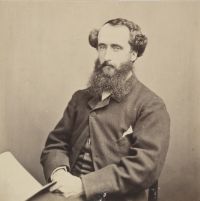 Alfred William Howitt,
Native Tribes of South-East Australia
(1904)
“ From the junction of the Saltwater and the Yarra Rivers, along the course of the former to Mount Macedon, [45] thence to Mount Baw-Baw, along the Dividing Range, round the sources of the Plenty and Yarra to the Dandenong Mountains, thence by Gardiner's Creek and the Yarra to the starting-point. ”
Charles Foster Kent, Biblical Geography and History
“ The Yarmuk itself is the most commanding river of all the east-Jordan land. Its tributaries water the fertile lands of the Hauran. Like all the great rivers east of the Jordan, it has cut a deep channel through the basaltic rocks. To-day the railroad from Damascus to Haifa twists along its tortuous course between walls of rock five hundred to one thousand feet in height. The climate in this deep gorge is that of the Jordan valley itself. Oleanders, palms, and [58] figs grow here, overshadowed by the pines and oaks of the upland plateau. ”
Timothy Coghlan and George Levey, 1911 Encyclopædia Britannica (1911)
“ The Yarra Yarra rises in the “Black Spur” of the Australian Alps. Emerging in a deep valley from the ranges, it follows a sinuous course through the undulating plains called the “Yarra Flats,” which are wholly enclosed by hills, on whose slopes are some of the best vineyards of Australia; it finds its way out of the Flats between high and precipitous but well-wooded banks, and finally reaches Port Phillip Bay below Melbourne. ”
Various, The Rivers of Great Britain, Descriptive…
“ Though the river has constantly increased in width, all the towns from Croft downwards are situated more or less on each side of the stream. The first of these is the quiet and sleepy town of Yarm, with a single broad street on one side of the river, and a few scattered houses and windmills on the other. Up to Yarm the tide reaches, and here also the net-fishing for salmon begins, small cobles, with salmon-nets on board, being plentiful in the neighbourhood of Yarm Bridge. What else the people of Yarm do for a living in these days is not readily discernible. ”
 Constance Fenimore Woolson,
Rodman the Keeper: Southern Sketches
“ The tide-water river—the Warra—flowed by, the moon-path shining goldenly across it; up in the north palmettos stood in little groups alongshore, with the single feathery pine-trees of the barrens coming down to meet them; in the south shone the long lagoon, with its low islands, while opposite lay the slender point of the mainland, fifteen miles in length, the Warra on one side, and on the other the ocean; its white sand-ridges gleamed in the moonlight, and the two could hear the sound of the waves on its outer beach. ”
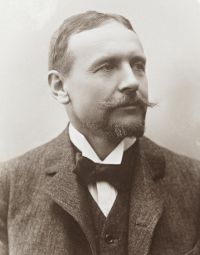 Carl Lumholtz,
Among Cannibals: An Account of Four Years' Travels in Australia and of Camp Life With the…
(1889)
“ One is tempted to believe that the yarri understands the preserving quality of the water. The natives, too, preserve their meat in the water during the hot summer months, as the temperature of the water is, of course, lower than that of the air. The fact probably is, that the yarri has found the water to be a safer place for storing the meat. The toollah was put between some stones near the edge of the river. I was much pleased with what the natives told me, for it awakened in me hopes of securing a specimen of this large marsupial. ”
Alexander Jardine, Narrative of the Overland Expedition of the Messrs…
“ October 14.—The distance travelled to-day was only 11 miles, but described by Mr. Jardine, as equal to 20 of fair travelling ground. The course lay over very stony quartz and granite ridges, which could not be avoided, as they ran into the river, whilst the bed of the stream would have been as difficult, being constantly crossed by rocky bars, and filled by immense boulders. The grass was very scarce, the blacks having burnt it all along the river. There were patches where it never grows at all, presenting the appearance of an earthern floor. ”
 Rolf Boldrewood,
In Bad Company, and other Stories
“ When the kangaroos by the thousand die,It's rough on the travelling sheep, as 'Banjo' sings.This station, when reached, presented a different appearance from North Yalla-doora. The prairie-like plain, far as the eye could reach, was bisected by a wide and turbid stream, flowing between banks, now low and partly submerged, now lofty and precipitous; occasionally overhanging as if cut away by the angry waters, in one of the foaming floods which, from time to time, alternated with seasons when the shallow stream trickled feebly over the rock-bars in the river-bed. ”
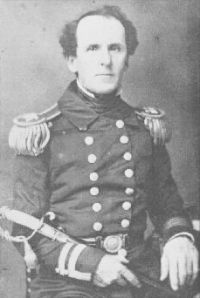 William Francis Lynch,
Narrative Of The United States Expedition To The River Jordan And The Dead Sea…
(1849)
“ The stream sometimes washed the bases of the sandy hills, and at other times meandered between low banks, generally fringed with trees and fragrant with blossoms. Some points presented views exceedingly picturesque — the mad rushing of a mountain torrent, the song and sight of birds, the overhanging foliage and glimpses of the mountains far over the plain, and here and there a gurgling rivulet pouring its tribute of crystal water into the now muddy Jordan. ”
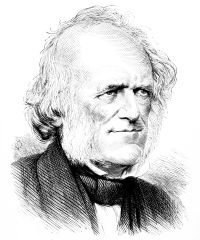 Sir Charles Lyell,
Principles of Geology
“ The sands whereon Yarmouth is built, first became firm and habitable ground about the year 1008, from which time a line of dunes has gradually increased in height and breadth, stretching across the whole entrance of the ancient estuary, and obstructing the ingress of the tides so completely, that they are only admitted by the narrow passage which the river keeps open, and which has gradually shifted several miles to the south. The ordinary tides at the river's mouth rise, at present, only to the height, of three or four feet, the spring tides to about eight or nine. ”
Alexander Jardine, Narrative of the Overland Expedition of the Messrs…
“ December 20.—The river was still followed down to-day, the party keeping about four miles from it, to avoid its scrubs and ana-branches. At between 7 or 8 miles, a stream about 100 yards wide, coming from the eastward, caused them to halt until a road was cut through the thick vine scrub that fringed its banks. Four miles further on they camped at a small lagoon close to the bank of the river, at which point it is about 100 yards wide, deep, and too salt for drinking, being affected by the tide. The country travelled over was box, and tea-tree, melon-hole flats, shewing very high flood marks. ”
Michael Russell, Palestine, or, the Holy Land: From the Earliest Period to the Present Time
“ In ascending the western shore, the traveller at length reaches the point where the Jordan mixes its muddy waters with those of the lake. Hasselquist, the only modern author who describes the mouth of that celebrated river, tells us that the plain which extends from thence to Jericho, a distance of more than three leagues, is, generally speaking, level, but uncultivated and barren. The soil is a grayish sandy clay, so loose that the horses often sank up to the knees in it. ”
Alexander Jardine, Narrative of the Overland Expedition of the Messrs…
“ September 6.—The ana-branch camped on last night being found to run parallel to the course of the river, received the name of Parallel Creek. Its average width is about 150 yards, well watered, and full of melaleucas and fallen timber. The country on its north bank down to its junction with the river 20 miles from the junction of Warroul Creek, is broken into ridges of quartz and sand-stone, stony, and poorly grassed. ”
 Andrew Lang,
The Brown Fairy Book
“ THE STORY OF THE YARADown in the south, where the sun shines so hotly that everything and everybody sleeps all day, and even the great forests seem silent, except early in the morning and late in the evening—down in this country there once lived a young man and a maiden. The girl had been born in the town, and had scarcely ever left it; but the young man was a native of another country, and had only come to the city near the great river because he could find no work to do where he was. ”
Alexander Jardine, Narrative of the Overland Expedition of the Messrs…
“ Travelling over lightly-timbered sandy ridges, barren and scrubby, but without stone, at 9 or 10 miles they crossed the head of a sandy creek, rising in a spring, about 60 yards wide, having about 5 or 6 inches of water in it. The creek runs through mimosa and garrawon scrub for 5 miles, and the spring occurs on the side of a scrubby ridge, running into the creek from the west. At 18 miles they struck an ana-branch having some fine lagoons in it, and half-a-mile further on a river 100 yards wide, waterless, and the channels filled up with melaleuca and grevillea ”
George St. Clair, Buried Cities and Bible Countries
“ In any case, if they can once gain possession of the hills, it may be easier thence to conquer the plains at their leisure, than it would be for them by-and-bye to conquer the hills, with the plains as their base of operations.They approach the river opposite Jericho, and prepare to cross. The spot is very well known, and it is where the pilgrims now go to bathe. At this part the Jordan is ordinarily a brown, rapid, swirling stream, some 20 yards across, fringed with a jungle of tamarisk, cane, and willow, in which the leopard and the wolf find their hiding place. ”
 Edward Dyson,
In the Roaring Fifties
“ Yarra was back within five minutes.'Him Boss belonga me all right. Him run longa gully, catch up horse by ole man blackbutt, ride longa gorge same debble chase him,' reported the half-caste.'Right, right! Yarra plurry fine feller!' said Ryder. 'Now we go up over small spur, down by gorge, sit down little stone cave near big splash. Pretty quick you come back, catch Wallaroo, lead him down to the gorge along down the creek. Make a track by the bank some time, turn him in pool where black fish sit down, and ride back up creek again, and tie horse up by big rock same monkey bear. ”
Alexander Jardine, Narrative of the Overland Expedition of the Messrs…
“ At about 6 miles Galaa Creek was crossed at Alexander Jardine's marked tree (V in a square) , and the Rocky Island at its junction, before mentioned, were seen. At this point the ranges come into the river on each side. The camp was pitched at about five miles further on, at a fine waterhole, where there was good grass—a welcome change for cattle and horses. It was not reached, however, till about 9 o'clock. The river afforded the party some fine fish—cod, perch, and peel, and a lobster weighing more than half-a-pound. Its channels were very numerous, making altogether nearly a mile in width. ”
 Bayard Taylor,
The Lands of the Saracen
“ The Jordan at this point will not average more than ten yards in breadth. It flows at the bottom of a gully about fifteen feet deep, which traverses the broad valley in a most tortuous course. The water has a white, clayey hue, and is very swift. The changes of the current have formed islands and beds of soil here and there, which are covered with a dense growth of ash, poplar, willow, and tamarisk trees. The banks of the river are bordered with thickets, now overgrown with wild vines, and fragrant with flowering plants. Birds sing continually in the cool, dark coverts of the trees. ”
“ The River Earn, if it lacks the majesty of the Tay and the impetuosity of the Garry, makes itself recognised as the dominating feature, whether in its quiet meandering moods or in the flooded temper, overflowing its banks and spreading its deposit of alluvial soil. ”
Alexander Jardine, Narrative of the Overland Expedition of the Messrs…
“ Leaving the cattle in camp, the Brothers spend the afternoon in exploring the country a-head for 7 miles. After crossing the river, the course lay through flooded country (the marks on the trees being in some cases five feet high, covered with box, and vine scrub, and the water, grasses, and rushes being matted together with mud and rubbish,) to a large stream with broad sandy bed, divided into three channels, altogether about 600 yards wide, but with little water in them. ”
Walter Harris, Tafilet (1895)
“ This plain, of which I shall have more to say anon, forms the centre of the Draa basin, and extends from the foot-hills of the southern [126] slopes of the great Atlas range as far as the northern extremity of Jibel Saghru, the so-called Anti-Atlas, to the south. The river of Agurzga, flowing from the snow-level, is always well supplied with excellent water, which whirls and eddies along in crystal clearness over its stony bed, here in deep blue pools, and there in tiny rippling rapids. In winter-time it is liable to sudden floods, and often entirely unfordable. ”
G. Christopher Davies, The Swan and Her Crew
“ It is the eastern part of Norfolk, and no better place could be found as a field for the doings of three enterprising young naturalists and sportsmen. It is known as the "Broad District," and it consists almost entirely of lake, river, and marsh. If we take Yarmouth on the sea-coast as the starting-point, and look inland, we shall see first of all a large tidal lake known as Breydon Water. From this radiate three rivers going north-west, [2] west, and south-west. The chief of them is the Yare, which winds for thirty miles inward to the old city of Norwich. ”
 Edwin A. Pratt,
The Rise of Rail-Power in War and Conquest…
“ The hills, absolutely bare, rise above the valley for many thousands of feet in fantastic pinnacles and cliffs. It is a scene of the wildest desolation." The Nari river, running through the gorge, is formed by a combination of three streams having but little water on ordinary occasions, but becoming, in time of flood, a raging torrent which fills up the whole gorge for miles, attains a depth of ten feet, and has a velocity of five feet per second. Over this river the railway had to be carried in five different places. Not alone bridges, but heavy embankments, cuttings and tunnels were needed. ”
Related terms
Authors who wrote about “Yarra River”
T. L. Mitchell Charles SturtSir Alexander Burnes
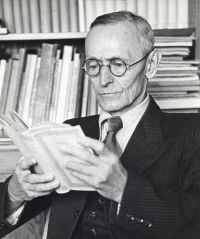 Hermann HesseJames T. NicholsAlexander JardineWilliam Francis LynchVariousSir Charles LyellAndrew Lang
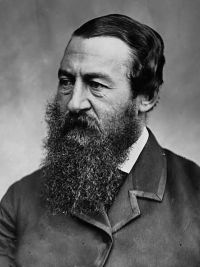 Sir Samuel White Baker
 Jerome K. Jerome
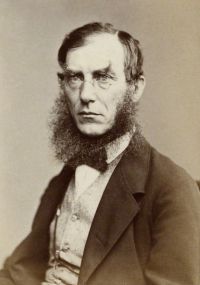 Joseph Dalton HookerWalter HarrisCharles Foster Kent
 John Wesley Powell
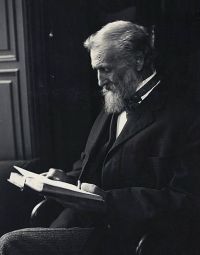 John Muir
 Rabindranath TagoreBayard Taylor
 Mark Twain
